Michigan’s political landscape is shifting, leaving Republicans in the state grappling with mounting challenges. As they eye 2026 to reclaim power, several factors are casting doubt on their prospects, including rising gas prices, a contentious Iran war, and tariffs impacting Michigan’s automotive sector.
Adding to their concerns, a recent special election saw a Democrat securing a decisive victory in a district previously won by Kamala Harris by a narrow margin in 2024. This shift in voter sentiment, highlighted by Michigan pollster Richard Czuba, suggests a growing alliance between Democrats and independents keen to send a message to the current administration.
The upcoming midterms are critical, with Michigan’s governorship, legislative control, and a significant U.S. Senate race at stake. Nationally, Republicans regard Michigan as a pivotal state, especially since Donald Trump’s 2024 triumph there.
Economic Struggles and Political Ramifications
Trump’s economic approval ratings have dipped, exacerbated by the Iran conflict, as detailed in an AP-NORC poll. The poll indicated a notable decline in support from Republicans and independents, crucial demographics in swing states like Michigan.
Michigan’s residents are particularly feeling the economic strain, with gas prices soaring to around $4.80 per gallon, placing the state among the highest in the nation. Jared Kaufman, a local voter, conveyed his frustration over the rising costs and the distant conflict in Iran, leading him to support Democrat Chedrick Green in the recent election.
Tariffs, too, have stirred anxiety among Michigan’s auto industry stakeholders. John Lytle of Promess Inc. highlighted the impact of these economic uncertainties on business growth, emphasizing the need for stability.
Despite the challenging climate, strategist Jason Roe remains optimistic, noting that Democrats face challenges of their own. However, he warned, “But if they don’t get Iran figured out pretty quick, we’re screwed.”
Internal Struggles within the GOP
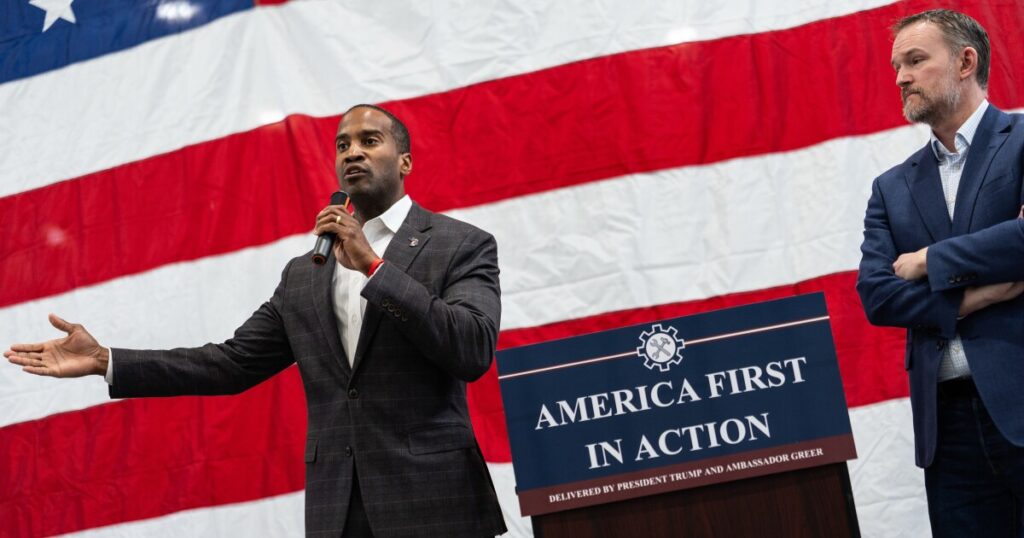
Internal discord adds another layer of complexity for Michigan Republicans. With Governor Gretchen Whitmer stepping down due to term limits, the GOP saw a prime opportunity to capture the governorship. Yet, divisions within the party have surfaced, notably surrounding Rep. John James, the presumed frontrunner.
James has faced criticism for his campaign approach, particularly after missing a key debate. Chris Long of the Michigan GOP leadership voiced concerns about James’ prospects in the general election, urging him to step aside. James, however, remains committed to the race, planning to participate in upcoming debates.
Democrats, too, are navigating their own challenges, with Secretary of State Jocelyn Benson leading the Democratic lineup, but facing potential vote-splitting from independent candidate Mike Duggan.
The Battle for the Senate
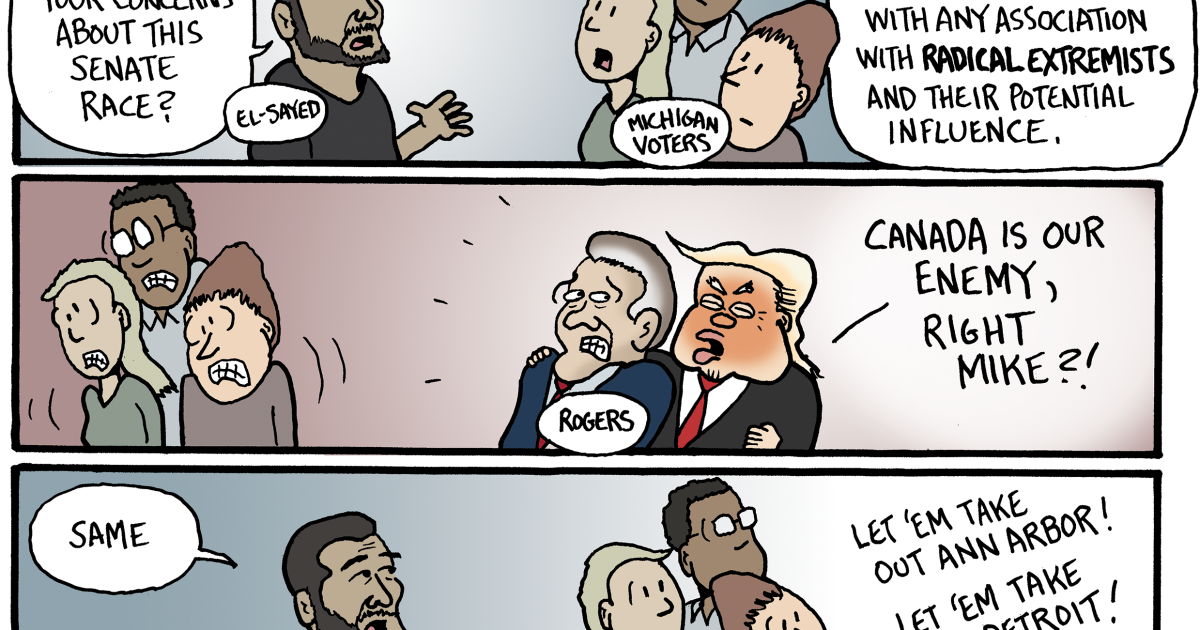
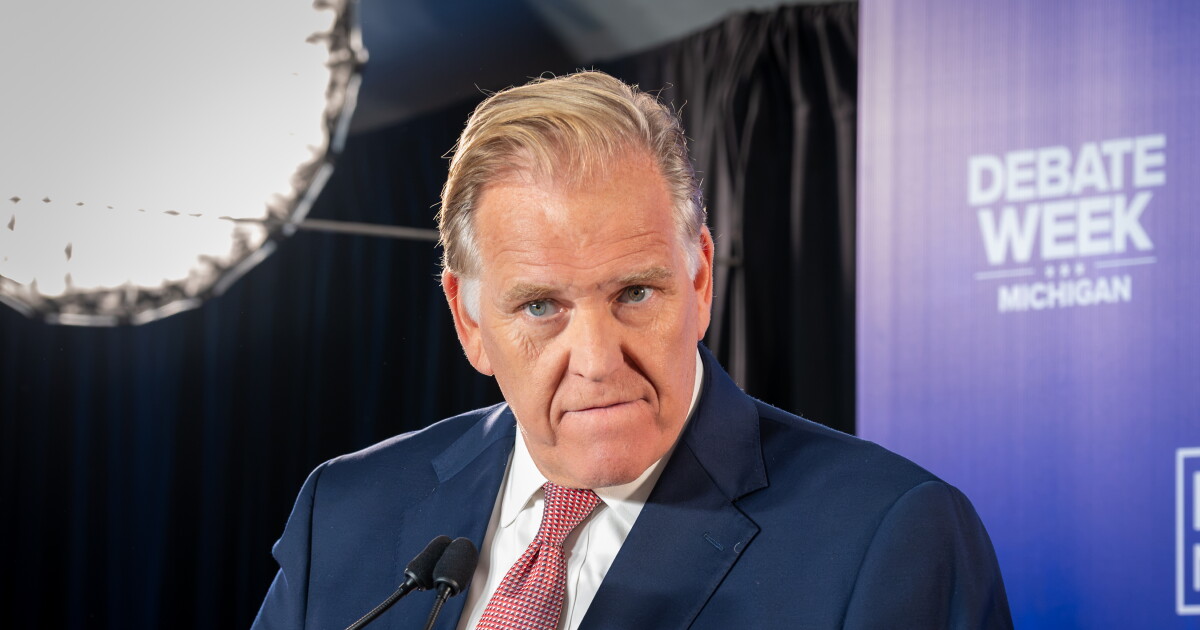
While the governorship garners attention, the Senate race is equally pivotal. Former U.S. Rep. Mike Rogers seeks to overturn the Democrats’ hold on Michigan’s Senate seat. Despite a narrow loss in 2024, his campaign is buoyed by substantial financial backing, including a $45 million investment from the Senate Leadership Fund.
However, questions persist about Rogers’ viability, especially given the national political climate. Czuba warned about the risks of nationalizing the race, pointing to Trump’s current unfavorable ratings.
As Michigan gears up for 2026, both parties face significant hurdles, with economic pressures and internal dynamics shaping the political battleground.
___
Associated Press journalist Mike Householder in Bay City, Michigan, contributed to this report.
—
Read More Michigan News