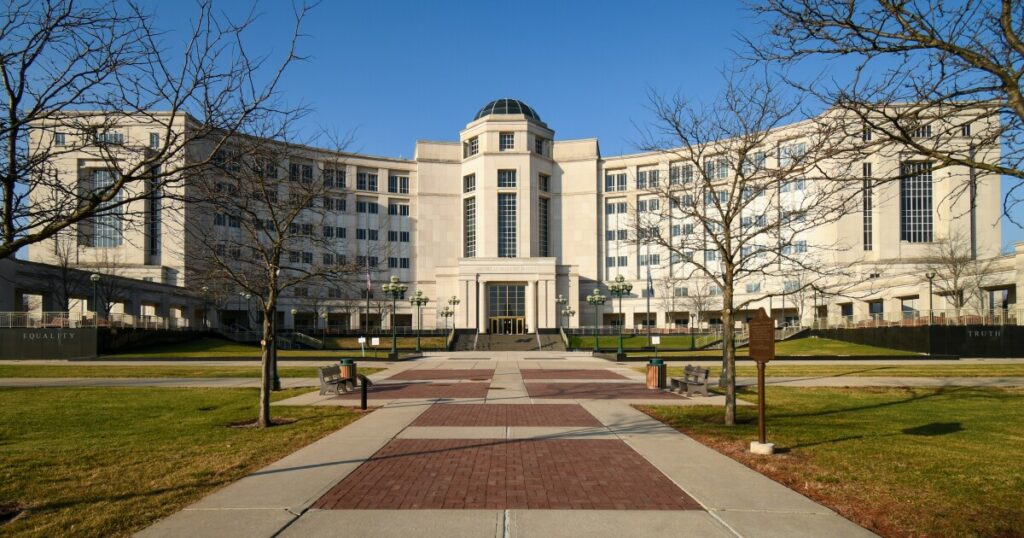
The Michigan Supreme Court is currently considering a pivotal case about legislative procedures that could have significant implications for the state’s legislative process. This case, the first of its kind in Michigan, involves the authority of legislative leaders over the progression of bills to the governor’s desk after being passed by both the House and the Senate.
Nine bills, approved by both chambers, remain in limbo as they await further action due to a directive from House Speaker Matt Hall (R-Richland Township) following the Republican takeover of the House in January 2025. These bills have been stuck with the House clerk, prompting Senate Democrats to seek intervention from the Supreme Court to enforce a lower court’s decision to move the bills forward to the governor.
Mark Brewer, representing Senate Democrats, argued against the current impasse, stating, “If the House’s anti-majoritarian tactic is allowed to succeed, it will unilaterally and drastically change Michigan’s bicameral legislature, its separation of powers, our checks and balances, and the majoritarian principles which underlie everything we do in state and local government in this state.” Brewer contends that no single legislative leader should have the power to halt a bill that has cleared both legislative chambers.
Conversely, Kyle Asher, the attorney for the House Republicans, defended the stance that legislative leaders do possess such authority, as the Michigan Constitution grants them broad discretion. He emphasized that the constitution does not specify who should present bills, whether all bills must be presented, or the timing of such presentations, leaving these matters to legislative rules.
Asher also addressed the interpretation of the Michigan Constitution’s presentment clause, arguing it is often misunderstood as a mandate, rather than a procedural step necessary for a bill to become law. He stated, “It’s a mere predicate step that has to occur before a bill can become law. It’s not a requirement that every bill must be presented.”
Lower courts have sided with the Democrats, ruling that the House Republicans acted unconstitutionally by withholding the bills from Governor Gretchen Whitmer. Senate Democrats now seek a Supreme Court directive to compel compliance with this ruling. Notably, Governor Whitmer has not publicly commented on the ongoing legal proceedings.
The bills in question encompass a range of issues, from requiring public employers to cover more employee health insurance costs, to exempting public assistance payments from debt collection, transitioning corrections officers into the Michigan State Police pension system, and permitting Detroit historical museums to levy a millage.
—
Read More Michigan News