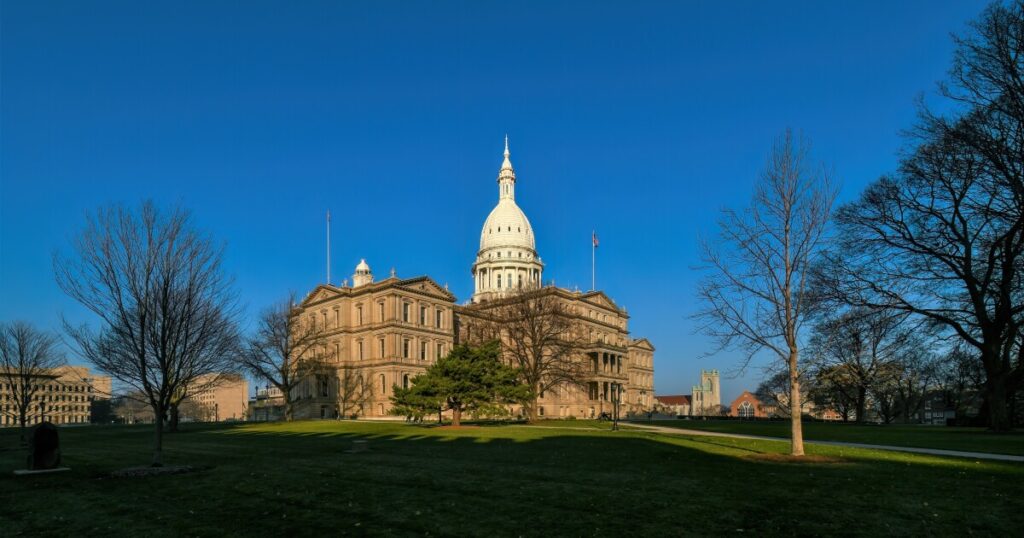
Amidst growing financial challenges, the Michigan Senate has approved the initial segment of an $88.1 billion state budget proposal. This decision marks a significant step as the state navigates complex fiscal negotiations.
The approved bill accounts for roughly $63 billion in state department expenditures, with the Senate’s overall budget plan proposing $12 billion more in state spending than the House’s version.
Senate Appropriations Committee Chair Sarah Anthony (D-Lansing) highlighted the plan’s focus on funding critical areas such as free school meals, affordable housing, and the social safety net. Anthony emphasized the urgency, stating, “That One Big Beautiful Bill has had a significant impact on our balance sheet and so I don’t think that we can waste a ton of time.”
Federal reductions from former President Donald Trump’s One Big Beautiful Bill Act are compelling Michigan to assume a larger share of costs, notably in Medicaid and food assistance programs. Anthony noted that presenting the Senate’s vision promptly allows more time for essential negotiations amidst the state’s budget shortfall.
Meanwhile, the Republican-led Michigan House of Representatives recently passed its own budget proposal, contrasting the Senate’s approach by advocating for budget cuts. Notably, in 2025, budget delays resulted in passing the state budget after the fiscal year had already commenced.
The Senate’s decision to increase spending has drawn criticism from Republicans, with State Senator Thomas Albert (R-Lowell) expressing concerns over potential inefficiencies. He questioned the necessity of adding state employees, increasing hunting and fishing fees, and allocating more funds to local governments. Albert also warned against potential misuses of “one-time spending” for ongoing needs, cautioning, “When government uses one-time spending to expand programs that continue every year, it builds an annual budget problem and breeds uncertainty and instability.”
Further criticism arose over the proposal’s reliance on the state’s rainy-day fund. Albert argued, “Using state savings now is unwise because it’ll leave fewer resources available if we truly do face a financial emergency in the future.”
A suggested budget supplemental aims to allocate $200 million from the rainy-day fund for Medicaid and an additional $150 million to counter federal cuts. Anthony acknowledged the difficulty of this decision, stating, “We’re not doing that lightly. We didn’t want the rainy-day fund to address any and everything in the state budget. Making sure that we’re addressing those impacts of the federal government were our intentions.”
The Senate’s fiscal year 2027 proposal aligns closely with the governor’s spending recommendations, which include potential tax increases on nicotine products, online gambling, and digital advertising. The Michigan House Speaker has also suggested his own tax increases on services to reduce property taxes and achieve savings.
Anthony, however, emphasized that discussions on revenue-raising measures could be deferred. She stated, “When we talk to people across the state, people are hurting right now. So, we didn’t want to start negotiations talking about raising taxes. That feels a little tone deaf when folks are worried about whether their healthcare will be addressed or whether they can put food on the table.”
The final state budget is expected to differ significantly from the current Senate, House, or governor’s proposals, with a deadline set for July 1 to finalize the details.
—
Read More Michigan News