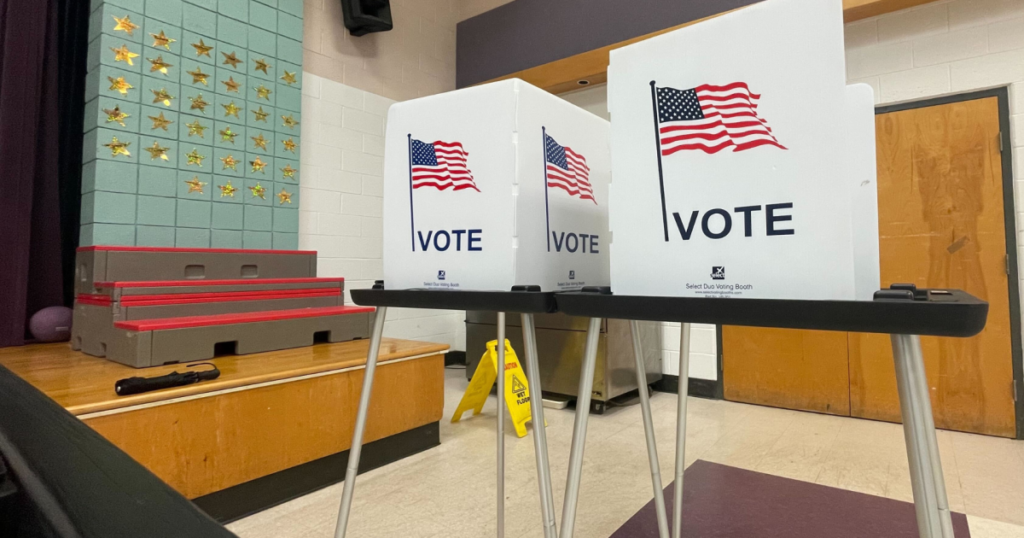
When election night stretches on without definitive results, it can stir anxiety and raise unfounded doubts about electoral integrity. Yet, according to experts, these delays are not indicative of fraudulent activity.
As voting concludes at 8 p.m. on Tuesday, media outlets often predict winners based on partial vote counts. Trusted sources like the Associated Press rely on current reports, historical voting trends, and other relevant data to make these projections.
In tightly contested races, media organizations might refrain from declaring a winner until more comprehensive data is available. Close competitions naturally extend the time needed to ascertain the outcome.
The Complexity of a Decentralized System
Michigan exemplifies one of the nation’s most decentralized election processes.
In this system, over 1,500 city and township clerks handle their own vote counting and reporting. These results are then forwarded to county clerks for consolidation before reaching the state level. This structure means a county’s complete results are only submitted once all precincts have finalized their counts, leading to varied timing in state-level reporting.
Stephanie Leiser from the University of Michigan’s Center for Local, State, and Urban Policy explained to Stateside that such decentralization offers a safeguard against electoral tampering. “It’s a natural limit on how much things can go wrong,” she noted. The complex structure makes large-scale manipulation unlikely.
Notably, Michigan’s Upper Peninsula counties — Dickinson, Gogebic, Iron, and Menominee — operate in the Central Time Zone, leading to an extra hour of voting compared to the rest of the state.
Impact of Early and Absentee Voting
A significant change occurred in 2022 when Michigan voters approved a constitutional amendment broadening voting rights. This amendment:
- Ensured eight days of in-person early voting
- Mandated counting of military or overseas ballots postmarked by Election Day
- Required the state to cover return postage for absentee ballots
- Guaranteed access to at least one state-funded ballot drop box per municipality or per 15,000 registered voters
Given the surge in absentee voting, the traditional method of processing these ballots post-Election Day was no longer feasible. A 2023 law allowed cities with populations over 5,000 to begin processing absentee ballots during early voting.
Despite this, numerous absentee ballots are still submitted on Election Day, necessitating verification, processing, and counting after polls close, often extending the work into the night.
These factors, combined with local reporting and administrative tasks, contribute to delays in unofficial results. Nevertheless, Michigan processes votes as quickly as, or faster than, comparable battleground states.
Timing of Results
Due to the requirement that all precincts within a county report before state-level updates are made, Michigan’s statewide results page often lags in updates.
Local clerks and larger counties frequently share interim results on their websites, though these are unofficial. Official results and certification occur only after thorough review by county and state boards of canvassers, which can extend into mid-August.
Election results can be accessed on our homepage or at michiganpublic.org/election.
—
Read More Michigan News