In the early months of 2020, Robert Gordon found himself at the helm of a pivotal decision in Michigan’s healthcare system, with the future of about 80,000 state residents’ health insurance hanging in the balance. As the state’s health director, Gordon faced the daunting task of implementing Medicaid work requirements, a law inherited from a previous administration.
Gordon, a Democrat with a background in the Obama administration, had been working to prevent coverage loss for many Michiganders. However, a mandate passed by a Republican-led legislature required Michigan to enforce work requirements starting January 2020.
Despite efforts to ensure that enrollees met the law’s stipulations through new systems for reporting work status, projections showed that between 80,000 and 100,000 individuals faced losing their Medicaid coverage within the year. “That’s the population of the city of Flint who were on track to lose their insurance,” Gordon remarked, emphasizing the severity of the situation.
A new federal law, signed by President Trump, expanded Medicaid work requirements to most states, potentially affecting 4.8 million people by 2034, according to the Congressional Budget Office. Across 40 states and the District of Columbia, enrollees must demonstrate work or similar activities for at least 80 hours monthly to maintain coverage, impacting an estimated 18 million people by 2027.
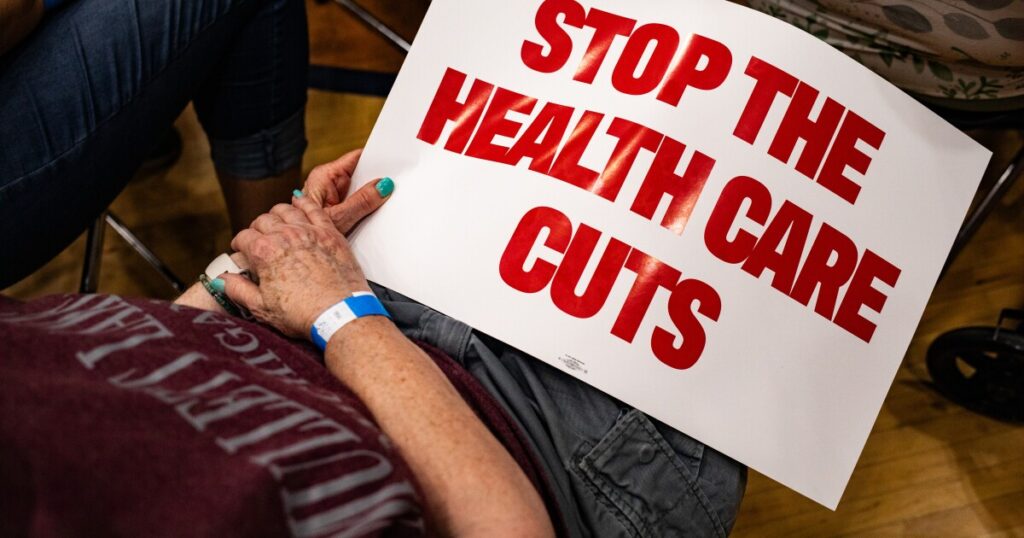
Republican advocates view this policy as a method to eliminate “freeloaders” from the system, while Democrats argue it undermines a program credited with saving 27,000 lives since the Affordable Care Act’s inception. The effect on coverage varies by state, influenced by local implementation and system efficiency.
A Complex Implementation Task
Michigan’s Medicaid expansion, driven by then-Governor Rick Snyder, initially aimed to reduce uninsured rates and improve economic health. However, work requirements emerged as a compromise to address opposition within Snyder’s party.
The expansion was successful in terms of enrollment, but by 2019, Michigan’s Medicaid costs escalated, raising concerns among fiscal conservatives like Jarrett Skorup from the Mackinac Center for Public Policy.
Snyder’s 2018 legislation set the stage for work requirements, leaving Governor Gretchen Whitmer’s administration to implement them. Gordon, wary of replicating Arkansas’ 2018 experience, where work requirements led to 18,000 coverage losses, aimed to mitigate potential fallout.
Striving for Effective Execution
Efforts were made to ease compliance, such as cross-referencing employment data and utilizing other assistance programs for eligibility verification. Despite these measures, by March 2020, around 80,000 individuals had not reported their work status, risking coverage loss.
However, before significant disenrollment occurred, a federal court blocked Michigan’s work requirements, rendering the extensive implementation efforts moot. Gordon later expressed that the millions spent on the process were essentially wasted.
The abrupt halt to Michigan’s work requirements coincided with the onset of the COVID-19 pandemic, allowing those at risk of losing coverage to retain their Medicaid benefits as the health crisis unfolded.
This story is part of NPR’s collaboration with Michigan Public and KFF Health News.
—
Read More Michigan News