This story is being published in partnership with MindSite News, a national news organization that reports on mental health and sends out a daily newsletter available here.
In 1984, Don Rakow, a graduate student at Cornell University, sought refuge in campus gardens during tough times. “They were my sanctuaries—those gardens were essential for me to maintain balance and to survive,” he says.
Decades later, as a Cornell professor, Rakow saw an opportunity to use green spaces to aid students facing mental health challenges. Discussing solutions with faculty, he proposed the campus itself as a resource, drawing from his own experiences. This led to the creation of NatureRx, a pioneering program encouraging students to engage with nature for health benefits.
NatureRx, co-founded by Rakow, operates as a student club and collaborates with Cornell Health for nature prescribing. This approach integrates nature activities into students’ health plans, monitored by on-campus physicians. Dr. Jonathan Keffer explains, “This is actually physiologically proven medical treatment,” emphasizing nature’s healing effects on stress, anxiety, and depression.
Cornell’s NatureRx is part of the social prescribing movement, which began in the UK in the 1980s. It involves referring patients to non-medical, community-based activities like nature, art, or service. Social prescribing boosts health and reduces healthcare costs, with similar initiatives emerging in U.S. universities like Michigan, California, New York, and Arizona.
Rakow, now retired, co-directs the Campus Nature Rx Network with Dorothy Ibes from William & Mary, helping universities establish their own programs. Funded by the REI Cooperative Action Fund, the network provides free resources to member schools. About 120 colleges have joined, reflecting a growing awareness of the need for diverse student well-being tools.
‘I feel lighter’
U.S. colleges began providing mental health services in 1910, with the demand for such services far exceeding campuses’ capacities by the late 20th century. Between 2009 and 2015, counseling service use outpaced student enrollment growth. A study found depression rose by 135% and anxiety by 110% from 2013 to 2021. In response, Cornell expanded mental health initiatives, including NatureRx, to address student well-being after a series of suicides in the 2010s.
Rakow emphasizes that nature isn’t a substitute for counseling or medication but complements other student well-being approaches. Research supports nature’s role in reducing anxiety and depression symptoms. A Cornell-led study found mental health benefits can begin after just 10 minutes outdoors.
Nature’s stress-reducing effects are crucial at Cornell, where academic pressures and sociopolitical concerns weigh heavily on students. Health professionals at Cornell Health introduce NatureRx to students experiencing anxiety, depression, or stress-related symptoms. Physicians like Dr. Kent Bullis carefully discuss the nature prescription, ensuring students feel their symptoms are taken seriously.
Dr. Keffer medicalizes nature’s benefits, explaining how it calms the nervous system. The process involves doctors checking a box in health records, encouraging students to create their own nature prescription. Options range from joining nature excursions to studying outdoors. Emily Dunuwila, Cornell’s NatureRx coordinator, helps students make personalized nature plans.
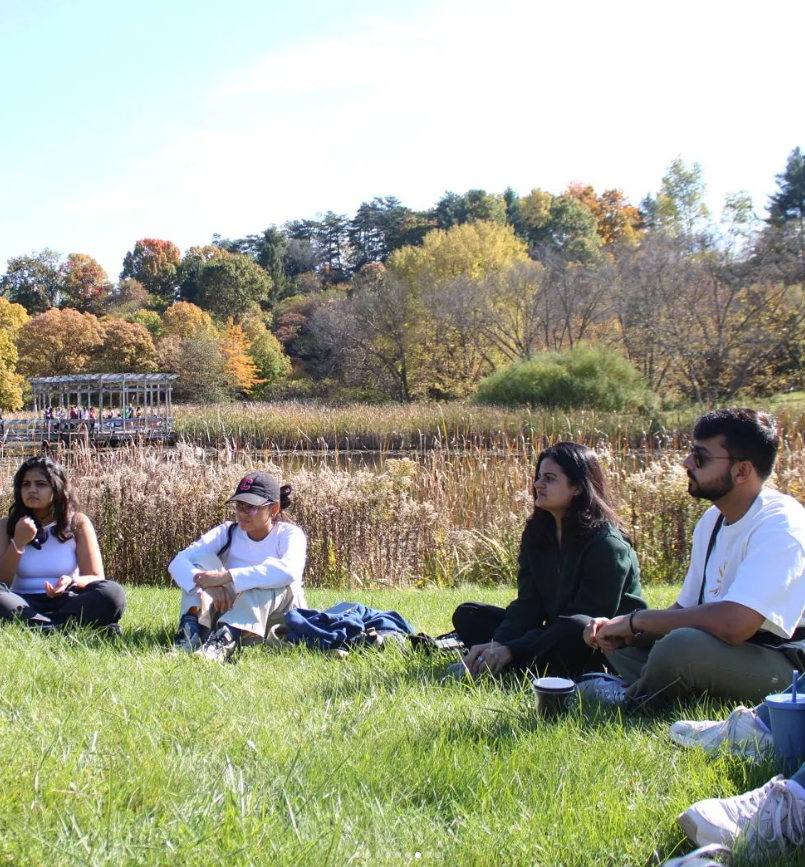
The NatureRx club, an undergraduate-run group, offers activities like crafting sessions, bingo walks, and discussions on climate anxiety. Student-led Big Red Barn Guided Nature Walks occur weekly, led by Sofia Mattson, who encourages students to engage with nature using all five senses. Participants often express feeling rejuvenated post-walk.
‘All of my worries disappear’
NatureRx remains flexible, allowing students to integrate nature into their schedules. In 2024-2025, over 2,200 Cornell students received nature prescriptions, with 88% reporting mood improvements and 85% feeling less stressed. While survey responses were limited, physicians observed significant clinical improvements in students’ mental health and productivity.
Dr. Keffer notes that nature also aids academic performance by reducing procrastination. NatureRx club co-president Arianna Sprenger recalls a student saying, “I feel so much lighter” after a nature walk. Sofia Mattson shares a student’s realization, “This is the first time I’ve actually touched grass,” highlighting the program’s impact.
Outside Cornell, other universities are developing social prescribing programs as student mental health needs rise. According to the Healthy Minds Study, 37% of students report moderate to severe depressive symptoms. Universities like Arizona and Stanford partner with SocialRx to connect students with community activities. Stanford’s program shows promising results, with 84% attending activities and 80% reporting improved mental health.
Despite ample social activities, students still report loneliness. At Michigan, a survey found time constraints and social anxiety deterred participation. Michigan’s Experience Rx and research initiatives aim to address these issues. Lisa Abia-Smith at Oregon and David Hollander at NYU lead courses on social prescribing’s benefits, encouraging students to design and promote programs like HoopsRx.
Ani Minic, a student at NYU, reflects on her revelation that sports fields are her “happy place,” where “all of my worries disappear.” Programs like HoopsRx and NatureRx are integral to addressing student mental health, offering personalized, impactful solutions to alleviate stress and foster well-being.
—
Read More Kitchen Table News