Article Summary –
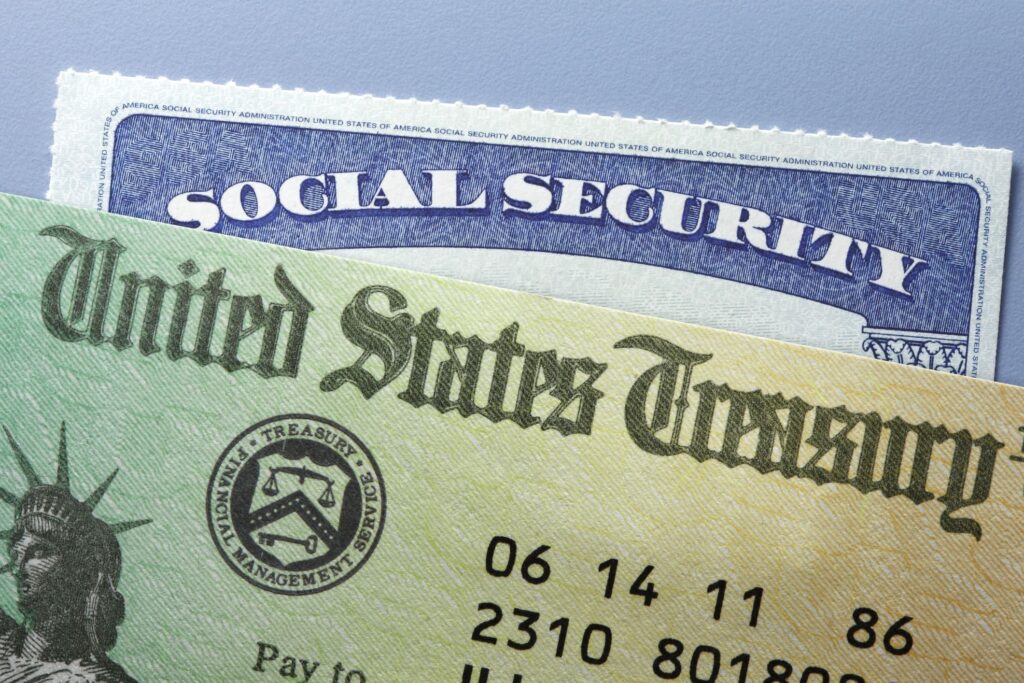
The Committee for a Responsible Federal Budget (CRFB) report highlights a potential 24% cut in Social Security benefits by 2032, impacting nearly two million Michiganders due to the Social Security Old-Age and Survivors Insurance trust fund’s looming insolvency. Despite longstanding awareness of the program’s funding issues exacerbated by tax cuts in the One Big Beautiful Bill Act, Congress has yet to implement changes, prompting calls from organizations like AARP and legislators for immediate action. The economic strain from potential benefit cuts is compounded by rising living costs in Michigan, with 40% of residents already struggling to afford essentials, further stressing retirees who often rely solely on Social Security for income.
Almost 20% of Michigan’s population could face cuts to their Social Security benefits in the next six years if Congress doesn’t tackle the program’s depleting funds, according to a report from the Committee for a Responsible Federal Budget (CRFB), a nonpartisan nonprofit focused on fiscal policy.
The June report, “No State Spared: Mapping the Impact of Social Security’s Insolvency,” highlights Michigan as one of the hardest-hit states if Congress fails to address insolvency. The Social Security Board of Trustees reported that the trust fund, supporting over 62 million Americans, might deplete by 2032.
By law, this depletion would result in a 24% benefit cut, translating to a $523 monthly reduction for Michiganders, affecting over two million residents, the CRFB notes.
The report cautions that no state is immune to these potentially severe consequences. With insolvency approaching in less than seven years, urgent policy changes are necessary.
Policymakers have long known Social Security was underfunded, but insolvency is now more imminent, partly due to the One Big Beautiful Bill Act, signed by President Trump in July 2025. This law’s tax cuts reduced taxes on benefits, exacerbating the issue.
AARP CEO Myechia Minter-Jordan emphasized, “Congress needs to act,” in her statement, highlighting that Americans who have contributed to Social Security deserve reliability upon retirement.
Following the board’s report, U.S. Reps. Thomas Suozzi and Tom Cole proposed the Bipartisan Social Security Commission Act to develop solutions for long-term solvency.
Cheryl Streberger, a retired nurse from Grand Blanc and part of the Michigan State Employee Retirees Association, stressed that Social Security cuts would devastate retirees who rely solely on these benefits. She explains that such cuts could erase her financial safety net.
As Social Security cuts loom, 40% of Michiganders struggle to meet basic needs, like food and housing, according to an August report from the University of Michigan. Rising costs during Trump’s second term have increased average household spending by $3,400, further tightening budgets.
Streberger highlights the difficulty of affording groceries and transportation, underlining the harsh reality retirees face. “It’s downright torturous and cruel,” she expressed, reflecting the growing anxiety over potential benefit cuts.
—
Read More Michigan News


![Botched Ad Mix-Up: Super PAC Error in Arizona Congressional Race[embed]https://www.youtube.com/watch?v=bEMgIlCkHz0[/embed]](https://www.kitchentablenews.org/wp-content/uploads/2026/10/Botched-Ad-Mix-Up-Super-PAC-Error-in-Arizona-Congressional-RaceembedhttpswwwyoutubecomwatchvbEMgIlCkHz0embed.com2F0e2F962Fe971102f49e7a4f2a64fd3cc60a22Fjonatha.png "Botched Ad Mix-Up: Super PAC Error in Arizona Congressional Race[embed]https://www.youtube.com/watch?v=bEMgIlCkHz0[/embed]")