Innovative Program in Flint Drastically Reduces Neonatal Mortality Rates
In Flint, Michigan, a groundbreaking initiative known as Rx Kids has been credited with significantly reducing neonatal mortality rates, cutting them in half since its inception. This program, which provides financial assistance to expectant mothers and continues support through the first year of the child’s life, is making waves in public health circles.
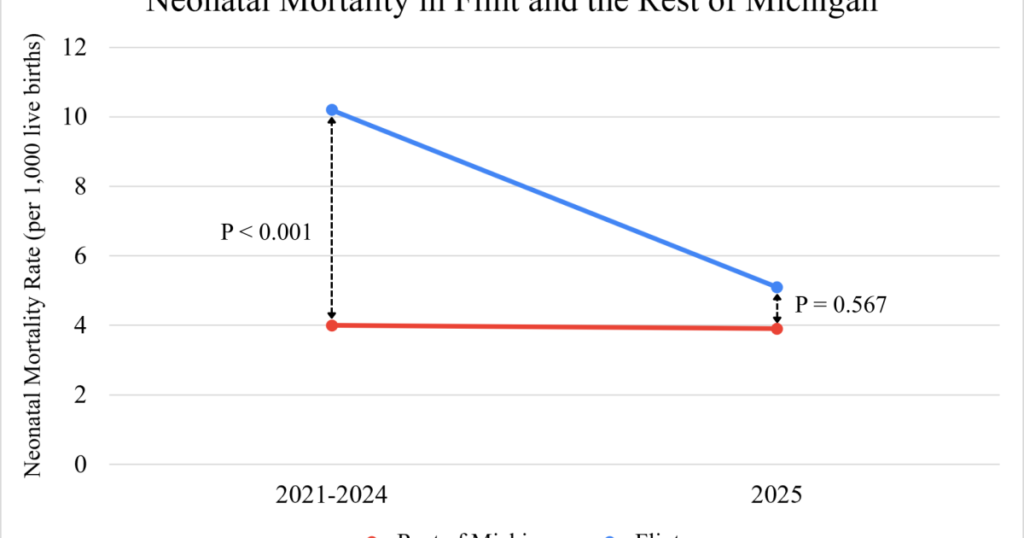
Before the program was launched in 2024, Flint faced a neonatal mortality rate of 10 per 1,000 live births, starkly higher than Michigan’s statewide rate of four per 1,000. By 2025, Flint’s neonatal death rate plummeted to 5.1 per 1,000, while the state rate remained at 3.9 per 1,000.
Dr. Mona Hanna, the director of Rx Kids and associate dean of public health at Michigan State University College of Human Medicine, stated, “These findings suggest that this pro-family, prevention-driven program may be helping more babies survive their earliest days.”
The success of Rx Kids is further underscored by data revealing improved health outcomes for both mothers and infants. Participants in the program experienced an estimated 18% reduction in preterm births, a 27% drop in low birth weight incidents, and a 29% decrease in neonatal intensive care unit admissions.
Since its inception in Flint, Rx Kids has expanded its reach across Michigan, including in Detroit and the Upper Peninsula. Despite its success, the program has faced criticism from some Republican lawmakers concerned about the unrestricted nature of the cash stipends provided to new parents.
During a recent legislative committee hearing, questions were raised about the potential misuse of funds, with some legislators suggesting that the initial $1,500 stipend could be used for abortions, while the monthly stipend might go towards non-essential items like alcohol and cannabis. In response, Dr. Hanna emphasized that their studies indicate most families are using the funds for essential baby needs such as diapers and infant supplies.
As Rx Kids continues to expand, so does the financial commitment from the state, reflected in the increased budget allocation. This program represents a promising step forward in addressing infant health disparities and supporting families in Michigan.
—
Read More Michigan News




![Botched Ad Mix-Up: Super PAC Error in Arizona Congressional Race[embed]https://www.youtube.com/watch?v=bEMgIlCkHz0[/embed]](https://www.kitchentablenews.org/wp-content/uploads/2026/10/Botched-Ad-Mix-Up-Super-PAC-Error-in-Arizona-Congressional-RaceembedhttpswwwyoutubecomwatchvbEMgIlCkHz0embed.com2F0e2F962Fe971102f49e7a4f2a64fd3cc60a22Fjonatha.png "Botched Ad Mix-Up: Super PAC Error in Arizona Congressional Race[embed]https://www.youtube.com/watch?v=bEMgIlCkHz0[/embed]")