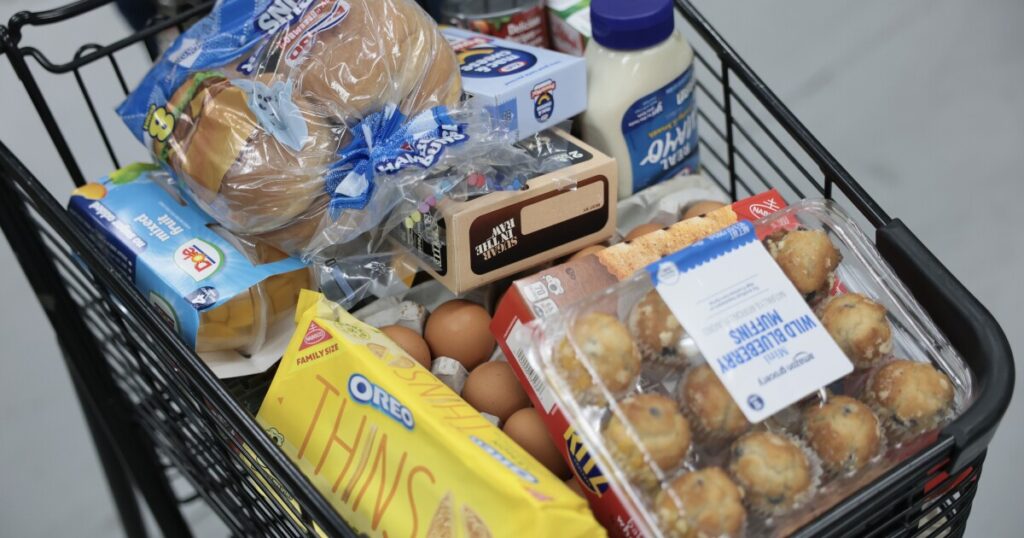
Amid sweeping reforms, the largest food assistance initiative in the United States is experiencing significant participation changes. Since last July, over 4 million individuals — many of them children — have reportedly lost access to crucial food support before the most substantial modifications even take effect.
The Supplemental Nutrition Assistance Program (SNAP), commonly referred to as food stamps, has witnessed a steady decline in beneficiaries following the implementation of a major Republican tax and spending reform. The One Big Beautiful Bill Act, enacted last July, introduced extensive modifications to SNAP. The White House described the program as “bloated,” emphasizing its shortcomings in providing temporary aid during challenging times. Read more from the White House.
Starsky Wilson, President of the Children’s Defense Fund, expressed alarm over the rapid impact of the legislation. “We’re upset about how quickly this has happened,” Wilson remarked. He further noted the potential for heightened desperation among families by year’s end, as more support measures are phased out.
Adjustments to SNAP’s eligibility criteria are already underway, with a major overhaul of its funding model set for October. States will soon be required to bear millions in additional expenses to sustain the program. Food policy specialists caution that these financial pressures might compel states to reduce or eliminate their participation in SNAP. In such cases, food banks and other government programs would be insufficient to bridge the gap, Wilson stated.
Changes in Eligibility
The One Big Beautiful Bill Act mandates that more adults demonstrate at least 80 hours per month of work or volunteer activities to qualify for food benefits. These work requirements now extend to veterans, homeless individuals, young adults exiting foster care, parents of teenagers, and those aged 55 to 64.
According to the Congressional Budget Office, these work requirement changes alone are anticipated to reduce SNAP participation by 2.4 million individuals monthly over the 2025-2034 period.
The tax reform also curtailed food stamp eligibility for specific immigrant groups. Although the majority of recipients are native-born or naturalized citizens, a small segment comprises noncitizens. Members of this group, including refugees, asylum seekers, and victims of domestic violence or trafficking, have been excluded from federal food aid. Federal data details these changes.
The Current Fallout
In the previous year, approximately 42 million Americans relied on food stamps monthly. As of April, this number has decreased to 37 million, based on preliminary data from the Agriculture Department.
Nationally, SNAP participation has dropped by 11% from July to April, according to data from the Center on Budget and Policy Priorities (CBPP). Arizona, in particular, has seen a drastic reduction, with SNAP enrollment halving from the previous year, resulting in over 400,000 fewer participants. The Arizona Food Bank Network reports that for the first time, more state residents are visiting food banks than receiving food stamps.
Natalie Jayroe, CEO of the Community Food Bank of Southern Arizona, remarked, “We think of ourselves as the canary in the coal mine. We are showing the rest of the country a really scary scenario.”
Besides Arizona, Louisiana, Florida, and Oklahoma have also experienced significant declines. CBPP’s review of 19 states indicates that over 1 million children have lost food benefits in those states alone since last July. Learn more about the impact on children.
What’s Driving the Decline
In a statement to NPR, the Agriculture Department indicated that SNAP participation numbers typically fluctuate and the recent decline isn’t attributed to a single policy. In late April, Agriculture Secretary Brooke Rollins suggested that the trend might reflect positive economic changes. “A lot of it is people taking the program that shouldn’t have been, and then a lot of it is just a better economy,” she said on Fox Business.
However, Katie Bergh, a senior policy analyst at CBPP, challenges this interpretation, noting that while unemployment remained stable, food costs have surged. “What that’s telling us is that this is not happening because fewer people need help affording groceries. It’s the result of these policy changes,” she said.
Bergh emphasizes that many state agencies face staff shortages and paperwork backlogs, complicating efforts to avoid errors on food aid applications and meet new federal standards. “People are calling and calling, and they can’t get through to anyone,” she explained. “Or they’re being asked for more and more documentation of every aspect of their lives, and maybe they don’t have a way to document everything.”
This aligns with findings from an Urban Institute and APHSA survey, where 15 of 39 states reported prioritizing payment accuracy over timely benefits.
More Drastic Changes to Come
Another key change stemming from the tax reform is the impending financial burden on states.
Historically, the federal government and states equally shared administrative costs. However, starting in October, the federal contribution will drop to 25%, leaving states to cover 75% of operational expenses.
By October 2027, states will also be responsible for a portion of food benefit costs if their error rate — indicating overpayments or underpayments — exceeds 6%. According to the CBPP, nearly half of the states could face penalties of $100 million or more due to high error rates.
The Agriculture Department reported that improper payments amounted to $10 billion last year. It’s important to note, as CBPP’s Bergh explains, that these errors often stem from unintentional mistakes by state workers or recipients.
SNAP experts contend that reducing these error rates takes time, prompting some local officials to advocate for delaying the new penalties. Read more about local officials’ efforts.
According to the Georgetown Center on Poverty and Inequality, these changes may compel states to increase their SNAP spending by two to three times, potentially leading to higher taxes or cuts in other state budget areas. In the same Urban Institute and APHSA survey, 29% of states indicated the possibility of further narrowing food assistance eligibility, while 11% considered suspending or withdrawing from the program if costs become unmanageable.
Lexie Kuznick, Director of Policy and Government Relations for APHSA, commented, “There’s really an existential crisis in the future of SNAP.”
Changes to SNAP affect not only low-income families but also have ripple effects on food banks and grocery stores. The National Grocers Association predicts that the reduction in households receiving food aid will lead to a nearly $88 billion decrease in grocery sales nationwide through 2034. Learn more about the economic impact.
“Groceries are a significant cost in the lives of low-income families, and it truly is a lifeline for them to be able to meet their family’s needs,” Kuznick explained. “We also know how critical the benefits are for entire communities.”
—
Read More Michigan News

![Jody White’s Unconventional Michigan Supreme Court Candidacy Explored[embed]https://www.youtube.com/watch?v=8NfxFIPE4ac[/embed]](https://www.kitchentablenews.org/wp-content/uploads/2026/10/Jody-Whites-Unconventional-Michigan-Supreme-Court-Candidacy-Exploredembedhttpswwwyoutubecomwatchv8NfxFIPE4acembed.com2F842F0e2Fc7223daa43c9876b36a4e00773a42Fme-supc.png "Jody White’s Unconventional Michigan Supreme Court Candidacy Explored[embed]https://www.youtube.com/watch?v=8NfxFIPE4ac[/embed]")