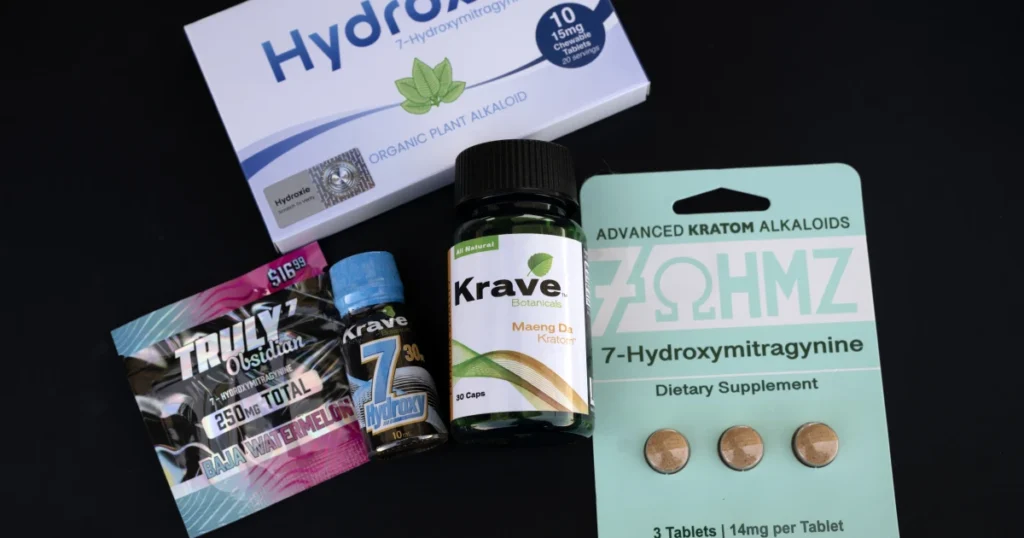
Amidst the complex landscape of addiction recovery, some individuals have turned to alternative substances like kratom to manage withdrawal symptoms. Tyler, who began using opioids in his early 20s, credits kratom with helping him stay opioid-free for a decade. Yet, new challenges have emerged with the introduction of highly concentrated kratom products like 7-OH.
Tyler, now in his late 30s, shared his story with NPR, expressing that kratom was instrumental in his recovery journey. However, the emergence of 7-OH products, advertised as a variant of kratom, presented a new set of hurdles. Initially drawn to 7-OH due to its euphoric effects and less harsh impact on the stomach compared to kratom powders, Tyler eventually found himself in a detox program to manage withdrawal symptoms from 7-OH.
Emerging Trends and Concerns
Products containing 7-OH, a potent compound found in kratom, have become widespread in various retail outlets. This compound, which acts like an opioid in the brain, is available in forms such as tablets and gummies. However, the lack of clear labeling makes it difficult for users to understand the potency and dosage, leading to potential addiction risks.
Tyler admitted, “I did not know at all what I was in for. It was much more potent than I had imagined.” His experience reflects concerns shared by researchers and policymakers about addiction signs among 7-OH users.
Regulatory Challenges and Federal Actions
The U.S. has faced difficulties in regulating kratom and its derivatives, including 7-OH. Despite attempts to impose restrictions, public opposition has kept these substances legal at the federal level. However, a potential federal crackdown on certain 7-OH products is forthcoming, following recent decisions by the DEA to restrict compounds like MGM-15 and MGPI under the Controlled Substances Act.
The American Kratom Association has actively opposed these measures, filing a lawsuit to ensure natural kratom products with trace amounts of regulated compounds remain legal. The DEA is now focusing on products with higher concentrations of 7-OH and MGPI, leaving traditional kratom largely unaffected.
The Impact and Potential Benefits
While some users report addiction and withdrawal challenges, others like Angela Wilson find 7-OH beneficial for managing chronic pain and mental health symptoms. Wilson, who uses 7-OH to deal with endometriosis pain and depression, describes the substance as “life-changing.”
Despite the benefits reported by some, experts like David Epstein from NIDA emphasize the addiction risks associated with 7-OH. His research indicates that dependency on 7-OH might be higher compared to whole leaf kratom, with some users experiencing severe withdrawal symptoms.
Future Research and Public Health Implications
Researchers advocate for further studies to explore the therapeutic potential of kratom and 7-OH in treating addiction. NIDA’s website acknowledges the need for continued research into these substances as possible treatments for substance use disorders.
However, current marketing practices raise questions about the target audience for kratom products. Chris Holstege, a physician and professor, notes the prevalence of kratom shops near college campuses, suggesting a broader appeal beyond those recovering from opioid addiction.
As the federal government considers new regulations, individuals like Tyler and Brian, another former kratom user, navigate the challenges of recovery and the consequences of using 7-OH. Tyler’s journey to overcome 7-OH addiction highlights the substance’s accessibility and addictive nature, as he states, “It’s just too addictive and too accessible.”
—
Read More Michigan News