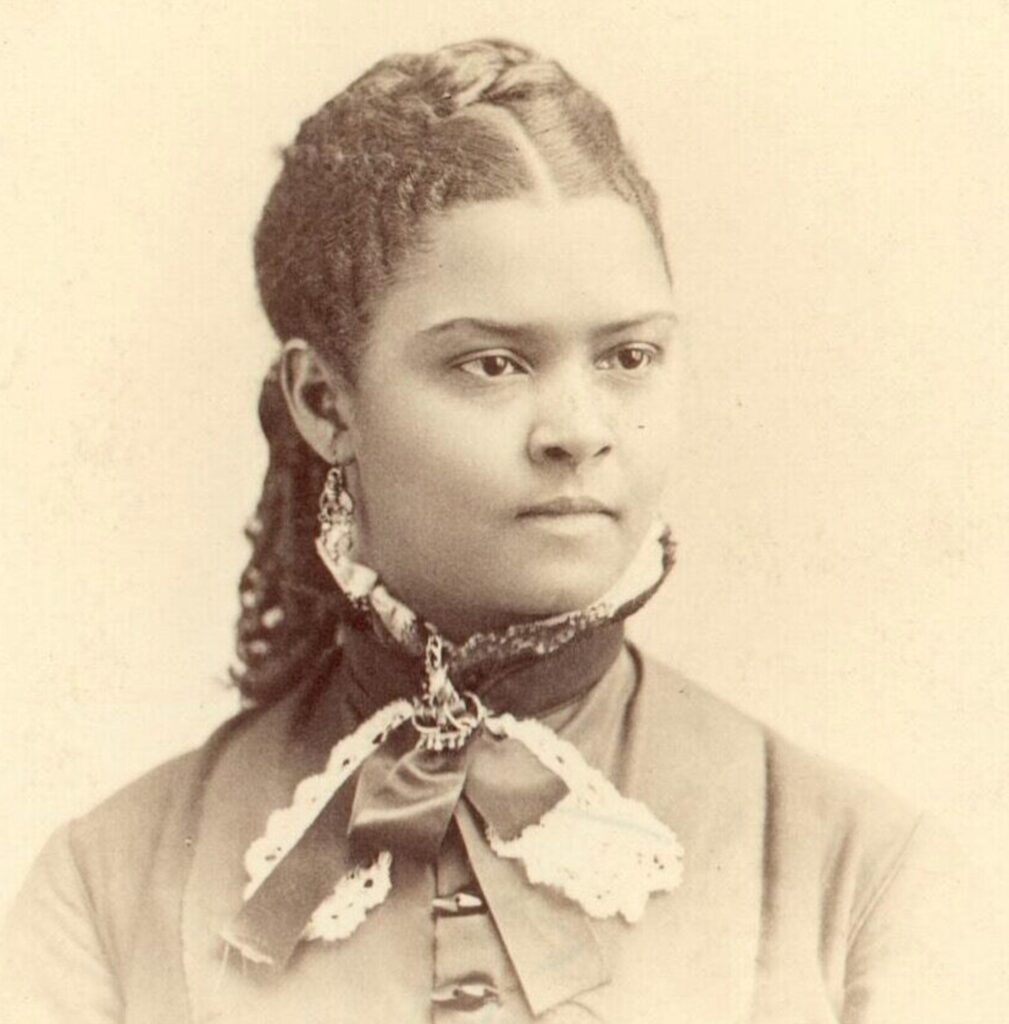
In the spring of 1880, a 22-year-old student was nearing graduation at the University of Michigan (U-M). Focusing on Latin and science, she was fluent in German and French, aiming for a journalism career. Mary “Mollie” Henrietta Graham was the first Black woman admitted to U-M, on the cusp of earning her degree.

Born in 1857 in Windsor, Ontario, Graham was the daughter of Sarah, a white Englishwoman, and Levi, a Black man from Illinois. Her father co-owned a grocery store in Windsor, while her mother raised their children. Graham was the second of at least four children, moving to Flint likely as a teenager. She graduated from Flint High School in 1876, then planned to attend U-M.
At the time, Black students were rare at U-M, an all-white, all-male campus, just beginning to diversify in the late 1860s. Fewer than 50 Black students had graduated from American colleges before 1865. The Reconstruction era saw the rise of Black colleges like Fisk and Howard. Nearby, Oberlin College and Wilberforce University had been educating Black students since the 1850s.
Graham, like other graduates from certified Michigan high schools, qualified for automatic admission to U-M. Her enrollment papers were signed by U-M President James Burrill Angell on Sept. 21, 1876. Little is known about her student life, but records note she was 5 feet tall, with braided dark hair, often adorned with earrings.
Living in Ann Arbor with her mother and sisters, Graham had no on-campus housing and joined no student organizations open to women. She might have kept a low profile as the sole Black woman in her classes. Despite this, Graham excelled academically, earning her Bachelor of Philosophy in 1880. The Ann Arbor Courier lauded her perseverance and intellect.

After graduation, Graham became a teacher at Missouri’s Lincoln Institute, a college for Black students founded post-Civil War. Within a year, she was promoted to matron, overseeing 60 young women. Two years later, she returned to Ann Arbor to marry Ferdinand L. Barnett Jr., a politically active Chicago lawyer and newspaper founder.
Graham Barnett immersed herself in Chicago’s Black elite, engaging in cultural and community activities. She joined the choir and taught Sunday school at St. Thomas Episcopal Church and participated in the Prudence Crandall Club. As a mother, she worked at her husband’s newspaper, progressing to editor in chief by 1888.
Graham Barnett’s promising life ended abruptly in 1889, likely due to heart disease, leaving behind her husband and two young sons. Her sudden death at 31 shocked her community, which remembered her as a woman of integrity and promise, praised for her scholarly and social contributions.
—
Read More Michigan News