Lafayette Park’s Future Under Debate as Trump’s Administration Proposes Permanent Fencing
In the heart of Washington, D.C., the Trump administration’s plan to enclose Lafayette Park with permanent fencing has ignited concerns about accessibility and protest rights. The historic seven-acre park, located north of the White House, has long been a focal point for demonstrations and tourist activity.
On a recent Tuesday, under the summer sun, a group of protesters gathered outside the temporarily fenced park to voice their opposition to the administration’s immigration policies, following two deadly shootings. Protesters like Donna Powell, who frequently visits the park with her handmade signs, expressed concern about the potential permanent barriers.
“The White House is the spot that everybody likes to stop at,” Powell said, emphasizing the symbolic importance of protesting near the President’s residence. Despite the temporary chain-link fencing, Powell remains undeterred, stating, “A permanent fence wouldn’t deter us.”
The National Park Service initially closed much of Lafayette Park for landscaping ahead of the nation’s 250th anniversary, but the fences remained past the July 4th deadline, sparking rumors of a permanent closure. Marty Pearl, a frequent protester, voiced frustration, saying, “Unless your calendar is way out of date, July 4th is gone, and this is still sealed off.”
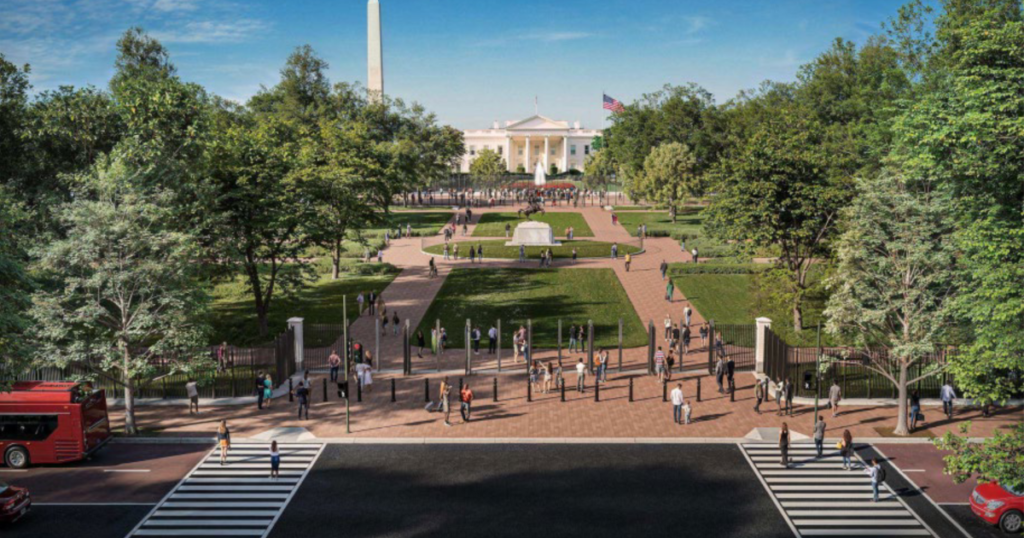
The Trump administration’s 79-page proposal to the Commission of Fine Arts outlines plans for permanent fencing that can be closed during “heightened conditions.” However, details about the gates and specific closure scenarios remain vague. The proposal suggests phased implementation beginning in 2027, dependent on funding availability.
The White House issued a statement recognizing ongoing discussions about safety but noted, “nothing is confirmed at this time.”
The Historic Role of Lafayette Park in Protests
Lafayette Park has served as a backdrop for a wide range of protests for more than a century, from suffragists in 1917 to civil rights rallies in the 1960s. Nadine Seiler, a Maryland-based activist, described the park as “ground zero for protests” and emphasized its symbolic representation of freedom.
Past protests have included anti-lynching demonstrations, gay rights rallies, and anti-Vietnam War protests. The park also hosted quieter protests, like the White House Peace Vigil, which was dismantled last year under Trump’s orders.
Seiler noted that Trump’s actions have already “eroded the people coming out and using the White House, Lafayette Park as a place of protest.” During the Black Lives Matter demonstrations in June 2020, authorities used force to clear protesters from the park, prompting backlash and leading to the establishment of “Black Lives Matter Plaza” by Mayor Muriel Bowser.
Procedural and Legislative Challenges
Congresswoman Eleanor Holmes Norton recently introduced a bill to prohibit permanent fencing at Lafayette Park, emphasizing its importance for public demonstrations. However, the bill faces challenges in the Republican-controlled House.
Before any changes can be implemented, the proposal must undergo reviews by the Commission of Fine Arts and the National Capital Planning Commission, both led by Trump appointees. Additionally, the National Historic Preservation Act requires a Section 106 review to consider the impact on historic sites.
Charles Birnbaum, president of The Cultural Landscape Foundation, criticized the lack of engagement with stakeholders, stating, “If they were earnest about truly engaging the consulting parties, that would have started already.”
The Commission of Fine Arts reviewed the fencing proposal, with Vice Chair James McCrery II noting, “This is definitely the President’s Park, but also the people’s park, and it’s to be made open but also closable so that it can be made safe.”
As discussions continue, the proposal’s implications for protest rights and public access remain a point of contention, underscoring the park’s historical significance as a venue for First Amendment activities.
—
Read More Michigan News