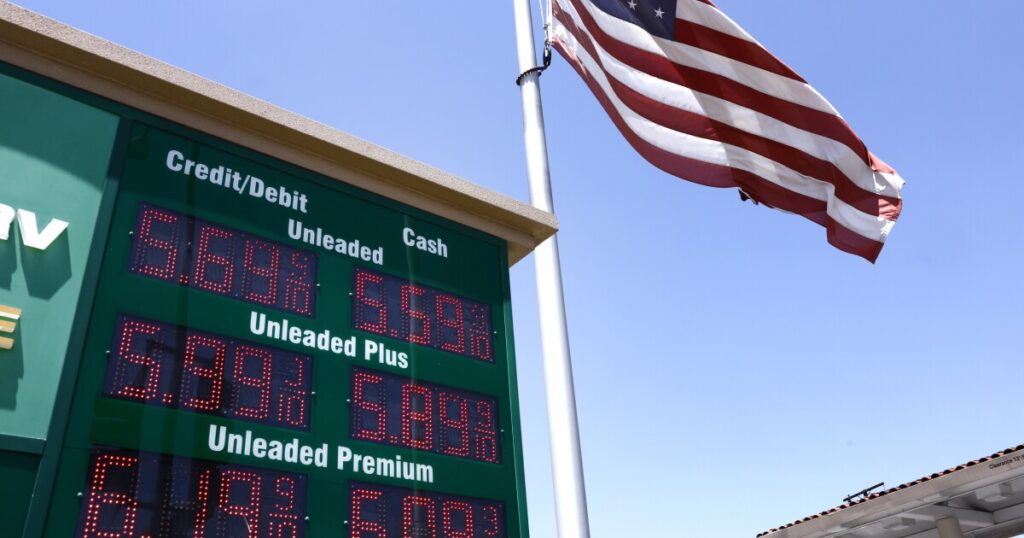
Amid escalating gasoline prices, President Trump has proposed a temporary suspension of the federal gas tax, a measure aimed at alleviating financial pressure on motorists. The tax, which currently stands at 18.4 cents per gallon, is one component of a larger strategy to mitigate the impact of rising fuel costs due to geopolitical tensions.
Trump’s proposal comes as frustration mounts among voters, with gasoline prices reaching their highest levels in four years. The increase is largely attributed to disruptions in the oil trade caused by the ongoing conflict with Iran. For the gas tax suspension to take effect, congressional approval is necessary, and while several bills have been introduced, the outcome remains uncertain.
Potential Savings for Drivers
If enacted, a federal gas tax holiday could save drivers up to 18.4 cents per gallon, translating to a $2.76 savings on a typical 15-gallon fill-up. However, with the national average gas price now at $4.46 per gallon, this relief would only partially offset the recent surge from prewar levels.
The actual savings at the pump might be even less, as some benefits could be absorbed by refineries and gas stations, especially if the tax holiday is brief. According to Kent Smetters from the Penn Wharton Budget Model, short-term market dynamics might allow suppliers to retain some of the tax savings by slightly increasing prices.
Estimates suggest that consumers would receive 13.2 to 16 cents per gallon in savings. Moreover, a reduction in gas prices could inadvertently boost gasoline demand, potentially exacerbating the supply-demand imbalance and leading to further price hikes.
Impact on Road Maintenance
While a gas tax pause could offer temporary relief at the pump, it would also result in decreased funding for infrastructure. The federal gas tax currently supports the Highway Trust Fund, essential for interstate construction and repair, as well as mass transit investments. State gas taxes similarly finance local road projects.
The Penn Wharton Budget Model calculated that Georgia’s two-month gas tax suspension cost the state approximately $361 million in revenue. This loss of funding poses significant risks to road maintenance and safety, as highlighted by Rob Bhatt from LendingTree. Poorly maintained roads, characterized by potholes and dips, lead to costly vehicle repairs, with AAA estimating $26.5 billion in related expenses nationwide last year.
Challenges with the Current Gas Tax System
The federal gas tax, unchanged since 1993, fails to meet the growing financial needs for highway upkeep, leading to an annual shortfall that Congress must address through general taxpayer funds. Despite potential benefits, raising the gas tax faces political resistance and may not offer a sustainable solution as electric vehicles (EVs) gain popularity, reducing gasoline consumption.
Alternative funding mechanisms, such as EV registration fees, vehicle weight-based charges, and road-user fees, are under consideration. These strategies aim to ensure that all road users contribute fairly to infrastructure maintenance, though privacy concerns and political challenges persist.
While the future of the federal gas tax remains uncertain, the need for a sustainable and equitable funding model for road maintenance is increasingly apparent.
—
Read More Michigan News