
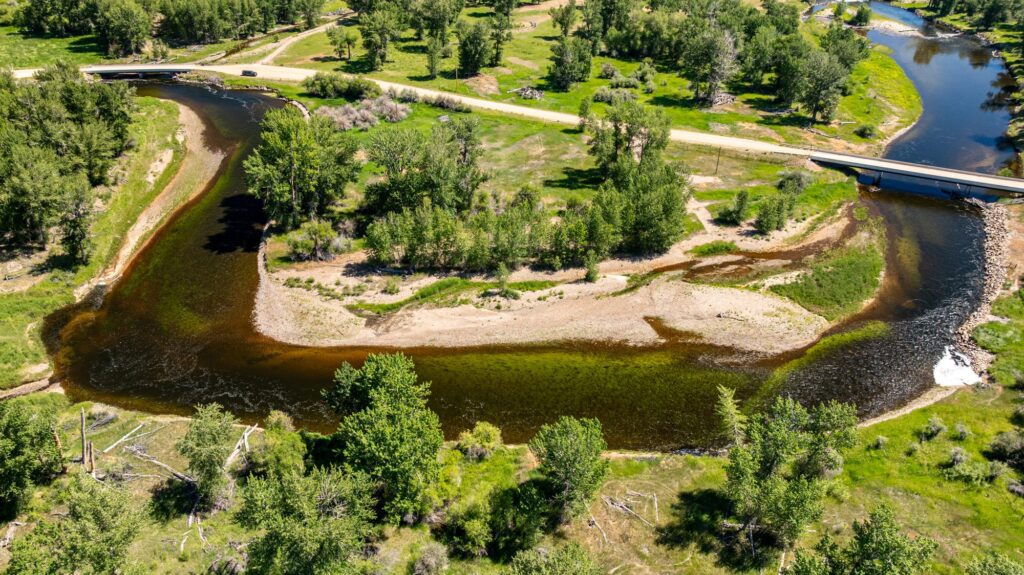
Numerous rivers in western Montana and several within Yellowstone National Park are experiencing restrictions or closures to mitigate fish mortality linked to angling activities. These measures aim to preserve fish populations during critical periods of warm temperatures.
In a recent announcement by Montana Fish, Wildlife and Parks, specific sections of Upper Rock Creek, the Clark Fork River, the Bitterroot River, and the entire Silver Bow Creek are closed after 2 p.m. to safeguard fish during peak heat. The previous day, hoot owl restrictions were imposed on parts of the Ruby, Big Hole, Beaverhead, and Smith rivers, as well as the whole Jefferson River. Notably, the Sun River and the Madison River above Hebgen Lake faced early hoot owl closures, starting on July 2 and June 19, respectively.
FWP enacts hoot owl restrictions when river temperatures reach 73 degrees for three consecutive days. They consider angler pressure and flow-based factors for complete closures. Trout are particularly vulnerable to diseases and other mortalities from late July to late August due to low flows, rising temperatures, and decreased dissolved oxygen. Water temperatures above 77 degrees can be fatal to trout.

On July 11, Yellowstone National Park enforced full fishing closures in specific areas to protect aquatic life. The Madison, Firehole, and Gibbon rivers, along with their tributaries, are now closed to fishing. Park officials may implement further closures if water temperatures rise above 68 degrees.
These actions follow a virtual town hall by FWP about declining streamflows in Montana. Biologists link the decrease to the loss of winter snowpack in May. “As things continue to drop … we’ll continue to work with water users on where we can find conservation measures to keep as much water as we can in the river,” Region 3 Fisheries Manager Mike Duncan said during the event.
Around 20 rivers in western Montana are near record-low flows, including renowned fishing spots like the Big Hole, Blackfoot, Madison, Missouri, and Clark Fork rivers. Some reservoirs are not fully filled, limiting access to boat ramps. The Dearborn River’s flow is at an all-time low according to a 55-year record.

Water levels and fish health are closely tied, as noted by Duncan, who mentioned that suboptimal flows significantly impact trout populations. The FWP’s Current Restrictions and Closures page provides updates on river statuses. Yellowstone National Park updates anglers through their Plan Your Visit webpage.
Approximately one-third of the state is under moderate or severe drought conditions, per the U.S. Drought Monitor. The Governor’s Drought and Water Supply Advisory Committee will address these conditions in its upcoming meeting.
—
Read More Montana News


