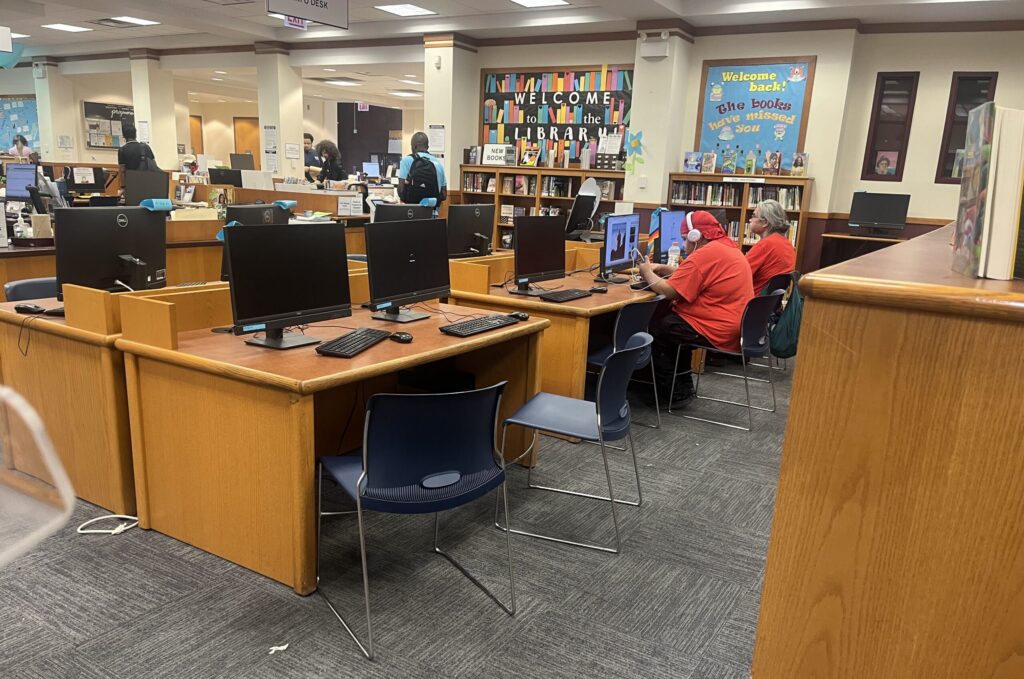
The federal E-Rate program, a critical source of education funding that supports broadband internet in schools and libraries, is under scrutiny by the Trump administration. This $3 billion initiative benefits over 100,000 schools and 11,000 libraries nationwide, serving as the fifth-largest federal funding source for schools, according to the Schools Superintendents Association (AASA). The Federal Communications Commission (FCC) is reviewing the program’s scope, questioning if its original connectivity goals have been met. Public comments are open until Oct. 13, influencing the forthcoming proposal.
With tightened budgets at state and district levels, education officials fear potential changes could impact operations of schools and libraries. The FCC, led by Chairman Brendan Carr, is exploring adjustments to the E-Rate program, aiming to empower parents and enhance educational outcomes. The program currently offers discounts between 20% and 90% on services, favoring disadvantaged institutions. The FCC is considering if these rates need revisions.
The commission is also soliciting feedback on whether E-Rate support should prioritize rural areas, single-provider regions, and whether certain services remain essential. Concerns about students’ screen time are also on the agenda. During a virtual town hall by the Schools Superintendents Association, debates arose over the FCC’s jurisdiction to alter the program and the potential financial strain on schools to maintain internet services without reallocating funds from staffing.
Without sufficient funding, schools and libraries might face increased internet costs and infrastructural challenges, particularly in rural and high-cost areas, AASA warned. Currently, the E-Rate program supports nearly 102,000 schools and 12,000 libraries, with significant participation from states like California, Texas, and New York. LaTonya M. Goffney, superintendent of Aldine Independent School District in Texas, emphasized the financial difficulties her district would face without E-Rate, having received $11 million over five years.
Shawnda Hines from the American Library Association noted that 73% of U.S. public libraries depend on the program for internet services. Established in 1996, when only 14% of classrooms had internet, the FCC can modify the program without Congress but cannot eliminate it entirely without legal challenges. Stacy Hawthorne of EdTech Leaders Alliance highlighted the program’s broader role beyond instruction, supporting essential functions like bus routing and security systems. “It’s not just email and Google Docs,” she stated, illustrating the program’s extensive impact on daily operations.
—
Read More Montana News