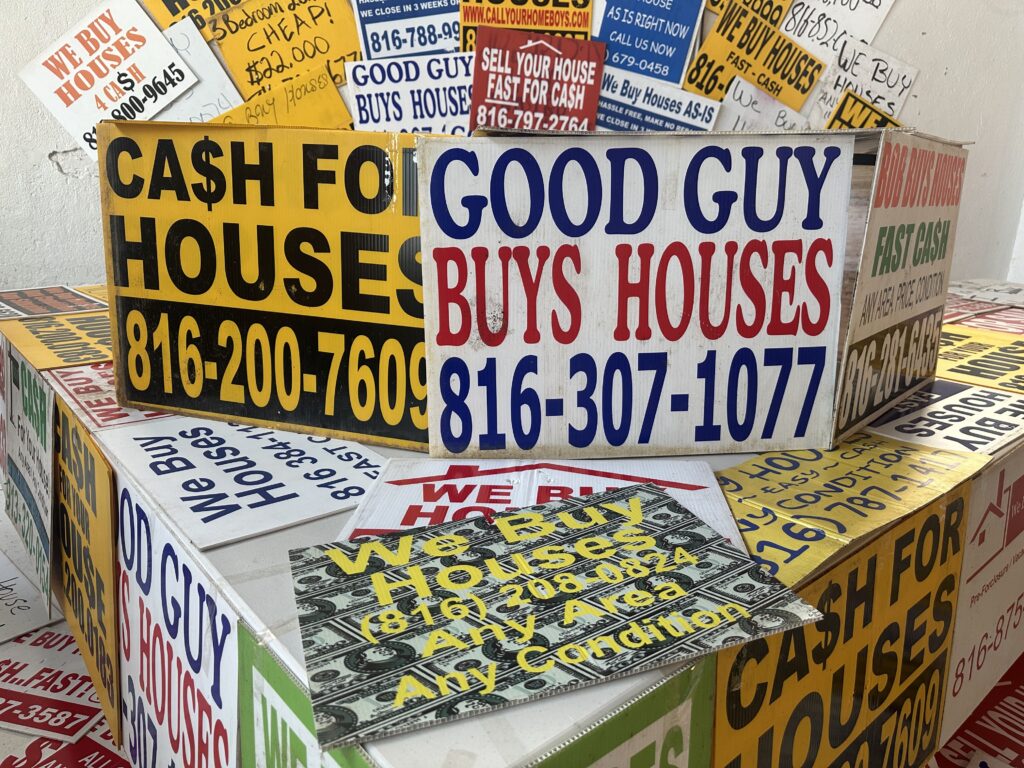
WE BUY HOUSES. CASH 4 HOMES. FA$T CA$H.
The signs, messages, and mailers offer cash, fast sales, and an easy way to sell unwanted homes. Yet, advocates warn that cash home buyers can confuse vulnerable homeowners, robbing them of home equity. Now, numerous states are implementing measures to address this issue.
Wholesalers often reach out directly, seeking sales by phone or door-to-door, but their signs on curbs and poles are more recognizable. Real estate wholesaling differs from traditional markets; it involves securing unlisted homes at a discount, then selling the contract to another buyer before finalizing the transfer. This process can prevent homeowners from gaining the full value of their property.
Lawmakers are concerned about the lack of transparency in the wholesaling process, with many homeowners unsure of who ends up owning their home. At least 15 states have introduced new regulations on wholesalers, including Missouri, which now mandates a 14-day written disclosure before closing. This disclosure informs sellers that offers may be below market value and encourages consulting an attorney before finalizing deals.

Brown, who is married to a real estate agent, emphasizes that the law aims to increase transparency and educate sellers about wholesaler intentions. He notes that vulnerable homeowners are often targeted by wholesalers, leading to significant equity loss.
Critics highlight that wholesalers primarily target minority, low-income, and elderly homeowners. Terrell Walls, president of the Greater Kansas City Association of Real Estate Brokers, equates predatory wholesaling to historical practices like redlining.
New regulations in states like Maryland, Ohio, and Texas require wholesalers to disclose their intentions. Other states, including Illinois and South Carolina, demand real estate licenses for wholesalers, ensuring oversight by state regulators.
‘Stop trying to hide’
Jeff Watson, general counsel for the National Real Estate Investors Association, states that many wholesalers act as real estate agents without licenses. Ethical wholesalers, he notes, provide a valuable service by purchasing distressed homes that agents avoid.
Wholesalers have acknowledged the changing industry landscape. In response to new Oklahoma regulations, investor Jerry Norton highlighted the need for better transparency and explanation of wholesaling benefits to homeowners.
“This is the new way to wholesale. Stop trying to hide what you’re doing,” Norton said, emphasizing the importance of trust and honesty in transactions.
Consumer confusion
The AARP advocates for state legislation requiring wholesaler licensing, appraisals, and marketing limits. Jenn Jones of AARP stresses protecting the wealth of older homeowners and ensuring they make informed decisions.
Jones shares concerns about her mother’s neighborhood, where homes are sold for significantly less than their value. She underscores the importance of understanding transactions to avoid jeopardizing financial security.
Recent legislative measures have been largely bipartisan and faced minimal industry resistance. Rhode Island’s new law, requiring wholesalers to hold real estate licenses, saw little opposition, aiming to bring transparency and accountability to the industry.
Rebekah Wagoner, from the Rhode Island Association of Realtors, emphasizes the need for consumer protection and regulatory oversight in wholesaling transactions.
—
Read More Montana News