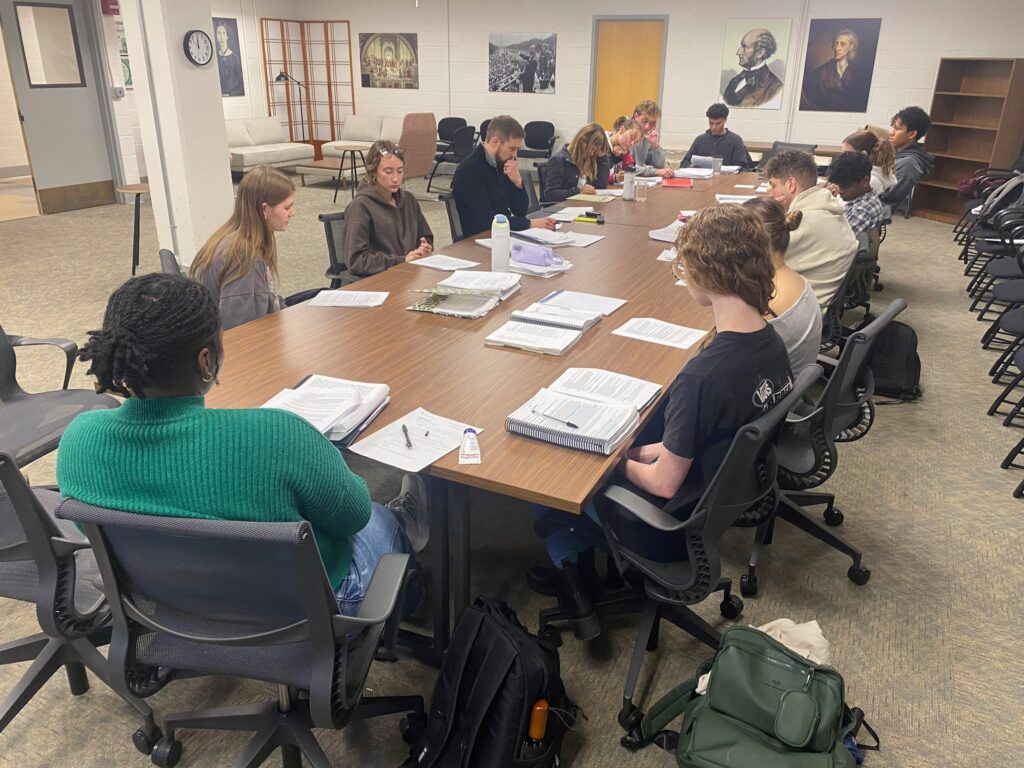
COLUMBUS, Ohio — In August, Ohio State University freshmen received orientation packets featuring a glossy insert offering a $4,000 scholarship. This scholarship covered nearly a third of in-state tuition and required students to enroll in a civics-oriented course and attend extracurricular events. The scholarships were provided by the Salmon P. Chase Center for Civics, Culture, and Society, established by Ohio’s Republican legislature to promote conservative ideologies through newly crafted courses.
Located at Ohio State, the Chase Center boasts 20 faculty members teaching nine courses with a conservative leaning. In 2023, Ohio legislators allocated $24 million to create this center and similar ones across the state, aiming to influence university operations significantly. This strategy aligns with a broader conservative push to promote intellectual diversity on college campuses, particularly targeting liberal students with right-leaning professors.
States such as North Carolina, Florida, and Utah have implemented similar centers, receiving nearly $50 million in taxpayer funding. Additionally, the University of Texas System has earmarked $100 million for the School of Civic Leadership’s building at UT Austin. Ohio’s centers have secured over $8 million in federal grants for civics education, and the Chase Center received a $5 million grant from the National Endowment for the Humanities for further development.
Critics argue these centers politicize faculty hiring and drain resources from existing departments. Proponents claim they restore balance to campuses dominated by left-leaning ideologies. Adam Kissel, a former deputy assistant education secretary, supports legislative intervention to address what he terms “curricular rot” in higher education.
Ohio’s model is part of a national movement backed by the Trump administration, aiming to establish similar centers across universities. This initiative has sparked debates about political influence and academic freedom, with concerns over the diversity of thought and representation among faculty. Some students, like Danielle Fienberg, appreciate the scholarship benefits and open discussions in Chase courses but challenge claims of left-wing indoctrination at Ohio State.
The Chase Center plans to expand its faculty and course offerings, aiming to hire 50 new professors with joint appointments across university departments. Efforts include scholarships, reading groups, and study abroad opportunities to attract diverse students. Critics, however, point out the predominantly white and male faculty makeup, highlighting concerns about resource allocation and long-term funding commitments.
In recent developments, Ohio State’s board of trustees maintains oversight of faculty appointments, including those at the Chase Center. The university emphasizes its commitment to educating for citizenship, aligning with state law. As Ohio’s centers grow, they continue to shape the landscape of higher education, sparking ongoing discussions about intellectual diversity and political influence.
—
Read More Kitchen Table News