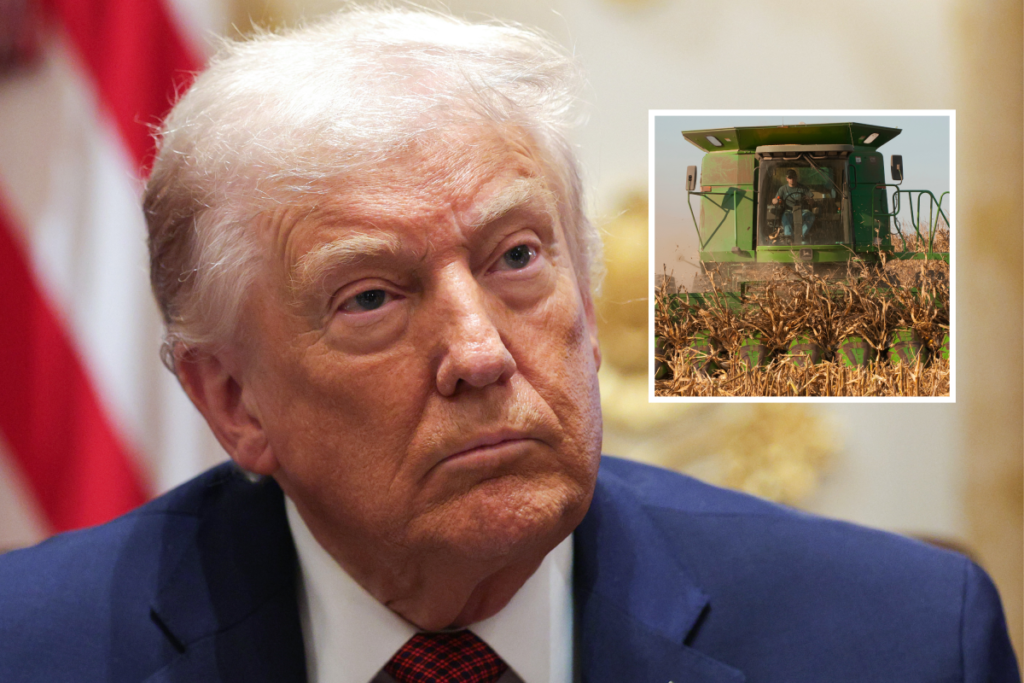
Rural Voter Support for Trump Diminishes Amid Economic Challenges
The support for President Donald Trump from rural Americans, traditionally a stronghold for his administration, has fallen into negative territory according to recent polling data. This shift occurs in a demographic crucial to the Republican electoral base, posing potential ramifications for upcoming midterm elections.
A new Fox News poll indicates a significant 34-point drop in Trump’s net approval among rural voters since early 2025, sliding from +20 to -14. The decrease is nearly as dramatic among rural white voters, showing a decline of 33 points from +27 to -6. Core voter groups, including Trump’s usual Republican base, also demonstrate waning support.
Overall, the poll reveals that just 29 percent of voters approve of Trump’s economic management, while 71 percent disapprove. Among rural Americans specifically, approval and disapproval ratings stand at 30 percent and 70 percent, respectively. Several factors contribute to this dissatisfaction, including a 46 percent surge in farm bankruptcies in 2025, increasing fertilizer and fuel costs driven by international tensions, particularly involving Iran, and controversies such as Chinese farmland ownership stirring unrest in rural areas.
The decline in support highlights deep-rooted economic and political pressures within rural communities. This demographic has historically bolstered Trump’s political campaigns, but recent economic strains have caused this support to wane, potentially affecting voter turnout in crucial battleground states. Shifts in rural voter sentiment could have significant implications in this year’s Senate and House races.
The Fox News poll, conducted from May 15-18 with 1,002 registered voters, highlights this changing dynamic. With a margin of error of ±3 percentage points, the data shows Trump’s overall approval rating at 39 percent, nearing its lowest point, while revealing considerable declines among rural and rural white voters, whose support is now at its lowest recorded level.
Trump’s approval among Republicans has also decreased, reaching its second-term low. Republican pollster Daron Shaw captures this sentiment by noting, “Despite consistently strong GOP support, the president’s numbers are leaking a bit,” attributing it to growing affordability concerns.
Economic challenges are evident, with inflation being a key issue. Only 24 percent approve of Trump’s inflation management, with 76 percent disapproving. Rural areas mirror this sentiment closely (28 percent approval, 71 percent disapproval). Additionally, foreign policy approval is low (38 percent approval nationally), though slightly better among rural voters at 42 percent approval versus 58 percent disapproval.
Pressures on farming communities remain amid rising costs and trade tensions. Farm bankruptcies increased by nearly half in 2025, with the situation worsening in 2026 due to global market disturbances. Speaking to these difficulties, Willis Nelson, a Louisiana farmer, described the financial strain, saying, “We’re not financially able” to maintain usual operations, highlighting input costs as a major challenge.
Trump’s actions regarding Chinese agricultural trades and land ownership further contribute to tension among farmers already grappling with economic challenges. His Beijing trip comments defending Chinese farmland purchases have only added to these anxieties, reflecting in declining polling numbers among this crucial voter bloc.
The White House contests the significance of these polling figures, viewing them as temporary rather than indicative of a lasting trend. Spokesman Kush Desai asserts the resilience of the U.S. economy, emphasizing long-term gains expected from Trump’s policies. Meanwhile, spokesman Davis Ingle points to Trump’s 2024 victory as a testament to his enduring support.
Desai assures that despite current challenges, initiatives on job creation, inflation control, and housing remain a priority, suggesting that the outcomes of Trump’s policies will be more evident over time.