Savion Horn observed images depicting Native American children before and after they attended U.S. government boarding schools. These photos revealed stark transformations, showing the children with traditional attire and long hair, then with cut hair and Western clothing. For Horn, a high school senior from the Citizen Potawatomi Nation, this was a pivotal lesson about the assimilation efforts aimed at Native American children in the 19th and 20th centuries.
Horn learned through the American Indian/Native Studies (AINS) class offered at Grand Prairie High School near Dallas. “They weren’t allowed to speak their own language. They weren’t allowed to represent themselves with their music or art,” Horn shared, reflecting on the emotional impact of the class.
The AINS course, piloted in 2021 within the Grand Prairie school district, was the result of Indigenous parents and educators’ collaborative efforts. Following the success of a Chicano/Mexican American studies class approved in 2015, the Texas board of education called for more ethnic studies classes, leading to the creation of AINS. By 2020, the course was certified as an “innovative course,” allowing other districts to adopt it.
However, by 2025, Texas’s political landscape had shifted. Restrictions on teaching race, ethnicity, and gender were implemented, notably through Senate Bill 3 and SB 12. These laws allowed parents to review educational materials and prohibited programs referencing race, color, ethnicity, or gender identity.
Despite these challenges, advocacy groups like the Ethnic Studies Network of Texas and Native-led nonprofits lobbied for the course’s continuation. Support from four Native nations emphasized the course’s importance in providing a complete picture of tribal histories.
During the Texas education board’s June hearing, the majority of members supported the course, although some raised concerns about its content. After debate, a 9-5 vote renewed the course for another five years, with a minor compromise to remove a contentious passage. The decision reflects a broader national context where similar courses are gaining traction despite challenges, like those in Washington and California.
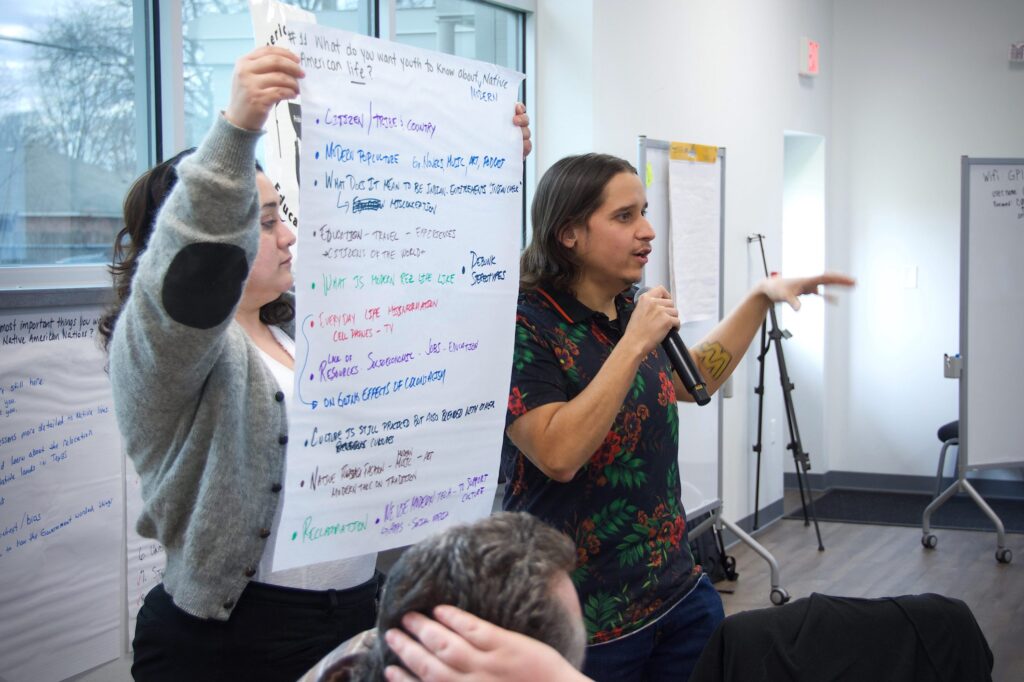
In Texas, educators developed the AINS course to include lessons on geography, arts, culture, and contemporary Indigenous achievements. The course content also covers pivotal Supreme Court cases, boarding schools, and Indigenous scholarship. It offers a critical lens on topics such as mascots and Stephen F. Austin’s policies.
Kimberly Rafalski, a teacher of the course, experienced the learning journey alongside her students. She noted the challenges of teaching difficult topics, such as the boarding schools’ history, but emphasized the celebration of Indigenous resilience through art.
Lanette Aguero, the district’s social studies coordinator, highlighted the course’s growth from 12 students in 2021 to 48 by 2024. The course’s expansion into other districts like Robstown and Crowley underscores its increasing relevance and demand.
Student feedback on the class has been overwhelmingly positive, with 97% expressing a newfound appreciation for Native American culture. One notable testimony came from Walter Dougherty, a young Cherokee student, who emphasized the course’s role in fostering cultural pride and awareness.
While the course faced scrutiny under Texas’s latest anti-DEI policies, advocates argued for its legality, referencing the federal Department of Education’s position that Native American history is distinct from DEI or CRT. Despite objections, the course’s supporters remain committed to its expansion and preservation for future generations.
After graduation, Horn plans to engage with his Native community and participate in cultural events like the Texas powwow trail, reflecting the course’s impact on his cultural identity and connections.
—
Read More Kitchen Table News