Article Summary –
President Trump’s tariffs have increased grocery store prices for many items, including those not produced domestically, such as coffee, bananas, and olive oil. Despite the initial tariffs being exempted, prices have remained high due to supply shocks and other economic factors, with coffee and bananas experiencing noticeable price increases. The rationale for tariffs on non-domestically produced goods is criticized as misguided, as it fails to protect domestic industries and merely acts as a sales tax, increasing consumer prices without promoting domestic manufacturing or employment.
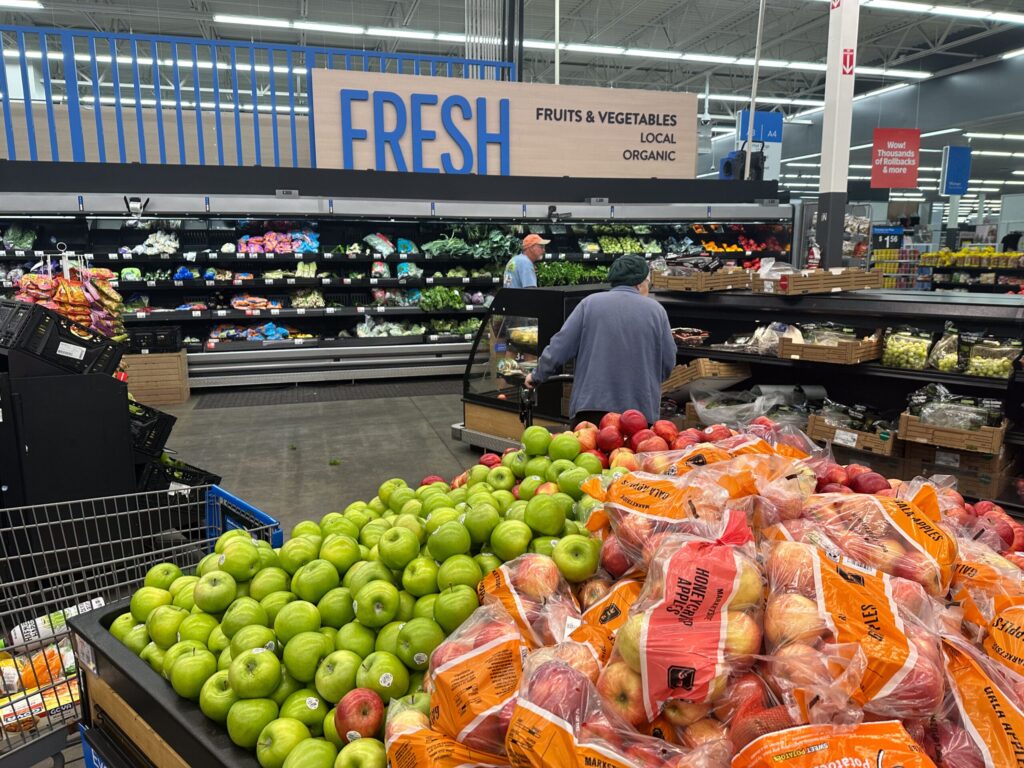
Americans are experiencing the impact of President Donald Trump’s dynamic tariff policies, especially at grocery stores.
While many food items are domestically produced, those not made entirely in the U.S. have faced Trump’s tariffs.
“A lot of produce is tariff-affected, like exotic foods we don’t produce,” stated Tibor Besedes, an economics professor at the Georgia Institute of Technology, to the American Independent.
Coffee and bananas, which can’t be grown in the U.S., were included in the April 2025 “Liberation Day” tariffs. These tariffs targeted various countries and ranged from 10% to up to 145% on certain Chinese imports.
Though these products were exempted in November 2025, price hikes remained. By July 2026, coffee prices rose 16% compared to April 2025, as per U.S. Bureau of Labor Statistics data. Banana prices increased by 3% in the same period.
Besedes noted coffee has faced supply issues due to weather, with tariffs compounding price spikes that persist.
“Supply issues haven’t eased, so even with tariffs gone, coffee prices barely dropped,” Besedes explained.
Olive oil is similarly affected. Domestic production in California covers only 4% of demand, meaning over 95% of U.S. olive oil is imported, per Forbes. EU producers like Spain and Italy face repeated tariffs.
Impact of Trump’s Tariffs on International Trade
The Supreme Court overturned Trump’s initial tariffs in February. He then announced a 10% tariff on most nations except Canada and Mexico, under Section 122 of the Trade Act of 1974. These expired in July after 150 days.
Prior to the expiration, a new round of 10%-12.5% tariffs was introduced under Section 301, covering 59 countries and the EU, targeting nations using forced labor. A coalition of 25 states is now suing the administration, seeking cancellation and refunds. These tariffs affect over 99% of U.S. imports.
Besedes commented that tariffs on non-U.S. produced goods offer little value.
“It’s misguided,” he critiqued. “Typically, tariffs protect domestic industries, but without U.S. production, it acts as a sales tax, raising consumer costs without benefits.”
“If the aim was to boost manufacturing and jobs, tariffs on non-produced items can’t achieve that,” he added.
—
Read More Wisconsin News

![Botched Ad Mix-Up: Super PAC Error in Arizona Congressional Race[embed]https://www.youtube.com/watch?v=bEMgIlCkHz0[/embed]](https://www.kitchentablenews.org/wp-content/uploads/2026/10/Botched-Ad-Mix-Up-Super-PAC-Error-in-Arizona-Congressional-RaceembedhttpswwwyoutubecomwatchvbEMgIlCkHz0embed.com2F0e2F962Fe971102f49e7a4f2a64fd3cc60a22Fjonatha.png "Botched Ad Mix-Up: Super PAC Error in Arizona Congressional Race[embed]https://www.youtube.com/watch?v=bEMgIlCkHz0[/embed]")