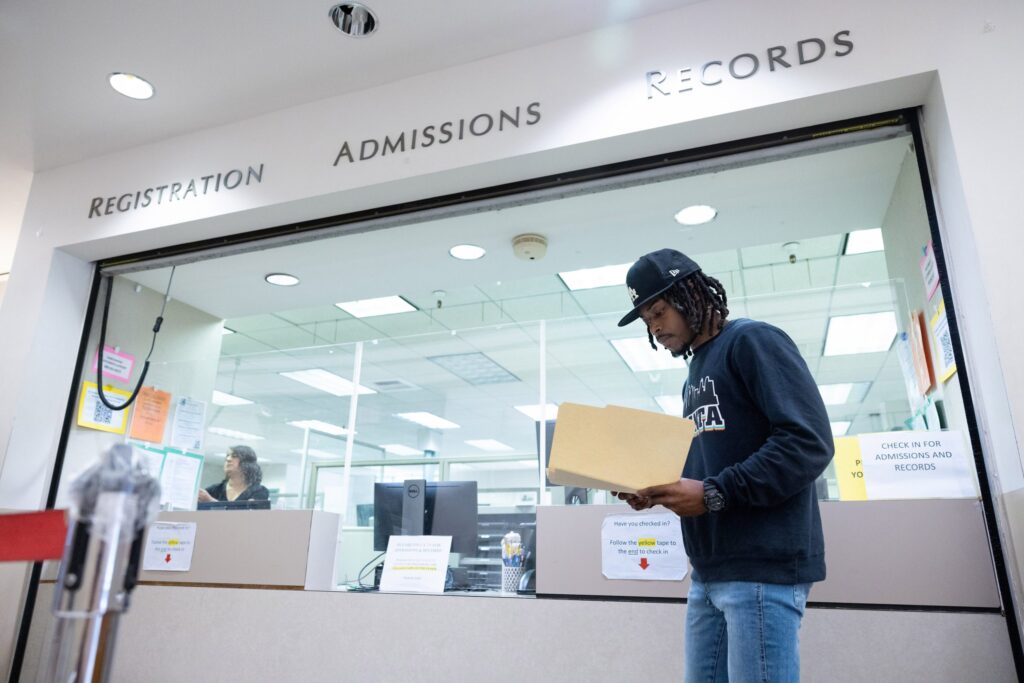
Lynette Duncan found herself unexpectedly spending 20 hours in recent weeks trying to retrieve admissions data from 2019 at John Brown University. Duncan, the director of institutional research at this small Christian university in Arkansas, manages all university data collections and analyses alone. Last year, she worked on new data to comply with a federal rule ensuring college graduates are prepared for good jobs.
In December, a sudden mandate from President Donald Trump required colleges to submit seven years of admissions data. This data needed to be detailed by race, sex, grades, SAT or ACT scores, and family income. Duncan remarked, “It’s like one more weight on our backs. The workload – it’s not fun.”
Nearly 2,200 colleges must comply with the new Admissions and Consumer Transparency Supplement (ACTS) by March 18. Failure to submit the data correctly could result in fines and loss of federal student aid access. This data collection move came after the Supreme Court’s ban on affirmative action, with the Trump administration aiming to ensure no racial preferences are secretly maintained.
The speed and scope of this data collection are unusual, moving from announcement to implementation in mere months. The Federal Register notice even contained misspellings, hinting at the rush. The task, affecting about 2,200 institutions, excludes community colleges but includes four-year and graduate programs.
Concerns about data quality and missing records have been raised, but changes made were minimal. Colleges are now required to upload raw student data to an “aggregator tool” for analysis. The Trump administration intends to compare data across race and sex categories, with significant gaps inviting further scrutiny.
Experts warn the results may be unreliable due to missing data. Melanie Gottlieb, from the American Association of Collegiate Registrars and Admissions Officers, noted that many institutions might lack entire years of applicant data. State policies often advise deleting records of applicants who never enrolled, reducing available data.
At smaller institutions, historical records might be missing or incompatible with federal requirements. Standardized test scores are often unavailable due to test-optional policies, and income data is limited to those who completed financial aid forms. Ellen Keast from the Education Department stated, “Schools are not expected to provide data they don’t have.”
The Education Department’s spreadsheet only allows for “male” or “female” categories, while colleges may collect more diverse gender data. Christine Keller from the Association for Institutional Research suggests adding a “missing” option to avoid misleading results.
John Brown University’s Duncan is concerned that aggregated data might falsely suggest racial bias, despite the university’s predominantly white demographic and lack of affirmative action. Disparities in standardized test scores and academic records are common, making it hard for institutions to avoid showing gaps.
The stakes are high, with potential fines and loss of federal aid looming for noncompliance. Yet, ACTS expands paperwork, contradicting Trump’s campaign to reduce federal bureaucracy. The estimated 200 hours to complete the survey may be underestimated, according to higher-education officials.
Duncan hopes to complete the reporting in less time, barring any setbacks during data uploads. Until then, she continues gathering and cleaning old records as the March 18 deadline approaches.
—
Read More Kitchen Table News


![Jody White’s Unconventional Michigan Supreme Court Candidacy Explored[embed]https://www.youtube.com/watch?v=8NfxFIPE4ac[/embed]](https://www.kitchentablenews.org/wp-content/uploads/2026/10/Jody-Whites-Unconventional-Michigan-Supreme-Court-Candidacy-Exploredembedhttpswwwyoutubecomwatchv8NfxFIPE4acembed.com2F842F0e2Fc7223daa43c9876b36a4e00773a42Fme-supc.png "Jody White’s Unconventional Michigan Supreme Court Candidacy Explored[embed]https://www.youtube.com/watch?v=8NfxFIPE4ac[/embed]")