Celebrating the Legacy of Lucile A. Watts: A Trailblazer in Michigan’s Judicial System
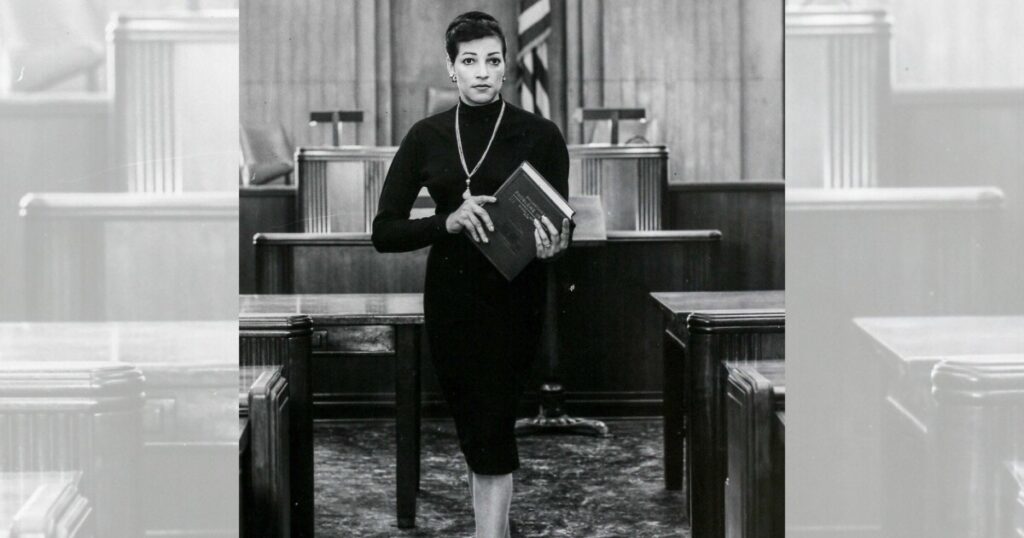
As Black History Month unfolds, stories of pioneering African-American women in Michigan politics are being highlighted, shedding light on their profound impact. Among these trailblazers is Lucile A. Watts, who, in 1980, became the first African-American woman to be elected to a circuit court in Michigan. Her tenure on Wayne County’s Third Circuit Court spanned 14 years, marking a transformative period for both African Americans and women in the state’s judiciary.
Lucile A. Watts, who passed away in 2018 at the age of 97, left an enduring legacy. To revisit her remarkable career, Michigan Public Radio’s Morning Edition host Doug Tribou engaged in conversation with Judge Cynthia Stephens, a fellow jurist who served on the Third Circuit Court for nearly 25 years and later on the Michigan Court of Appeals until her retirement in 2022.
Doug Tribou: How did your path first cross with Lucile Watts?
Cynthia Stephens: I returned to Michigan from Texas in the early ’80s and met her through the Mary McLeod Bethune Association, where she was chair and provided free legal services. She was also a member of my sorority, Delta Sigma Theta.
Courtesy of Judge Cynthia Stephens
DT: What challenges did Judge Watts face in her pioneering role?
CS: When Watts graduated from Detroit College of Law in 1962, women often struggled to find employment as attorneys. In a Detroit Free Press interview, she reflected, “At that time, being a woman was worse than being Black.” Despite challenges, she established her own law firm, driven by a determination to succeed.
DT: How did Judge Watts contribute during the Detroit Uprising of 1967?
CS: Watts actively engaged by defending Black men wrongfully detained by police. George Crockett, who later became a U.S. representative, held court at the police headquarters, and Watts, along with others like Elliott Hall, provided legal services to those detained.
DT: Describe Judge Watts’s judicial approach.
CS: Judge Watts was known for her directness and thoroughness. She served as a mentor to young lawyers and judges, offering guidance and support, much like her friend Geraldine Bledsoe Ford. She was a teacher at heart, always willing to provide advice.
DT: How have things evolved for Black women in the judiciary since then?
CS: There has been an increase in the number of Black women judges. However, scrutiny by the Judicial Tenure Commission has also increased. Nevertheless, the electoral process has become more inclusive, partly due to trailblazers like Judge Watts demonstrating their capability.
DT: Do you have a memorable moment with Judge Watts?
CS: She swore me in as a circuit court judge, reminding me that common sense was uncommon. She loved hosting gatherings, and I recall an event where George Clinton was present—highlighting her openness to diverse experiences.
Editor’s note: Some quotes in this article have been lightly edited for length and clarity. You can listen to the full conversation near the top of this page.
—
Read More Michigan News