The Mexican Gray Wolf Debate: Conservation, Politics, and Public Perception
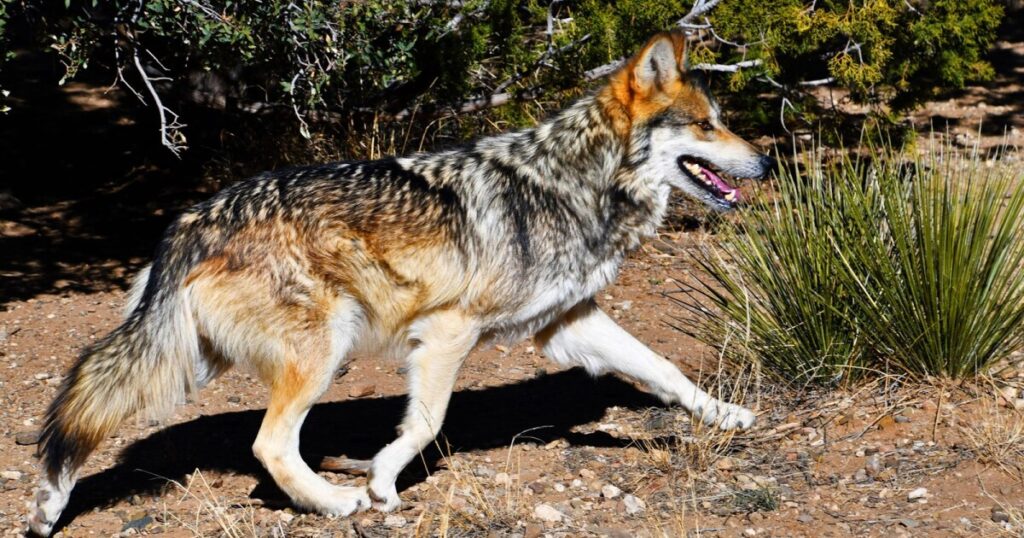
In the American Southwest, the Mexican gray wolf has become a symbol of a broader debate, bridging conservation efforts with political ideologies. The fate of this species is at the center of legislative and legal battles, reflecting the complex interplay between wildlife preservation and political identity.
Republican Congressman Paul Gosar has proposed legislation to remove the Mexican gray wolves from the Endangered Species Act’s protection, sparking a contentious discussion. Concurrently, the Center for Biological Diversity has filed a lawsuit against the U.S. Fish and Wildlife Service. The organization accuses the agency of not implementing a comprehensive national recovery plan for the wolves, a requirement under the Endangered Species Act.
A recent study sheds light on public attitudes toward gray wolves, revealing that initial support transcends political affiliations. However, when political identities are highlighted, the divide becomes apparent: liberals tend to reinforce their support, whereas conservatives’ backing diminishes.
Insights from the Study
Alex Metcalf, an associate professor at the University of Montana’s College of Forestry and Conservation, contributed to this research. He noted, “A lot of our research focuses on human relationships with wildlife and other natural resources. And a lot of those relationships have to do with, like, the realities of the species.”
Metcalf explained that while many individuals initially express positive attitudes toward wolves, these views shift once political affiliations are considered. “We see this across all sorts of different studies,” he remarked. The study found that political identities significantly influence perceptions, often leading to polarization.
Metcalf emphasized that understanding and correcting misconceptions about party views on wolves can reduce this divide. He stated, “And then just by correcting people’s assumptions about what Republicans probably think about wolves and what Democrats probably think about wolves, we could actually start to bring people back together.”
Broader Implications
The research highlights how political identities are increasingly influencing various aspects of public life, not just limited to wildlife conservation. Metcalf mentioned, “One of the really interesting but also kind of scary things about social identity theory is that when we get ourselves into groups and we think about our group and the other group, we tend to overestimate the extremism and negativity of the other group.”
By presenting accurate information about group beliefs, the study demonstrated that individuals could bridge gaps in understanding. “We were able to bring people back together,” Metcalf noted, emphasizing the potential for fostering consensus on contentious issues.
Real-world Applications
Metcalf asserted that the lessons learned from this study extend beyond wolves, applicable to numerous societal issues. He observed that many subjects garner widespread agreement until viewed through a political lens. “When we reminded Democrats that they were Democrats, their attitudes increased significantly toward wolves,” he explained, illustrating how identity can shift perspectives.
The study underscores the importance of fostering common ground and addressing misconceptions to mitigate conflicts driven by political identities. As Metcalf concluded, “This phenomenon is not a Democrat phenomenon or a Republican phenomenon. This is a people phenomenon.”
—
Read More Arizona News