WASHINGTON — The United States lost 92,000 jobs in February, slightly increasing the unemployment rate, as reported by the Bureau of Labor Statistics. This marks the third nonfarm job loss in five months, emphasizing a “trend down” in sectors like information and federal government employment. The federal workforce has shrunk by 11% since October 2024. Additionally, health care jobs decreased, reflecting strike activities.
Unemployment rose to 4.4% from 4.3% in January, with higher rates for women, teenagers, and non-white workers. The job losses were attributed to harsh winter weather on the East Coast and labor disputes among West Coast health care workers. However, Democrats criticized President Donald Trump’s policies, highlighting military actions in Iran and reimposing tariffs despite the U.S. Supreme Court ruling against many taxes on foreign goods.
Senate Minority Leader Chuck Schumer stated that the report is a “blaring alarm that Donald Trump’s economy is deteriorating rapidly,” warning that the ongoing war in Iran could exacerbate the situation. “Tariffs are increasing costs, gas prices are spiking, and jobs are evaporating,” he noted, urging an immediate change in economic course.
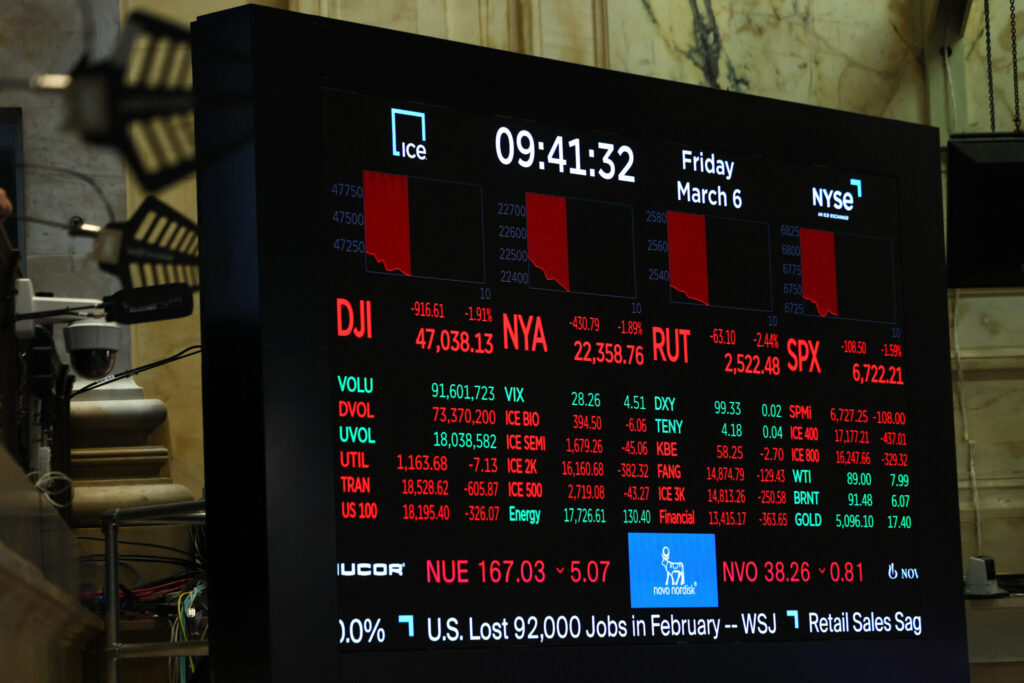
The surprising report, alongside the uncertainty of the Iran conflict, affected U.S. markets, causing a drop across all indexes, according to a New York Stock Exchange update. Economists had anticipated a job increase of around 59,000, contrasting with January’s gain of 130,000 jobs.
Trump officials project optimism
The administration attributes the weak employment report to February’s severe weather and a month-long strike by Kaiser Permanente workers. Labor Secretary Lorie Chavez DeReemer highlighted several positive economic indicators, stating, “While record-breaking strikes and bad winter weather dragged down February nonfarm employment, the unemployment rate held steady.” She praised the administration’s tax and spending cuts as beneficial for the economy.
Kevin Hassett, director of the White House National Economic Council, suggested to CNBC, “We had a surprisingly positive one last month and a surprisingly negative one this one. But on average, it’s about what we expect to be seeing,” pointing to a reduced immigration rate causing “break-even employment.”
No growth
Economists warned the report adds to a negative economic outlook. Daniel Hornung from Stanford Institute of Economic Policy Research commented that the report complicates the Fed’s efforts to maintain low unemployment and inflation. He added that it challenges the Administration’s claims of economic growth and improvement in living standards.
David Kelly, JPMorgan Asset Management’s chief global strategist, deemed the report “weak,” noting, “We’re not seeing any job growth at all, really, in this economy.” He emphasized that a significant drop in the labor force due to declining immigration is preventing a spike in unemployment, highlighting a sluggish economy.
—
Read More Montana News