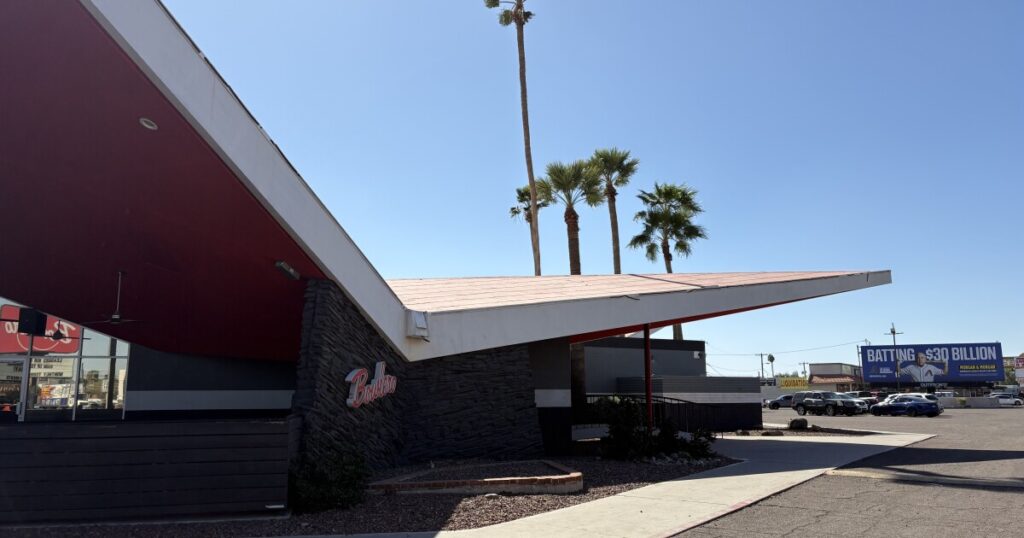
The architectural significance of buildings is often associated with skyscrapers or cultural landmarks, yet one local gem in central Phoenix defies this norm. Bowlero Christown, formerly known as 300 Bowl, stands as a testament to mid-century modern architecture, showcasing the unique style known as “Googie.” This architectural marvel is characterized by its futuristic design elements, featuring space-age angles and soaring peaks.
Mike Hardesty, a real estate agent and preservation enthusiast, has a special connection to this bowling alley. His lifelong passion for bowling began as a child growing up in a bowling alley. Now, as a member of Preserve PHX’s board, Hardesty has documented the architectural importance of 300 Bowl, sharing its story with the community. For more insights, he has written extensively on the subject.
The Architectural Journey of Bowlero Christown
Constructed in 1958 during Phoenix’s boom period, Bowlero Christown is a relic of an optimistic era when the city and bowling were on the rise. The building’s unique design, with its dramatic angles and high ceilings, is a prime example of Googie architecture, a style that symbolizes hope and progress. As Hardesty explains, “To me, this building represents not just like the history of Phoenix, but the optimism of the time period and Phoenix was really growing up as a city.”
While the interior of the bowling alley has undergone several updates over the years, it still retains its historical charm. Originally, the facility featured fountains and a restaurant known as the Ripple Room, where patrons could enjoy meals like prime rib. The exterior, however, remains the most striking element, capturing the essence of its architectural roots.
A Community Icon
Bowlero Christown is more than just a building; it is a community hub. Hardesty’s personal connection to bowling is profound, having been raised in a bowling center and continuing to participate in leagues today. “Bowling is like, it’s so inclusive. And any given league night you can walk in and there’s all different walks of life,” he shares, emphasizing the sport’s role in fostering community spirit.
Preservation Challenges
Despite its architectural and historical value, Bowlero Christown faces the risk of future redevelopment. The building is not currently protected, leaving it vulnerable to potential changes. Hardesty hopes that its significance will be recognized and preserved for generations to come. “It’s currently not protected. And maybe if Bowlero is listening, they would give us a call to try to initiate that because it’s absolutely 100% architecturally and historically significant,” he suggests.
As Phoenix continues to evolve, preserving sites like Bowlero Christown becomes crucial for maintaining the city’s cultural heritage. The building is a symbol of a bygone era, offering a glimpse into the past while continuing to serve as a vibrant part of the community.
—
Read More Arizona News