In a world where personal stories often reveal broader societal issues, Wambūi Karanja’s experience with her father’s early onset dementia sheds light on the challenges faced by many in Kenya. Her journey from personal grief to professional advocacy highlights the necessity of awareness and support in tackling dementia.
Growing up in Nairobi, Kenya, Karanja faced a unique struggle among her peers. While her friends shared tales of their fathers’ habits, Karanja felt disconnected. “I [can’t] stand listening to my friends complain about their dads, because I don’t get to experience my dad the same way you get to experience yours,” she explains. Her father, a teacher, was diagnosed with early onset dementia when she was still a teenager, an event that profoundly shaped her life.
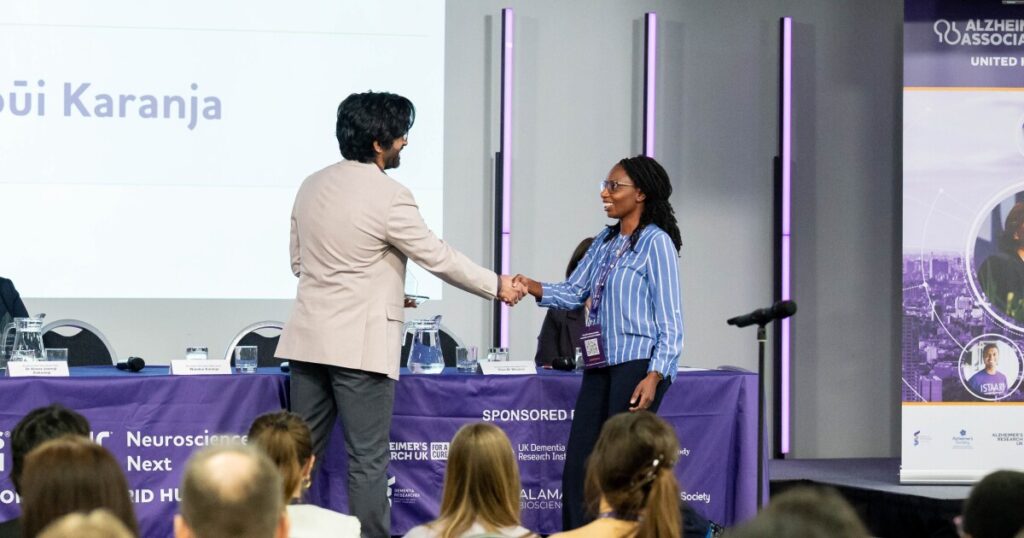
Now at 32, Karanja reflects on the moments her father has missed, including her graduation and career milestones. Yet, through this personal tragedy, Karanja found her “purpose.” As a project manager at the Brain and Mind Institute at Nairobi’s Aga Khan University, she’s dedicated her career to helping families understand and manage caregiving. Her work earned her the title “One to Watch” at the Neuroscience Next conference by the Alzheimer’s Association.
In a conversation with NPR, Karanja discussed the challenges of dealing with dementia in Kenya, including prevailing myths. “One of the myths is that it’s a normal part of aging,” she noted. This misconception often prevents families from seeking help and understanding the condition.
Another common belief attributes dementia to spiritual causes, sometimes leading to blame within families. Karanja shared, “There are people who said that my mom had bewitched my father, because my mother is from a different ethnic community from my dad.”
To counter these beliefs, Karanja emphasizes education, explaining that “dementia is caused by changes in the brain.” This understanding can prevent families from resorting to costly and futile treatments, such as traveling abroad for further diagnosis.
The scarcity of neurologists in Kenya poses a significant barrier to diagnosis. With only about 30 neurologists for a population exceeding 55 million, accessing professional help is often a luxury few can afford. This reality underscores the importance of awareness and acceptance, which Karanja champions.
Understanding dementia as a “disease of moments,” she highlights the importance of coping strategies for caregivers. Music, she notes, can temporarily uplift a person’s mood, illustrating the dynamic nature of the condition. Supporting caregivers is also crucial, as they must maintain their well-being to effectively care for their loved ones.
Karanja’s own mother found solace and rejuvenation through faith and community support, once a reliable caregiver was in place. However, finding such assistance is often challenging, leaving many to rely on community members for help.
For Karanja, the small joys come from knowing her father is cared for with dignity, even if he no longer recognizes her. Her story is a testament to resilience, the importance of education, and the power of community support in the face of dementia.
Copyright 2026 NPR
—
Read More Michigan News
![Jody White’s Unconventional Michigan Supreme Court Candidacy Explored[embed]https://www.youtube.com/watch?v=8NfxFIPE4ac[/embed]](https://www.kitchentablenews.org/wp-content/uploads/2026/10/Jody-Whites-Unconventional-Michigan-Supreme-Court-Candidacy-Exploredembedhttpswwwyoutubecomwatchv8NfxFIPE4acembed.com2F842F0e2Fc7223daa43c9876b36a4e00773a42Fme-supc.png "Jody White’s Unconventional Michigan Supreme Court Candidacy Explored[embed]https://www.youtube.com/watch?v=8NfxFIPE4ac[/embed]")