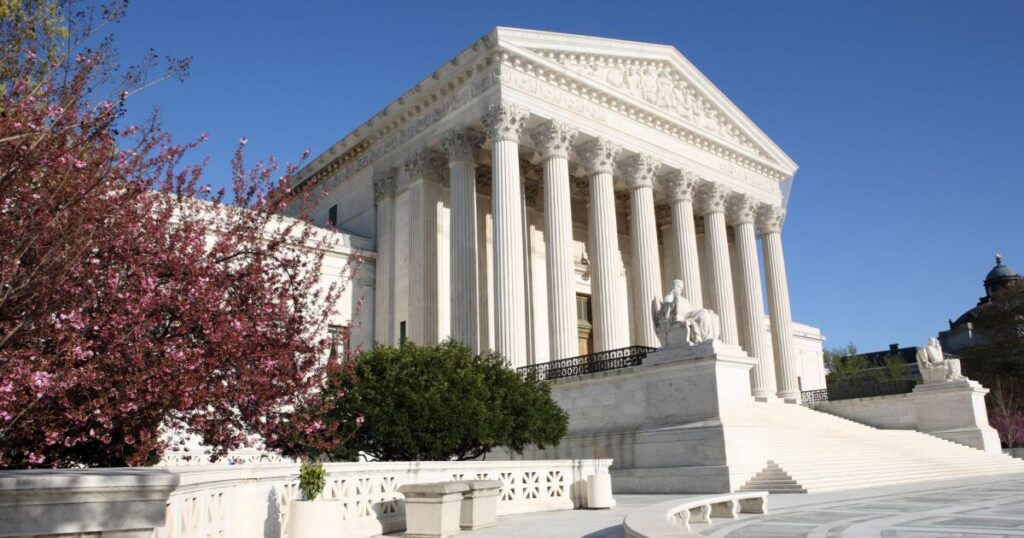
Michigan’s Conversion Therapy Ban Faces Legal Scrutiny Following Supreme Court Decision
The recent U.S. Supreme Court decision to overturn Colorado’s conversion therapy ban has significant implications for similar laws in over 20 states, including Michigan. Governor Gretchen Whitmer, who enacted Michigan’s ban nearly three years ago, expressed her disapproval of the ruling and commitment to protecting LGBTQ+ youth.
“Today’s Supreme Court ruling is disappointing, but it does not change who we are,” Whitmer remarked in a statement. “Michigan will never support any practice that harms or shames LGBTQ+ youth. As long as I’m governor, every young person deserves the right to grow up safe, supported, and free to be themselves.” More details about the Michigan law can be found here.
Michigan’s law, which prohibits professional counseling aimed at altering a minor’s sexual orientation or gender identity, has been temporarily halted. This pause follows a December decision by the U.S. Sixth Circuit Court of Appeals. The ruling was prompted by a free speech lawsuit from Catholic Charities of Jackson, Lenawee, and Hillsdale Counties.
William Bloomfield, general counsel for the Catholic Diocese of Lansing, commented, “Kids struggling with issues of gender dysphoria or same-sex attraction should be able to get effective and compassionate counseling in accord with Catholic teaching. This ruling confirms that states cannot ban such counseling, as such laws violate the free speech clause of the First Amendment.”
Despite the court’s decision, state Representative Jason Hoskins (D-Southfield), who championed the law, remains steadfast. He asserted, “This is still malpractice. It’s consumer fraud, literally, to call it conversion therapy when it’s not really therapy in the eyes of every major medical organization. It’s still something we can fight against, but it’s just disheartening to see this ruling come through.”
Michigan Attorney General Dana Nessel is currently evaluating the state’s legal avenues before the next court appearance. “Free speech is a sacred right in America, but it should not provide a runway in which medical professionals can actively harm their patients,” she emphasized.
According to Jay Kaplan, staff attorney with the LGBTQ+ Rights Project of the American Civil Liberties Union-Michigan, some elements of Michigan’s law may still be enforceable. He noted that the Supreme Court’s decision only impacts verbal counseling, leaving restrictions on physical aversion therapies and certain medications intact. “The court opinion did not address the issue of physical aversion therapy,” Kaplan explained, “or medication that’s prescribed. That’s not addressed in this opinion.”
Parties involved in the Michigan lawsuit are scheduled to update the federal judge on the case’s status in the coming weeks. For further reading on the court’s earlier decision, visit this link.
—
Read More Michigan News