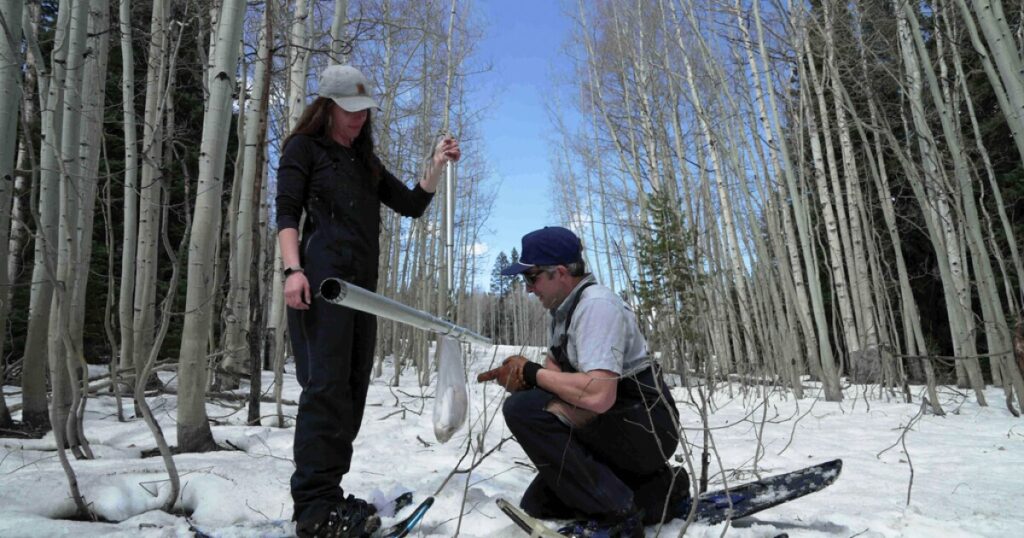
In a stark illustration of the changing climate, Colorado faces its most severe snowpack shortage since records began in 1941. Hydrologist Maureen Gutsch, trudging through the slushy remains of snow, confirmed this alarming trend, noting that snow accumulations peaked a month early and held only half the typical moisture content.
This phenomenon follows an unusually warm winter, which transitioned into early spring with record-breaking heat. The rapid melting of snow at all but the highest altitudes in the West is exacerbating the ongoing drought crisis, leading to water shortages unless an unexpected influx of precipitation occurs.
Standing in the sunny 56-degree (13.3 degrees Celsius) weather, Gutsch remarked on the difficulty of enjoying the outdoors under such dire conditions: “We love being out here. We love being in the snow, taking these measurements. This year, it’s kind of hard to enjoy it because it’s slightly depressing with the conditions that we’ve seen.”
Brittany Peterson/AP
/
AP
Ranchers Feel the Impact
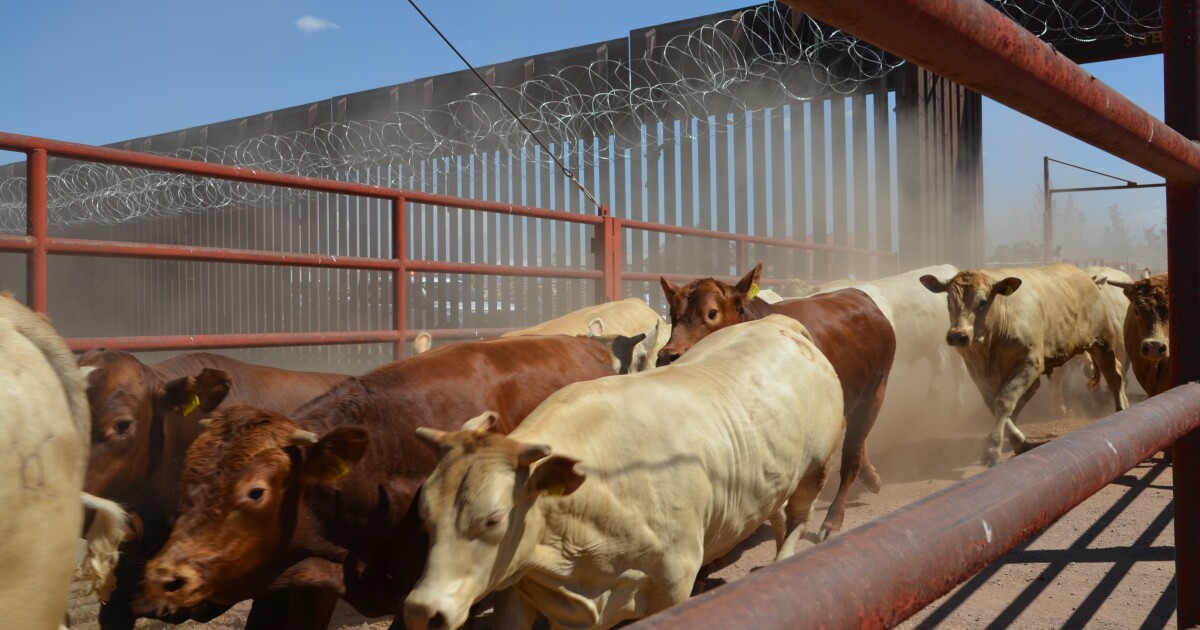
In the picturesque valleys of Colorado near the Continental Divide, ranchers are on the front lines of this drought, closely tied to the melting mountain snowpack. Philip Anderson, a veteran rancher, voiced his concerns: “I’ve never seen it so warm so early and no snow all winter long.” With snow usually persisting on his pastures into spring, its absence forces his cattle to graze prematurely, drying up ponds and ditches.
In the nearby Stanko Ranch, Jo Stanko battles low water flows that allow cattle to wander across the river. She has begun watering her fields earlier than ever in her 50 years of ranching and is considering purchasing hay to sustain her livestock.
The Upper Basin states, including Colorado, remain at a stalemate with Lower Basin states over new water management agreements, as the current rules are set to expire in September. As Becky Mitchell, Colorado’s river negotiator, stated, “When there is less, we use less. This is not voluntary and no one gets paid as a result.”
Cities Implement Restrictions
In response to the dry conditions, Salt Lake City has initiated a 10% reduction in daily water use, with the largest water consumers facing stricter limits. In Denver, efforts are underway to achieve a 20% savings by restricting lawn watering and other measures. Nathan Elder of Denver Water emphasized, “It would take a tremendous amount of snow to recover at this point, so it’s time to turn our attention to preserving what we have.”
California, Oregon, and Nevada are also experiencing below-normal precipitation levels, exacerbating the water scarcity. In California, a snowpack survey revealed a significant shortfall, measuring only 18% of the average near Lake Tahoe.

Brittany Peterson/AP
/
AP
Escalating Wildfire Threat
Denver’s recent weather has set new temperature records, with the city reaching 87 degrees (30 Celsius) in March, marking the hottest such day recorded. This heat, coupled with dry conditions, increases the risk of wildfires in the region.
Despite some snow forecasted for North Park, ranchers like Anderson remain apprehensive. As he puts it, “It’s pretty serious. If we just talk and communicate together and cooperate, we might be able to make it through this. But we’ll see.”
___
Gruver reported from Fort Collins, Colorado. Christopher Weber in Los Angeles and Amy Taxin in Santa Ana, California, contributed.
___
The Associated Press’ climate and environmental coverage receives financial support from multiple private foundations. AP is solely responsible for all content. Find AP’s standards for working with philanthropies, a list of supporters and funded coverage areas at AP.org.
—
Read More Arizona News