Ingenious Methods of Food Preservation by Southwest Tribal People
Long before the advent of refrigeration, Southwest Tribal communities developed innovative techniques to preserve their food. These methods were essential for protection against spoilage, pests, and harsh environmental conditions.
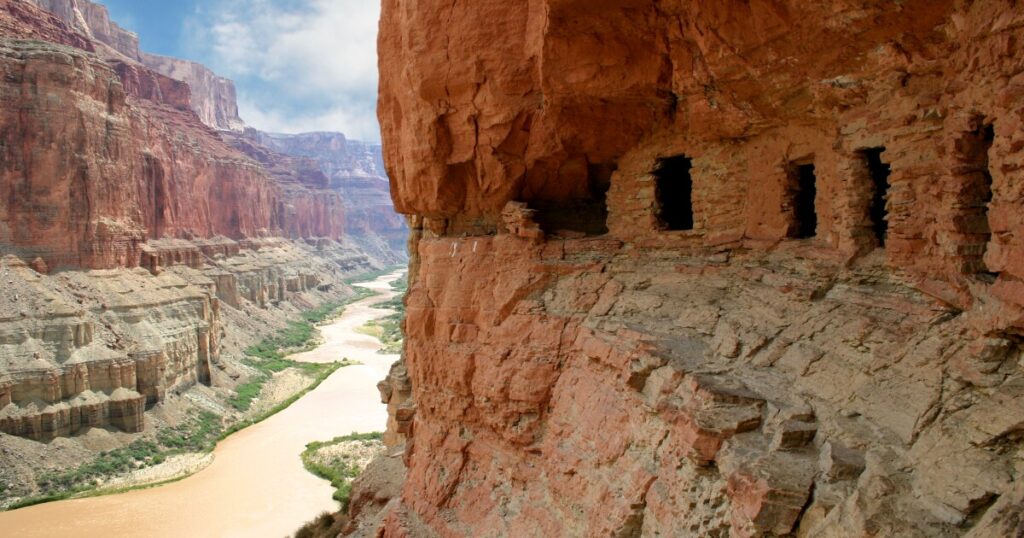
To prevent mold, insects, and rodents from damaging their food supplies, these communities employed a variety of storage solutions. Underground pits, temporary brush shelters, and stone and mud granaries built into cliff walls were among the strategies used. In the Tucson area, archaeologists have discovered that some storage pit walls were fire-hardened from within, transforming the clay-rich soil into a pottery-like material.
Different cultures, including the Ancestral Puebloan and Hohokam, utilized pithouses and built elevated granaries in cliff alcoves. Notable examples include the Nankoweap granaries of the Grand Canyon. For temporary storage within homes, baskets and bags were likely used.
Food preservation often involved drying or cooking before storage. Edible seeds were kept in covered baskets sealed with creosote gum and topped with pottery shard lids. Mescal agave hearts and other plants were boiled and transformed into dried slabs. Similarly, meat, as well as pumpkin and squash pulp, were dried for longer preservation.
Along the Colorado River, the Mojave people utilized large granaries woven from arrowweed branches and mesquite beans, along with underground pits lined with plants. The O’odham groups constructed shaded structures to protect large sumac basketry granaries.
Interestingly, both sumac and arrowweed possess natural insecticide properties, which may have been intentionally exploited in the construction of these granaries.
This Earth Note was written by Carrie Calisay Cannon and produced by KNAU and the Sustainable Communities Program at Northern Arizona University.
—
Read More Arizona News