Drivers Find Relief in Tribal Lands Amid Rising Gas Prices
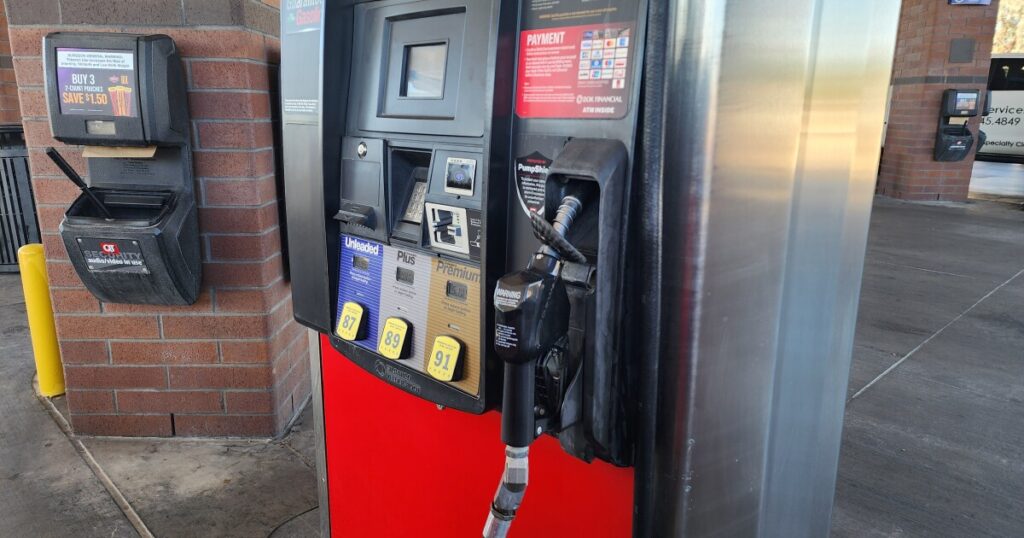
Amid soaring gas prices affected by geopolitical tensions, drivers like Junelle Lewis are seeking out more affordable refueling options. Her search led her to the Tulalip Reservation near Seattle, where she found fuel priced significantly lower than in her neighborhood.
“I purposely drove here just for the gas,” Lewis shared, as she filled her Chevrolet Suburban at a notably cheaper rate of $4.84 per gallon. This was about 75 cents less than what she would pay closer to home. “Gas is ridiculous. But I have found, honestly, over the years, this gas station specifically is cheaper than a lot around here. Probably the cheapest.”
Many drivers across the U.S. have discovered that some of the most economical fuel can be found on Native American reservations. States like California, New Mexico, New York, Oklahoma, and Washington, where numerous tribally owned stations are exempt from state fuel taxes, offer competitive pricing.
Tech and Tax Benefits Aid in Finding Savings
The search for affordable gas has been simplified by apps such as Gas Buddy, which help consumers locate the lowest prices available. Nationwide, gas prices have risen by over a dollar since tensions escalated in Iran, currently averaging $4.15 per gallon, according to AAA.
Despite these increases, deals can be found at the nearly 500 tribally owned gas stations across the country. For example, at the Chukchansi Crossing Fuel Station & Travel Center in California, gas was priced at $5.09, which is 60 cents less than nearby competitors.
In New Mexico, Jamie Cross frequently saves at the Mescalero Apache Reservation, where prices were as low as $3.79. “I hope we don’t go any higher,” she noted.
Similarly, in eastern New York, stations on the Cattauragus Indian Territory offered gas at $3.65 per gallon, about 50 cents less than neighboring towns.
Understanding the Tribal Tax Exemption
The key to these lower prices lies in tax exemptions. While tribes pay federal fuel taxes, state taxes are a different matter. For over a century, U.S. courts have held that states cannot collect taxes from Native Americans on their land, according to Dan Lewerenz, a law professor specializing in Native American law.
“The Supreme Court consistently held to this view and it’s one of the most enduring principles in federal Indian law,” Lewerenz explained.
State taxes vary and are subject to agreements between states and tribes, as well as court rulings. An example is the 2005 U.S. Supreme Court decision allowing Kansas to tax sales to tribes, contrasted with a 2019 ruling prohibiting Washington state from taxing tribal lands due to an 1855 treaty.
Beyond Fuel: Additional Revenue Streams
While gas sales bring customers to tribal lands, the real profit often lies in what happens next. Convenience stores, often situated in “food deserts,” provide essential goods and services, from groceries to household supplies.
Matthew Klas, a consultant for tribal businesses, notes, “Sometimes these gas stations and convenience stores are the nearest, best place to purchase affordable food or household supplies.”
Besides offering groceries, many tribally owned establishments diversify their offerings with drive-through smoke shops, car washes, and even “gasinos” — gas stations with gaming machines. Many stations are strategically located near or at casinos, contributing significantly to tribal revenue.
Revenue from these operations supports community services. On the Tulalip Reservation, for example, gas sales fund infrastructure, healthcare, and education, according to Tulalip Tribes Federal Corporation CEO Tanya Burns.
“Like any government, we provide critical services to our people,” Burns said.
For many customers, however, the appeal of tribal stations is not just about price. As Todd Hall, a driver in Oklahoma, noted, “They’re cheaper here than anywhere else,” while Mark Foster appreciates the community support the tribe provides, adding, “I like the way the tribe operates.”
As rising prices persist, drivers like Jared Blankenship, whose electric vehicle was recently totaled, find themselves back at the pump, seeking the best deals available. “This is new. It’s either Costco or looking wherever’s cheap, like the rez. So here we are,” he remarked.
—
Read More Arizona News