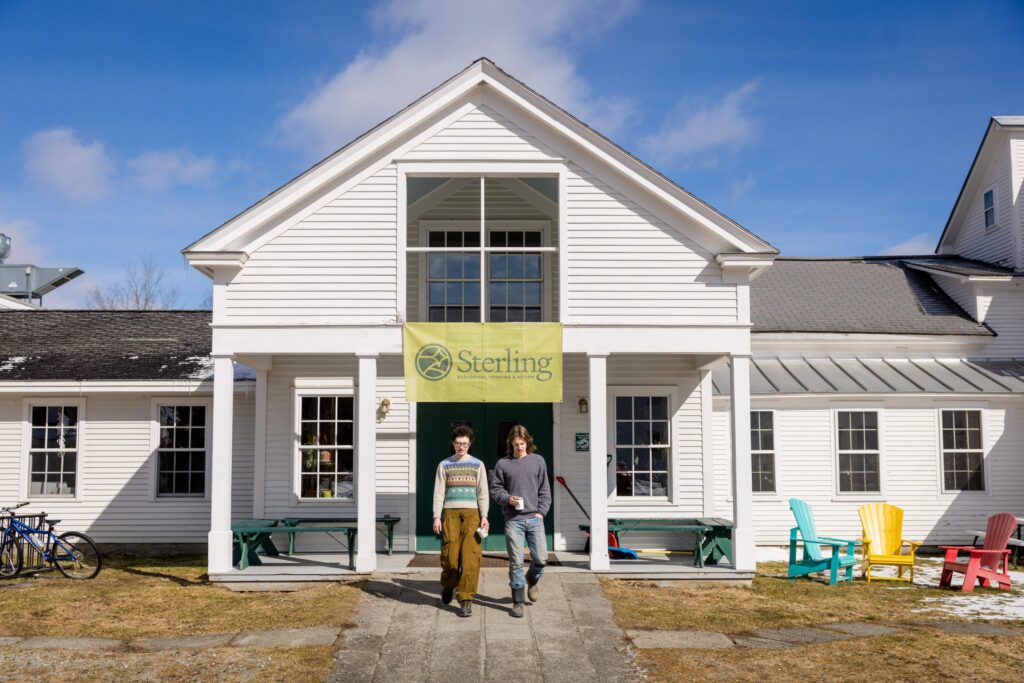
CRAFTSBURY COMMON, Vt. — Under the watchful eyes of their mothers and a few students, more than a dozen newborn lambs frolic in a fenced yard at Sterling College. These lambs bring a needed cheer to the small college, which uses its 130-acre farm to educate students in agriculture and other fields. Located in a remote part of northeastern Vermont, Sterling College is so isolated that passing cars are rare, and cell service is non-existent. Senior LillyAnne Keeley appreciates the solitude and the stunning views, especially the sunsets, which she admits she takes for granted.
However, students are now cherishing these moments more than ever, as Sterling College plans to close at the end of this semester. A new estimate by Huron Consulting Group predicts that 442 of the nation’s 1,700 private, nonprofit four-year colleges could face closure or mergers within a decade. More than 120 institutions are at the highest risk, with many small and rural like Sterling. Keeley expressed concern, saying, “Now that this might be gone, I just really worry about some students out there that are going to have less and less choices.”
This crisis is fueled by declining college enrollment and political attacks on higher education. “We have too many seats. We have too many classrooms,” noted Peter Stokes, managing director at Huron, predicting a shakeout in the next five to ten years. Sterling, the seventh private college in Vermont to close since 2016, offered students a final semester to finish degrees or transfer, unlike others that closed abruptly.
For some students, like Izzy Johnson, the closure of Sterling is a familiar setback. Johnson previously faced a similar situation when the college he intended to attend closed before his high school graduation. At Sterling, students are determined to make the most of their remaining time. “We’re just going to have a really good last semester and go out on a really positive note,” said Keeley, who is working hard to graduate this spring.
The closure of Sterling is also a loss for the local community, affecting jobs and local businesses like cafes and stores. Graduates like Liz Chadwick, now a faculty member, have historically contributed significantly to the town’s economy and culture. The college’s impact extends beyond education, as it has been a community cornerstone for decades.
Across the U.S., many colleges and universities are grappling with financial challenges. A dropping birthrate and fewer students attending college are major factors, alongside political and financial pressures. Institutions like the University of Southern California and Stanford are making significant staff reductions, while others seek strategic sales or mergers to survive.
Even public universities are facing financial strain due to state funding challenges and federal policy changes, impacting their ability to adapt. Community colleges, which enroll millions, are also struggling financially. The risk isn’t a sudden collapse but a gradual erosion of capacity, affecting the communities they serve.
Despite the bleak outlook, some students, like Jack Beatson, feel grateful for their time at Sterling, valuing the small college community and personal connections. As Beatson prepares to transfer, he reflects, “Just feeling like you’re really part of something, and other people depend on you — that’s very important to young people especially, and today especially.”
—
Read More Kitchen Table News