Efforts to address the persistent water scarcity in the Colorado River Basin have taken a significant turn, as Arizona, California, and Nevada have put forth a new proposal. This plan aims to reduce water usage from major reservoirs until 2028, providing a temporary solution while discussions for a long-term agreement continue.
Announced recently, the initiative involves these states collectively retaining between 700,000 to 1 million acre-feet of water in the Colorado River system. The move is critical to safeguarding the water levels at Lake Powell and Lake Mead, the two largest reservoirs in the United States.
For reference, one acre-foot equates to the volume of water required to cover one acre of land with water one foot deep, typically sufficient for one to two households annually.
This new conservation effort is an extension of previously suggested reductions, with state leaders indicating that overall cuts could exceed 3.2 million acre-feet by the end of 2028. The proposal is positioned as a temporary measure, or “bridge,” maintaining water reserves while negotiations continue.
Arizona’s primary water negotiator, Tom Buschatzke, although unavailable for direct comment, expressed his views in a statement from the Arizona Department of Water Resources. He noted, “This proposal reflects the creativity and commitment of water users across the Lower Basin who continue to step forward with solutions that support the river.” Buschatzke emphasized the effectiveness of collaborative, voluntary efforts in achieving meaningful water savings.
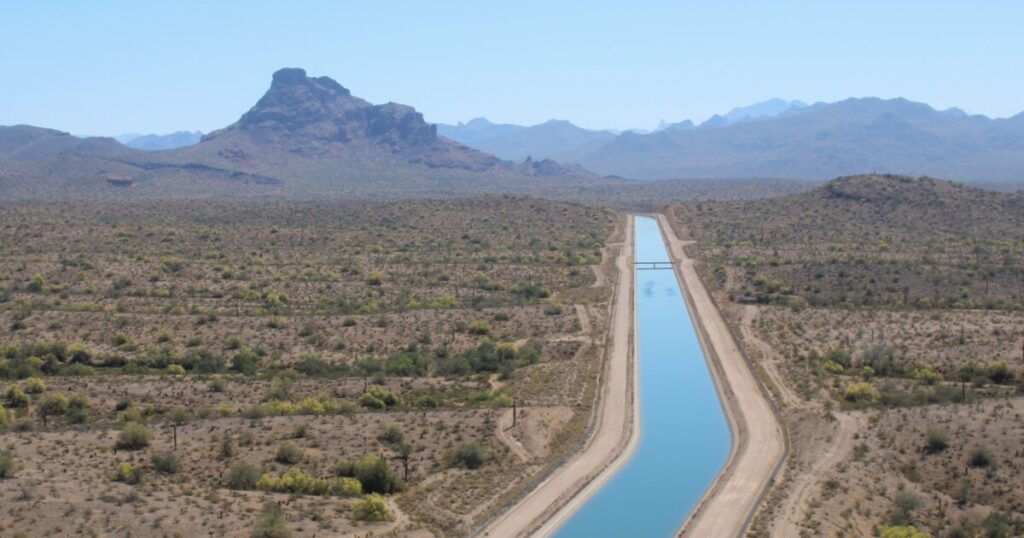
The specifics of which areas, such as cities, towns, or agricultural sites, will implement these reductions remain unclear. These voluntary measures give states the flexibility to manage reductions autonomously. Previously, the federal government suggested major mandatory reductions in the Central Arizona Project, affecting regions like Phoenix and Tucson.
Arizona officials opposed such plans, citing the severe impact. However, the current proposal could mitigate the most severe consequences while still preserving critical infrastructure and water reserves at Powell and Mead.
The Central Arizona Project leaders now support the new initiative, describing it as a “welcome lifeline and cause for hope.”
The urgency for a revised water management strategy, even a temporary one, has grown due to a historically dry winter. Before this proposal, forecasts indicated that Lake Powell’s water levels could drop critically soon, threatening hydropower production at Glen Canyon Dam and potentially affecting water distribution downstream.
Federal approval is necessary for the proposal to advance. The initiative appears crafted to avoid legal confrontations, as Arizona, California, and Nevada have been at odds with upstream states like Colorado, Utah, Wyoming, and New Mexico. With stagnant negotiations and diminishing reservoirs, the threat of significant legal disputes loomed. The proposed cutbacks could stabilize the river and its reservoirs long enough to avert such disputes.
By introducing their water-saving strategy, the Lower Basin states aim to create a window for renewed negotiations toward a sustainable solution. These discussions may take a new direction after the Upper Basin states requested a mediator to facilitate talks and help policymakers reach consensus.
“The Lower Basin states recognize the Upper Basin’s call for mediation and are open to that process,” stated leaders from Arizona, California, and Nevada in a press release.
—
Read More Arizona News

![Jody White’s Unconventional Michigan Supreme Court Candidacy Explored[embed]https://www.youtube.com/watch?v=8NfxFIPE4ac[/embed]](https://www.kitchentablenews.org/wp-content/uploads/2026/10/Jody-Whites-Unconventional-Michigan-Supreme-Court-Candidacy-Exploredembedhttpswwwyoutubecomwatchv8NfxFIPE4acembed.com2F842F0e2Fc7223daa43c9876b36a4e00773a42Fme-supc.png "Jody White’s Unconventional Michigan Supreme Court Candidacy Explored[embed]https://www.youtube.com/watch?v=8NfxFIPE4ac[/embed]")