Medicare is on the brink of a significant transformation concerning weight loss medications. Starting in July, beneficiaries could gain access to GLP-1 prescriptions for just $50 a month, marking a substantial change for Medicare, which has traditionally not covered weight loss treatments.
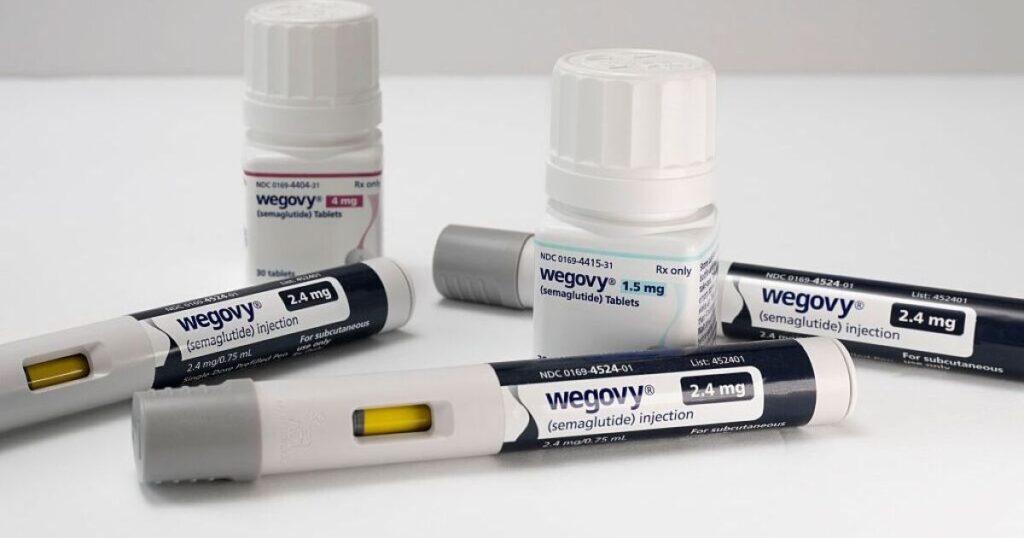
Medications like Wegovy and Zepbound, though effective, are often costly without insurance. Available as injections or pills, these drugs’ prices can range from $149 to $699 monthly, even after discounts.
According to KFF polling, about half of the users of GLP-1 drugs have found them difficult to afford, with a quarter describing them as “very difficult” to manage financially.
Introducing the Medicare GLP-1 Bridge Program
The Centers for Medicare & Medicaid Services (CMS) has announced a short-term pilot, the Medicare GLP-1 Bridge, set to run from July 1, 2026, to December 31, 2027. This initiative aims to bridge the gap until a potential longer-term program begins in 2028.
The pilot covers GLP-1 medications approved for weight loss, including both pill and injectable forms of Wegovy, Zepbound’s KwikPen formulation, and the Foundayo pill.
Eligibility and Participation
To participate, individuals must be enrolled in a Medicare Part D plan. Eligibility primarily depends on body weight and health status. Those with a BMI of 27 or higher and conditions like heart disease or prediabetes can qualify. A BMI of 35 or higher automatically qualifies a person. Currently, around 40% of American adults are considered clinically obese.
How It Operates
The Bridge program deviates from standard Medicare benefits. Despite requiring Part D enrollment, a different process is employed. Prescriptions go through a centralized system run by CMS contractor Humana, bypassing regular Part D plans. Doctors aren’t required to be Medicare providers to participate, and once approved, patients pay a flat $50 copayment.
Advantages of the Program
This program could make these medications accessible to those previously unable to afford them. TrumpRx, a government site, offers direct-to-consumer discounts. Prices on this site range from $199 to $699 for various dosages and formulations.
For many, higher dosages are necessary for sustained weight loss. The Bridge program uniquely offers a stable $50 copayment, irrespective of dosage increases.
Challenges and Limitations
There are downsides to consider. The $50 copay doesn’t count toward the Part D deductible or the $2,100 annual prescription drug cost cap. The program ends in December 2027, and it’s noted that many regain weight after stopping GLP-1 medications.
Affordability Concerns for Low-Income Participants
Those receiving the low-income subsidy, or Medicare Extra Help, can’t use it for this program. For some, a $50 copay remains a hurdle. Juliette Cubanski from KFF noted, “Fifty dollars a month sounds like a great deal compared to paying the discounted prices through TrumpRx and these other direct-to-consumer options, but it’s a lot of money for somebody who’s living on a $750-a-month Social Security check.”
Specifics of the $50 Copay
This copay applies only to weight loss. If prescribed for other conditions like Type 2 diabetes, the regular Part D plan prices apply, which may exceed $50. Existing GLP-1 users for weight loss might qualify for the Bridge program if they meet specific clinical criteria.
The Future Post-2027
The Trump administration proposed expanding GLP-1 coverage for obesity in Medicare with a two-step approach. Initially, the Bridge program was to last six months before transitioning costs to insurers. However, due to low insurer participation, CMS extended the Bridge program to 18 months.
This extension allows insurers to gather more data and negotiate with the administration, though it’s costly for Medicare. Cubanski added, “There’s no sense right now of the cost of the Bridge model, but it is likely to be billions of dollars a year in additional spending for Medicare.”
The financial impact depends on the number of participants, with KFF estimating that nearly 14 million Medicare beneficiaries were overweight or obese in 2020.
Interested in sharing your Medicare weight loss experience? Contact KFF Health News’ reporting team.
KFF Health News is a national newsroom that produces in-depth journalism about health issues and is one of the core operating programs at KFF.
—
Read More Michigan News

![Jody White’s Unconventional Michigan Supreme Court Candidacy Explored[embed]https://www.youtube.com/watch?v=8NfxFIPE4ac[/embed]](https://www.kitchentablenews.org/wp-content/uploads/2026/10/Jody-Whites-Unconventional-Michigan-Supreme-Court-Candidacy-Exploredembedhttpswwwyoutubecomwatchv8NfxFIPE4acembed.com2F842F0e2Fc7223daa43c9876b36a4e00773a42Fme-supc.png "Jody White’s Unconventional Michigan Supreme Court Candidacy Explored[embed]https://www.youtube.com/watch?v=8NfxFIPE4ac[/embed]")