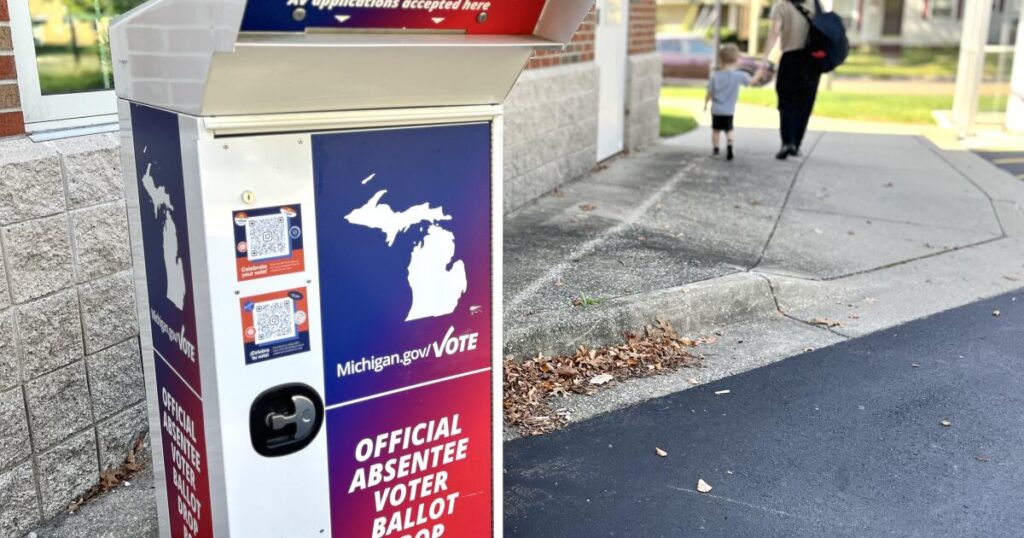
Michigan Court Ruling on Voter Ballot Information Sparks Debate
A recent decision by a Michigan Court of Claims judge has stirred discussions surrounding voter privacy and public access to election records. The ruling addressed the state Bureau of Elections’ policy on withholding specifics about ballot choices made by individual voters.
Changes were implemented by the Bureau of Elections in response to amendments made to the Michigan Constitution post-2022 election, which introduced early voting. Previously, the state provided a list detailing who participated in-person or via absentee ballots on Election Day. However, this practice was halted due to concerns about potential privacy breaches.
Secretary of State officials expressed apprehension that, particularly in small precincts, available data could reveal individual voting choices, thereby infringing on the right to a secret ballot. Phani Mantravadi, a conservative activist, challenged these restrictions, citing violations of the Michigan Freedom of Information Act.
Judge Christopher Yates found the state’s comprehensive approach to denying access problematic, noting that the possibility of deciphering votes was minimal. “To be sure, that circumstance is so uncommon that the parties agree it almost certainly will affect, at most, a very small collection of voters in each election,” Yates wrote, pointing out the overreach in the bureau’s policy.
Thomas Lambert, representing the plaintiffs, emphasized to Michigan Public Radio that hypothetical risks aren’t sufficient for withholding information. “Which is why the courts for many decades have been very clear that the standard to withhold information has to be more than theoretical. They have to show ‘would’ not ‘could,’” Lambert explained, warning against excessive governmental control over public records.
Angela Benander, spokesperson for Secretary of State Jocelyn Benson, stated that the department is evaluating possible responses to the ruling. She reiterated the importance of safeguarding voter privacy, noting the particular vulnerability of smaller, rural communities to privacy breaches if voting methods were disclosed.
The court has planned a subsequent hearing to explore a potential compromise that balances public access under Michigan’s Freedom of Information Act with the protection of voter secrecy, even if it pertains to a limited number of voters.
—
Read More Michigan News