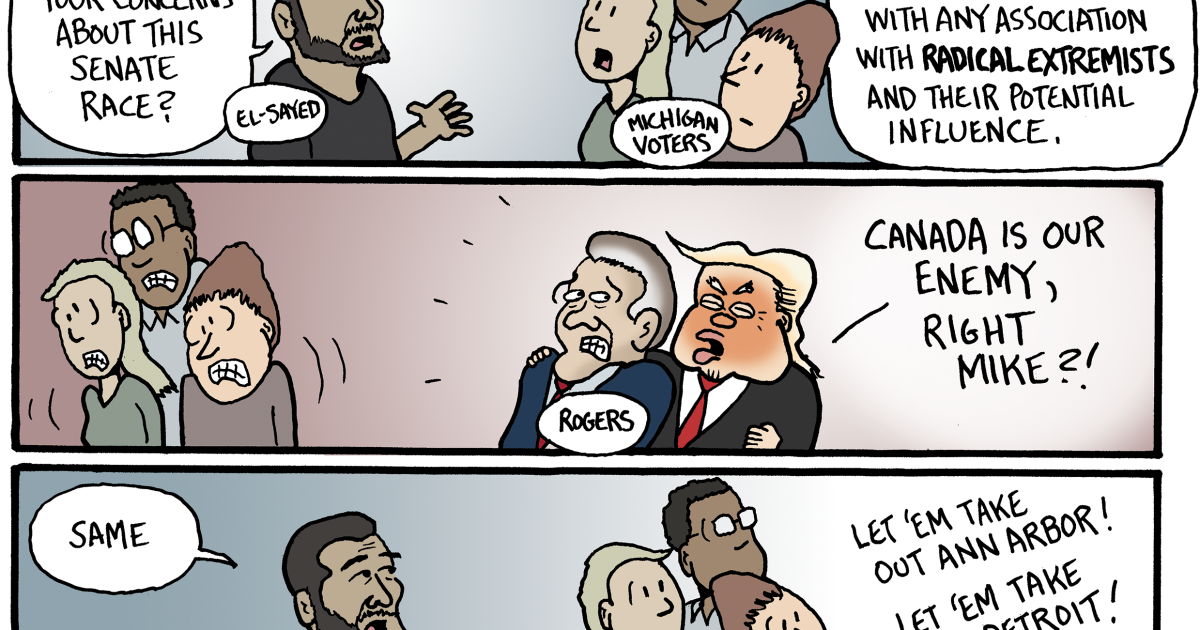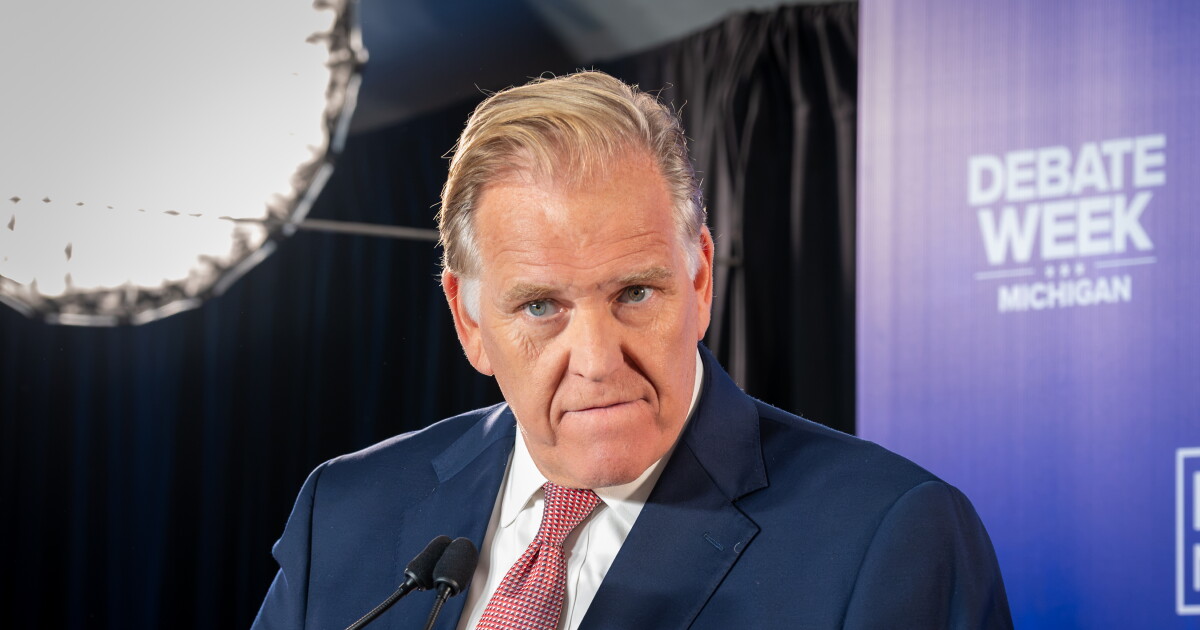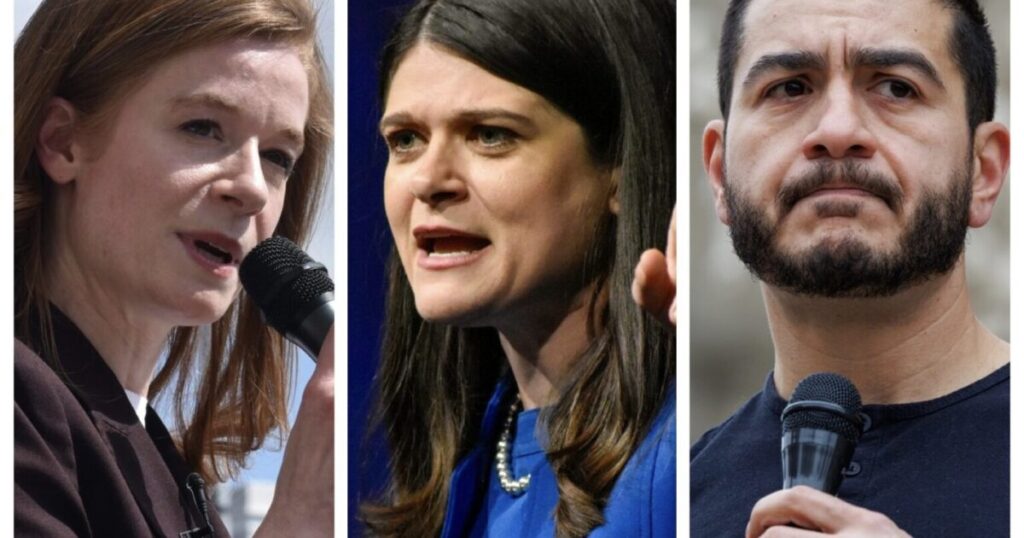
The Democratic primary race for the U.S. Senate in Michigan, featuring Mallory McMorrow, Haley Stevens, and Abdul El-Sayed, is intensifying with a series of contentious exchanges. Initially, a calm competition with overlapping policy agendas has now evolved into a fierce battle marked by personal attacks and strategic endorsements.
McMorrow recently faced scrutiny over her decision to delete numerous social media posts. These posts included comments on Michigan winters and her voting history in California, her former home. Despite her appearance on CNN to dismiss these reports, critics, particularly from Stevens’ camp, described her response as damaging.
Stevens’ campaign criticized McMorrow’s deletion of social media content, asserting that McMorrow’s attempts to explain the posts as typical millennial expression lacked authenticity.
Meanwhile, Stevens faced challenges at the Michigan Democratic Party endorsement convention, where she was booed on stage. However, she gained significant momentum by securing an endorsement from former U.S. Sen. Debbie Stabenow.
Endorsements and Strategic Alliances
Stabenow’s support for Stevens followed her decision not to seek reelection, endorsing Stevens as the candidate most capable of defeating GOP contender Mike Rogers. Stabenow’s endorsement included media appearances praising Stevens as a “workhorse.”
McMorrow’s team responded by criticizing Stabenow and Senate Minority Leader Chuck Schumer’s support for Stevens, arguing that the political landscape in Michigan requires new leadership.
McMorrow’s spokesperson, Hannah Lindow, emphasized that endorsements don’t replace facts, noting that Democrats are reportedly less popular than Donald Trump in Michigan. Lindow underscored McMorrow’s connection with grassroots voters, suggesting she is the only candidate capable of securing victory in November.
Josh Cowen, a former U.S. House candidate, commented on X that criticizing Stabenow’s endorsement of Stevens was a deliberate choice.
Contentious Issues and Campaign Tactics
McMorrow’s team has also targeted Stevens over her congressional record supporting ICE, highlighting her votes and the support she received from external groups to bolster her stance. Stevens’ vote on HR 488, which included gratitude to law enforcement agencies like ICE, was particularly noted.
The emergence of a $5 million ad campaign from the Center for Democratic Priorities in support of Stevens raised suspicions about funding sources, with some speculating AIPAC’s involvement, which the group denied on X.
In the backdrop of McMorrow and Stevens’ rivalry, El-Sayed remained relatively passive until a Politico report raised questions about his medical credentials. The report found no evidence of him practicing as a licensed physician.
El-Sayed’s spokesperson, Roxie Richner, defended his qualifications, detailing his academic achievements and public health expertise, asserting his legitimacy as a candidate advocating for Medicare for All.
Richner emphasized that any attempts to question “Dr. El-Sayed’s credentials, which are matters of public record, are an attempt to distract from the fact that Medicare for All is a broadly popular policy, and that he is the only candidate in this race willing to fight for it.”
This story was originally published by Michigan Advance.
—
Read More Michigan News