
Get an insider’s look into what’s happening in and around the halls of power with expert reporting, analysis, and insight from the editors and reporters of Montana Free Press. Sign up to get the free Capitolized newsletter delivered to your inbox every Thursday.
May 14, 2026
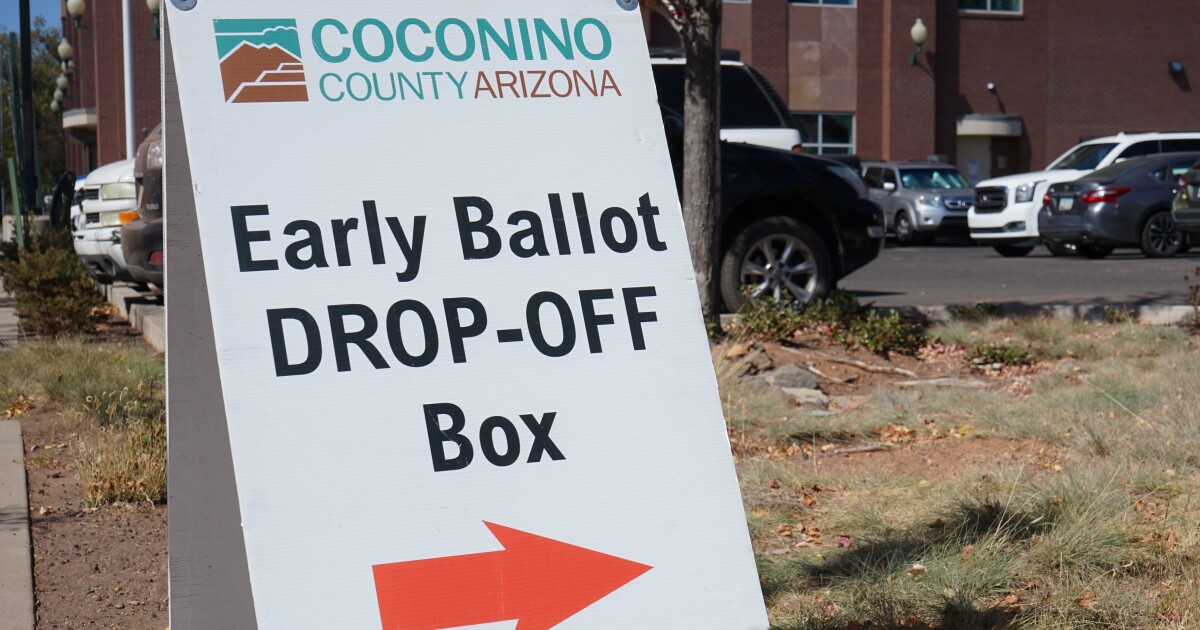
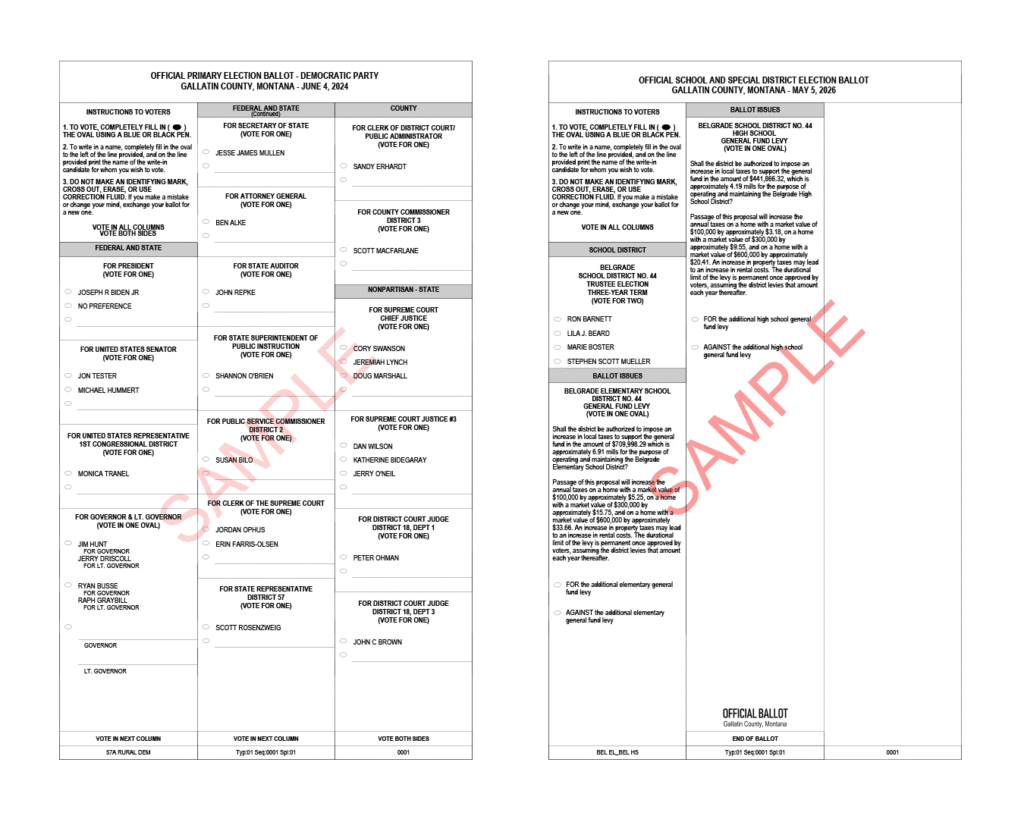
Aspirants like Mickey Mouse will be disappointed as Montana voters can no longer write undeclared candidates onto ballots, following a 2025 Montana Legislature law. This change, evident on 2026 primary ballots arriving in mailboxes, eliminates the long-standing blank lines once available for write-ins.
Ballots still feature instructions on writing in a name, but without the necessary spaces, leaving them redundant.

“The instructions are required,” explained Dayna Causby, Yellowstone County elections administrator, emphasizing that write-ins must be qualified by county or state to be counted.
Many write-ins have historically been ineligible. Eligibility criteria like residency must be met, disqualifying fictional entries like Mickey Mouse. Even real names weren’t counted without official notification to election officials.
Lawmakers opted to remove the write-in spaces through the secretary of state’s rule-making following House Bill 207, sponsored by Jodee Etchart, R-Billings. This decision was due to no registered write-in candidates per HB 207 requirements, eliminating the need for ballot space.
No write-in candidates are registered for the primary, but general election candidates have until 90 days prior to register and have their names counted. If such candidates emerge, the ballot spaces will be reinstated.
“That’s valuable real estate to me,” noted Regina Plettenberg, Ravalli County Clerk and Recorder, mentioning that write-in spaces can consume a significant portion of ballot pages.
Many historically cute or offensive write-ins have appeared, but some races have been won this way. Municipal races in West Yellowstone and party precinct positions have seen this success.
Not the first attempt to revise write-in rules, HB 207 follows previous efforts after the 2020 Senate race to stop counting non-registered write-ins.
Are Senate Supporters Playing 4-Dimensional PAC-Man?
In the Democratic primary for U.S. Senate, Alani Bankhead faced immense odds to reach voters. With only $10,000 in campaign funds, she struggled against opponent Reilly Neill, who boasted over $100,000.
Unexpectedly, Bankhead received compliments about ads she didn’t know existed, thanks to Progressive Vet PAC’s $397,000 expenditure on her behalf.
Critics suggest Progressive Vet PAC’s motive might be to assist independent candidate Seth Bodnar by dividing non-Republican votes. The PAC’s treasurer, former Democratic legislator Moffie Funk, has past ties to U.S. Sen. Jon Tester’s electoral efforts.
Bankhead, who had little knowledge of Funk, has focused solely on her campaign. Other Democrats like Brian Miller voiced concerns about potential conspiracies influencing the primary’s outcome.
Schweitzer, former Montana Gov. and Neill supporter, criticized Bankhead for minor gaffes, labeling them rookie mistakes.
Although PACs can’t coordinate with candidates, Progressive Vet continues promoting Bankhead, who can neither direct nor stop their spending.
Progressive Vet PAC’s funders remain undisclosed until after the primary, a common strategy for maintaining anonymity in campaign finance.
Funk, when questioned on funding sources, pointed to the PAC’s website narrative, which suggests Republican meddling is boosting Neill to harm Bodnar.
Records indicate More Jobs, Less Government PAC spent almost $599,000 opposing Neill, possibly driving Democrats to her side.
Though theories abound, both Bankhead and Neill resist stepping aside for Bodnar, challenging the notion of a Republican strategy.
“Not only no, but hell no,” Bankhead declared, emphasizing her steadfastness in the race.
—
Read More Montana News