Grocery prices got you down? Learn how to cut your food bill with NPR’s 4-part newsletter. Sign up here for budgeting tips, meal planning and more.
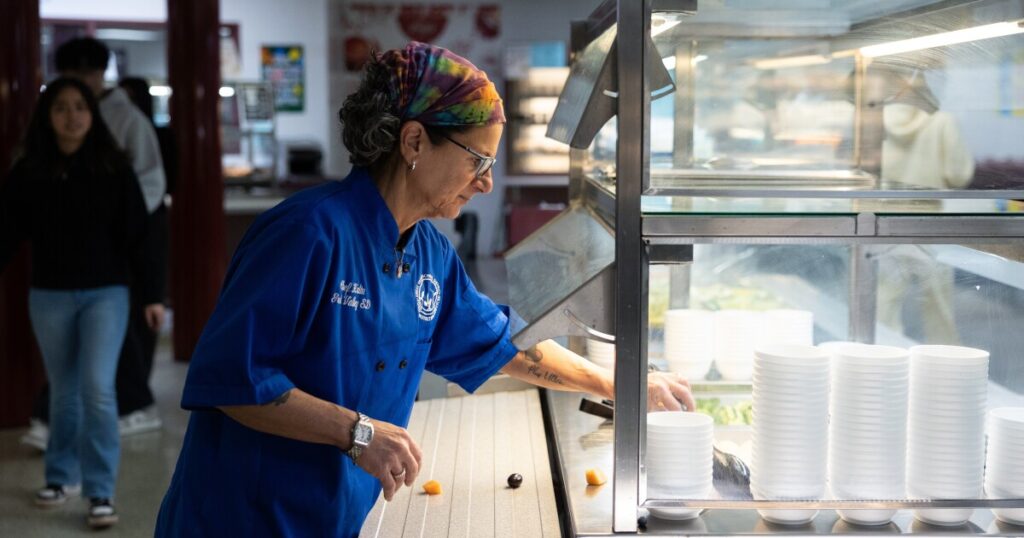
MALVERN, Pa. — As social media platforms overflow with enticing food visuals, schoolchildren are no longer satisfied with uninspiring lunch menus.
data-size=”fallbackImageSizeMobile” />
data-size=”fallbackImageSizeMobile” />
data-size=”fallbackImageSize” />
data-size=”fallbackImageSize” />
srcset=”https://npr.brightspotcdn.com/dims4/default/d73c054/2147483647/strip/true/crop/3648×5472+0+0/resize/1760×2640!/quality/90/?url=https%3A%2F%2Fnpr.brightspotcdn.com%2Fdims3%2Fdefault%2Fstrip%2Ffalse%2Fcrop%2F3648x5472%200%200%2Fresize%2F3648x5472%21%2F%3Furl%3Dhttp%3A%2F%2Fnpr-brightspot.s3.amazonaws.com%2F26%2F70%2F4cac19d64e7c88b85105e3e045bd%2Fschoolnutrition-108.JPG 2x”
width=”880″ height=”1320″ loading=”lazy”
src=”https://npr.brightspotcdn.com/dims4/default/0067ffa/2147483647/strip/true/crop/3648×5472+0+0/resize/880×1320!/quality/90/?url=https%3A%2F%2Fnpr.brightspotcdn.com%2Fdims3%2Fdefault%2Fstrip%2Ffalse%2Fcrop%2F3648x5472%200%200%2Fresize%2F3648x5472%21%2F%3Furl%3Dhttp%3A%2F%2Fnpr-brightspot.s3.amazonaws.com%2F26%2F70%2F4cac19d64e7c88b85105e3e045bd%2Fschoolnutrition-108.JPG” />
Rachel Wisniewski for NPR /
Great Valley School District.
“I don’t have a TikTok account, but they’re telling me, ‘Hey, I saw this on TikTok. Can you make this? Can we do
this?'” said Nichole Taylor, supervisor of food and nutrition services at the Great Valley School District in
Malvern, Pennsylvania.
“I would have never asked my lunch lady to make something special for me. I would’ve just ate what they told me,”
she said, adding that the students are “very engaged.”
Since taking over the meal program in the suburban Philadelphia district a year and a half ago, Taylor has been
trying to introduce more fresh food to the menu while dealing with budget limitations and a shortage of skilled
labor.
However, districts like Taylor’s and others nationwide are on edge about the potential rise in meal preparation
costs.
This is due to new national dietary guidelines announced in January by Health Secretary Robert F. Kennedy Jr.,
outlining the Make America Healthy Again plan. These guidelines, which discourage highly processed foods and
promote “high-quality, nutrient-dense” protein, form the basis of federal nutrition standards for schools
participating in federal meal programs.
Many school districts depend on processed foods to serve their students, and protein is already the priciest
item on the cafeteria menu, according to school nutrition experts.
In the contiguous 48 states, the U.S. Department of Agriculture reimburses schools about $4.60 per meal for
students eligible for free lunch, $4.20 for reduced-price lunch, and $0.44 for full-price paying students,
according to the School Nutrition Association (SNA).
data-size=”fallbackImageSizeMobile” />
data-size=”fallbackImageSizeMobile” />
data-size=”fallbackImageSize” />
data-size=”fallbackImageSize” />
srcset=”https://npr.brightspotcdn.com/dims4/default/66e250d/2147483647/strip/true/crop/4000×4000+0+0/resize/1760×1760!/quality/90/?url=https%3A%2F%2Fnpr.brightspotcdn.com%2Fdims3%2Fdefault%2Fstrip%2Ffalse%2Fcrop%2F4000x4000%200%200%2Fresize%2F4000x4000%21%2F%3Furl%3Dhttp%3A%2F%2Fnpr-brightspot.s3.amazonaws.com%2F79%2F51%2Ff4e454ef47a38cf4d3beb399e21c%2Fschool-lunch-trio.jpg 2x”
width=”880″ height=”880″ loading=”lazy”
src=”https://npr.brightspotcdn.com/dims4/default/51610e8/2147483647/strip/true/crop/4000×4000+0+0/resize/880×880!/quality/90/?url=https%3A%2F%2Fnpr.brightspotcdn.com%2Fdims3%2Fdefault%2Fstrip%2Ffalse%2Fcrop%2F4000x4000%200%200%2Fresize%2F4000x4000%21%2F%3Furl%3Dhttp%3A%2F%2Fnpr-brightspot.s3.amazonaws.com%2F79%2F51%2Ff4e454ef47a38cf4d3beb399e21c%2Fschool-lunch-trio.jpg” />
Rachel Wisniewski for NPR /
to enhance its meal program and get more students into the breakfast and lunch lines.
Federal and state grants are the primary funding sources in Taylor’s district, covering expenses like staff wages,
kitchen equipment, and food costs. While Taylor is supportive of the nutritional aims of the new federal
standards, she is apprehensive about their potential impact on schools that are already struggling financially.
“We want to follow the guidelines, because we are that voice that says, ‘No, you can eat healthy and still eat
really well,'” Taylor said. “But we also have to be realistic and say we need the funding for it.”
Concurrently, the Trump administration has reduced funding programs that previously allowed schools to purchase
local food from farmers.
How dietary guidelines can affect schools
data-size=”fallbackImageSizeMobile” />
data-size=”fallbackImageSizeMobile” />
data-size=”fallbackImageSize” />
data-size=”fallbackImageSize” />
srcset=”https://npr.brightspotcdn.com/dims4/default/5e2ae85/2147483647/strip/true/crop/5418×3611+0+0/resize/1760×1174!/quality/90/?url=https%3A%2F%2Fnpr.brightspotcdn.com%2Fdims3%2Fdefault%2Fstrip%2Ffalse%2Fcrop%2F5418x3611%200%200%2Fresize%2F5418x3611%21%2F%3Furl%3Dhttp%3A%2F%2Fnpr-brightspot.s3.amazonaws.com%2Fb9%2Fe3%2F1f5753cc416eb69f2125832ad005%2Fgettyimages-2255262632.jpg 2x”
width=”880″ height=”587″ loading=”lazy”
src=”https://npr.brightspotcdn.com/dims4/default/a755014/2147483647/strip/true/crop/5418×3611+0+0/resize/880×587!/quality/90/?url=https%3A%2F%2Fnpr.brightspotcdn.com%2Fdims3%2Fdefault%2Fstrip%2Ffalse%2Fcrop%2F5418x3611%200%200%2Fresize%2F5418x3611%21%2F%3Furl%3Dhttp%3A%2F%2Fnpr-brightspot.s3.amazonaws.com%2Fb9%2Fe3%2F1f5753cc416eb69f2125832ad005%2Fgettyimages-2255262632.jpg” />
Anna Moneymaker / Getty Images
/
Getty Images
guidelines, including an emphasis on proteins and full-fat dairy, as well as limits on processed
foods.
Agriculture Secretary Brooke Rollins expressed at a press conference in January her particular interest in how
these guidelines could enhance child nutrition.
“Right now, that is going to be the single most important, from my perspective, move forward — is the school
lunches and making sure that we’re getting the right amount, the best amount and the most nutrient-dense foods
into the schools,” Rollins said.
Some medical professionals, however, have raised concerns over the new food pyramid’s emphasis on saturated fat
sources like red meat and full-fat dairy. “It does go against decades and decades of evidence and research,”
Stanford University nutrition expert Christopher Gardner
href=”https://www.npr.org/2026/01/07/nx-s1-5667021/dietary-guidelines-rfk-jr-nutrition” class=”Link”
target=”_blank”>told NPR this year. Gardner was a member of the Dietary Guidelines Advisory Committee.
The actual impact of the new dietary guidelines on schools remains uncertain. The USDA is still in the process
of updating the nutrition standards required for institutions participating in the National School Lunch Program
and the School Breakfast Program. These programs fed 30 million children last year. The department called the new
guidelines a “pivotal step to Make America Healthy Again through real, nutrient-dense foods” and stated that
their release “kicks off a multi-year effort” to update the rules of the department’s nutrition programs through
a formal rule-making process, which will include public comment.
data-size=”fallbackImageSizeMobile” />
data-size=”fallbackImageSizeMobile” />
data-size=”fallbackImageSize” />
data-size=”fallbackImageSize” />
srcset=”https://npr.brightspotcdn.com/dims4/default/27edefc/2147483647/strip/true/crop/4030×3000+0+0/resize/1760×1310!/quality/90/?url=https%3A%2F%2Fnpr.brightspotcdn.com%2Fdims3%2Fdefault%2Fstrip%2Ffalse%2Fcrop%2F4030x3000%200%200%2Fresize%2F4030x3000%21%2F%3Furl%3Dhttp%3A%2F%2Fnpr-brightspot.s3.amazonaws.com%2F4d%2F24%2Fe9ce4d2a4208837804f0b9ad4823%2Fschool-lunch-duo1.jpg 2x”
width=”880″ height=”655″ loading=”lazy”
src=”https://npr.brightspotcdn.com/dims4/default/5677b7a/2147483647/strip/true/crop/4030×3000+0+0/resize/880×655!/quality/90/?url=https%3A%2F%2Fnpr.brightspotcdn.com%2Fdims3%2Fdefault%2Fstrip%2Ffalse%2Fcrop%2F4030x3000%200%200%2Fresize%2F4030x3000%21%2F%3Furl%3Dhttp%3A%2F%2Fnpr-brightspot.s3.amazonaws.com%2F4d%2F24%2Fe9ce4d2a4208837804f0b9ad4823%2Fschool-lunch-duo1.jpg” />
Rachel Wisniewski for NPR /
added sugar in certain items to align with new federal rules.
Mara Fleishman, CEO of the Chef Ann Foundation, which assists schools in cooking more meals from scratch,
welcomed the move away from highly processed foods but acknowledged the challenge in transitioning.
“The conundrum is that often animal protein in school food is one of the most highly processed components,” she
said. Fleishman used chicken nuggets as an example, which she said appear in some form in just about every school
district in the United States.
“The primary chicken nuggets that are served come cooked frozen. So you get it cooked, you put it in your
freezer, take it out, put it in the retherm [ovens], put it on the line. And it’s got about 35 ingredients in
it,” she said.
Fleishman said districts that want to cook chicken strips from scratch could make them fresh using six or seven
ingredients. “But it’s hard, because you go from buying a chicken nugget, which is totally contained,” to having
to consider the financial, labor and waste implications of cooking it from scratch, she said.
USDA cut funding that helped schools buy local food
While urging Americans to consume more “real” food, the Trump administration has cut funding that enabled schools
to purchase from local farmers.
In March of last year, the
href=”https://schoolnutrition.org/sna-news/proposed-school-meal-cuts-prompt-nationwide-advocacy/”
class=”Link” target=”_blank”>School Nutrition Association reported that the USDA ended the Local Food
for Schools Cooperative Agreement Program (LFS), erasing an estimated $660 million in funding. LFS provided
money that schools could use to buy “unprocessed or minimally processed foods, such as meat, poultry, fruit,
vegetables, seafood, and dairy” from local or regional producers,
href=”https://www.ams.usda.gov/selling-food-to-usda/lfs/faqs” class=”Link” target=”_blank”>according to the
program’s website.
“That was a big loss,” said Stephanie Dillard, SNA president and the nutrition director of an Alabama school
district, “because we lost the money we could spend on local farmers.”
The USDA said in an emailed statement that the Local Food for Schools Cooperative Agreement Program — as well as
the Local Food Purchase Assistance Cooperative Agreement Program (LFPA), which supports feeding programs such as
food banks — are being “sunsetted at the end of their performance periods.”
The department said that it released more than half a billion dollars in funding through the two programs last
year and that, as of March, $100 million remained in LFPA funding and more than $17 million remained in LFS
funding for states to use.
data-size=”fallbackImageSizeMobile” />
data-size=”fallbackImageSizeMobile” />
data-size=”fallbackImageSize” />
data-size=”fallbackImageSize” />
srcset=”https://npr.brightspotcdn.com/dims4/default/9c62cd5/2147483647/strip/true/crop/5472×3648+0+0/resize/1760×1174!/quality/90/?url=https%3A%2F%2Fnpr.brightspotcdn.com%2Fdims3%2Fdefault%2Fstrip%2Ffalse%2Fcrop%2F5472x3648%200%200%2Fresize%2F5472x3648%21%2F%3Furl%3Dhttp%3A%2F%2Fnpr-brightspot.s3.amazonaws.com%2F3a%2Ff4%2Fbec0c7a247e1a60e918dce3299f9%2Fschoolnutrition-033.JPG 2x”
width=”880″ height=”587″ loading=”lazy”
src=”https://npr.brightspotcdn.com/dims4/default/ead4d14/2147483647/strip/true/crop/5472×3648+0+0/resize/880×587!/quality/90/?url=https%3A%2F%2Fnpr.brightspotcdn.com%2Fdims3%2Fdefault%2Fstrip%2Ffalse%2Fcrop%2F5472x3648%200%200%2Fresize%2F5472x3648%21%2F%3Furl%3Dhttp%3A%2F%2Fnpr-brightspot.s3.amazonaws.com%2F3a%2Ff4%2Fbec0c7a247e1a60e918dce3299f9%2Fschoolnutrition-033.JPG” />
Rachel Wisniewski for NPR /
Cafeteria staff sometimes make vegetarian entrees upon request.
The USDA also paused funding from the Patrick Leahy Farm to School grant program for the 2025 fiscal year, which a
spokesperson said was in response to
href=”https://www.whitehouse.gov/presidential-actions/2025/01/ending-radical-and-wasteful-government-dei-programs-and-preferencing/”
class=”Link” target=”_blank”>Trump’s executive order targeting diversity, equity and inclusion (DEI)
programs in January 2025.
However, the program reopened for the 2026 fiscal year and offered up to $18 million in awards. The department
said it “streamlined the Farm to School Grant application process and removed Biden-era DEI components to ensure
equal treatment, not preferential treatment, of applicants.” Rollins said in a statement that the grants are
“one of the best ways we can deliver nutritious, high-quality meals to children, while also strengthening local
agriculture.”
Schools have long called for more money for meals
For years, education administrators and child nutrition advocates have been saying that school cafeterias —
often called the biggest restaurants in town — operate on tight budgets due in part to inadequate reimbursements
from the federal government. Federal initiatives such as the National School Lunch Program and the School
Breakfast Program provide billions of dollars in funding each year to schools across the U.S. to keep their meal
programs afloat.
Reimbursement rates are adjusted annually based on the consumer price index, but school nutrition directors say
that the increases are not enough and that Congress needs to revisit the reimbursement formula altogether, as
meal programs become more expensive to operate.
“It all comes down to funding,” said Dillard, of the SNA. “The sky would be the limit if we had the funding. We
could cook all day long.”
data-size=”fallbackImageSizeMobile” />
data-size=”fallbackImageSizeMobile” />
data-size=”fallbackImageSize” />
data-size=”fallbackImageSize” />
srcset=”https://npr.brightspotcdn.com/dims4/default/b46b1a1/2147483647/strip/true/crop/4030×3000+0+0/resize/1760×1310!/quality/90/?url=https%3A%2F%2Fnpr.brightspotcdn.com%2Fdims3%2Fdefault%2Fstrip%2Ffalse%2Fcrop%2F4030x3000%200%200%2Fresize%2F4030x3000%21%2F%3Furl%3Dhttp%3A%2F%2Fnpr-brightspot.s3.amazonaws.com%2F1f%2F7b%2Fdbc68d364e8ebaa5023e6c12c958%2Fschool-lunch-duo2.jpg 2x”
width=”880″ height=”655″ loading=”lazy”
src=”https://npr.brightspotcdn.com/dims4/default/6bbb8ac/2147483647/strip/true/crop/4030×3000+0+0/resize/880×655!/quality/90/?url=https%3A%2F%2Fnpr-brightspotcdn.com%2Fdims3%2Fdefault%2Fstrip%2Ffalse%2Fcrop%2F4030x3000%200%200%2Fresize%2F4030x3000%21%2F%3Furl%3Dhttp%3A%2F%2Fnpr-brightspot.s3.amazonaws.com%2F1f%2F7b%2Fdbc68d364e8ebaa5023e6c12c958%2Fschool-lunch-duo2.jpg” />
Rachel Wisniewski for NPR /
feedback on menu changes.
In an
href=”https://schoolnutrition.org/wp-content/uploads/2026/01/SY-25-26-School-Nutrition-Trends-Report.pdf”
class=”Link” target=”_blank”>SNA survey released in January, nearly 95% of school nutrition directors
expressed concern over the financial sustainability of their programs three years from now.
“The current reimbursement rate isn’t even quite enough for the current status quo,” said Jennifer Gaddis, a
University of Wisconsin-Madison associate professor of civil society and community studies who studies school
food systems, “let alone to do the holistic transformation that we need in order to make school meals really
important engines of public health and economic vitality in our communities.”
Moreover, Gaddis noted that the previous heat-and-serve model allowed schools to cut costs by employing fewer
workers for shorter shifts. Preparing meals from scratch would demand more labor hours and better-equipped
kitchens.
Many school meal programs receive state funding in addition to federal dollars, but the amounts vary.
target=”_blank”>According to SNA, nine states have dedicated state funds to provide universal free
school meals.
“If a kid is hungry, they’re not studying”
Despite budget and logistical challenges, more schools are discovering ways to expand their efforts in preparing
meals from scratch.
The Chef Ann Foundation, for instance, provides an online database of recipes and guides for districts aiming
for fresher meal preparations, along with apprenticeships, fellowships, and other programs for nutritional
staff.
The Great Valley School District hired a chef in December to help source local ingredients, expand freshly
prepared menu options, and train staff in new kitchen skills. Jenifer Halin, the district’s new culinary
coordinator, discovered frozen, precut vegetables in the cafeteria kitchen when she arrived. “And I have already
transitioned everybody over to cutting fresh vegetables. It’s been simple.”
data-size=”fallbackImageSizeMobile” />
data-size=”fallbackImageSizeMobile” />
data-size=”fallbackImageSize” />
data-size=”fallbackImageSize” />
srcset=”https://npr.brightspotcdn.com/dims4/default/d6035c4/2147483647/strip/true/crop/5139×3426+0+0/resize/1760×1174!/quality/90/?url=https%3A%2F%2Fnpr.brightspotcdn.com%2Fdims3%2Fdefault%2Fstrip%2Ffalse%2Fcrop%2F5139x3426%200%200%2Fresize%2F5139x3426%21%2F%3Furl%3Dhttp%3A%2F%2Fnpr-brightspot.s3.amazonaws.com%2F41%2F50%2F978a0f2549a6b0ad2d4f31efe727%2Fschoolnutrition-063.JPG 2x”
width=”880″ height=”587″ loading=”lazy”
src=”https://npr.brightspotcdn.com/dims4/default/272f5ae/2147483647/strip/true/crop/5139×3426+0+0/resize/880×587!/quality/90/?url=https%3A%2F%2Fnpr.brightspotcdn.com%2Fdims3%2Fdefault%2Fstrip%2Ffalse%2Fcrop%2F5139x3426%200%200%2Fresize%2F5139x3426%21%2F%3Furl%3Dhttp%3A%2F%2Fnpr-brightspot.s3.amazonaws.com%2F41%2F50%2F978a0f2549a6b0ad2d4f31efe727%2Fschoolnutrition-063.JPG” />
Rachel Wisniewski for NPR /
School District’s freshly prepared offerings and training staff members on new kitchen skills.
Taylor, the district’s supervisor of food and nutrition services, has even tried to reformulate some of those
meals suggested by students to meet federal nutrition standards, and she said she still hopes to cook more meals
from scratch, which would mean giving more staff members full-time status and culinary training. (The cost of
cheaper raw ingredients might make the overall financial math even out, she said.)
“I want to be able to offer our students our own muffins, our own French toast sticks,” Taylor said, standing in
Great Valley High School’s walk-in freezer next to boxes of frozen chicken breasts and banana chocolate chip
breakfast bars. “I want to be able to produce our own pizza, so that we’re not having to buy out from other
vendors.”
Her efforts have not gone unnoticed by the students.
“It started with like one day randomly they had this grilled cheese and tomato bisque, and it was like
ancient-grain bread, and everyone was like, ‘It tasted like Panera,'” said Varun Kartick, a Great Valley High
School senior.
More new dishes followed. Kartick, who doesn’t eat pork or beef, said the vegetables have been fresher and the
cafeteria staff often makes entrees vegetarian upon request. On a given day, he may opt for a seasonal chicken
wrap or fill up a plate with pasta and vegetables.
data-size=”fallbackImageSizeMobile” />
data-size=”fallbackImageSizeMobile” />
data-size=”fallbackImageSize” />
data-size=”fallbackImageSize” />
srcset=”https://npr.brightspotcdn.com/dims4/default/773d4ed/2147483647/strip/true/crop/4188×2792+0+0/resize/1760×1174!/quality/90/?url=https%3A%2F%2Fnpr.brightspotcdn.com%2Fdims3%2Fdefault%2Fstrip%2Ffalse%2Fcrop%2F4188x2792%200%200%2Fresize%2F4188x2792%21%2F%3Furl%3Dhttp%3A%2F%2Fnpr-brightspot.s3.amazonaws.com%2F46%2F22%2Fa46a9dbe4e9b87adf28bcace5e0d%2Fschoolnutrition-072.JPG 2x”
width=”880″ height=”587″ loading=”lazy”
src=”https://npr.brightspotcdn.com/dims4/default/762f9d7/2147483647/strip/true/crop/4188×2792+0+0/resize/880×587!/quality/90/?url=https%3A%2F%2Fnpr.brightspotcdn.com%2Fdims3%2Fdefault%2Fstrip%2Ffalse%2Fcrop%2F4188x2792%200%200%2Fresize%2F4188x2792%21%2F%3Furl%3Dhttp%3A%2F%2Fnpr-brightspot.s3.amazonaws.com%2F46%2F22%2Fa46a9dbe4e9b87adf28bcace5e0d%2Fschoolnutrition-072.JPG” />
Rachel Wisniewski for NPR /
Valley 5/6 Center.
“It’s been very convenient and very nice to see that change, that we’re not disgusted [by the food] or having to
pack a lunch,” he said. “There’s an option that we can have at school.”
Among the items on offer in the cafeteria that day were pizza and chicken fingers, as well as avocado toast and a
salad made with Pennsylvania sweet potatoes.
Taylor said getting more students to eat breakfast and lunch at school would mean more federal reimbursements
that could help her expand the district’s nutrition program. But it would also ensure that — most importantly to
her — more students are fed.
“If a kid is hungry, they’re not studying. They can’t learn. They’re acting out,” Taylor said. “But if you build
this into part of their school day to where they feel like this is the norm for them, then you’ve knocked down
that hurdle.”
Grocery prices got you down? Learn how to cut your food bill with NPR’s 4-part newsletter.
href=”https://www.npr.org/newsletter/food-budget” class=”Link” target=”_blank”>Sign up here for
budgeting tips, meal planning and more.
Copyright 2026 NPR
—
Read More Michigan News