This story was produced by the Associated Press, in partnership with Chalkbeat and AL.com, and reprinted with permission.
MODESTO, Calif. – In an effort to boost student morale before tests, teacher Nancy Barajas dims the lights, activates a disco ball, and plays upbeat music for her sixth graders. This “pre-celebration” dance aims to enhance their confidence before exams.
Elementary schools in Modesto, California, have seen rising reading and math scores over the last several years, a contrast to national trends. Researchers label this a reading recession, a downturn that began before pandemic disruptions.
A study by Harvard, Stanford, and Dartmouth on state test scores for grades 3-8 across 5,000 districts in 38 states reveals only modest progress. From 2022 to 2025, five states and the District of Columbia noted measurable reading score growth. Students nationwide lag almost half a grade level behind pre-pandemic levels.
Despite efforts post-COVID-19, reading scores have declined since 2013 for eighth graders and 2015 for fourth graders, according to the National Assessment for Educational Progress. “The pandemic was the mudslide that had followed seven years of steady erosion in achievement,” said Thomas Kane, a professor involved in the Education Scorecard project.
However, certain states and districts have made strides by emphasizing phonics-based instruction and extra support for struggling readers. In math, nearly all states reported improvements and reduced absenteeism from 2022 to 2025. Over 400 districts, including Modesto, outperformed similar districts in reading or math growth.
Debate continues over the reading recession’s causes, with social media’s impact on kids’ reading habits being a factor. States easing off standardized testing consequences also play a role, says Kane. States like Louisiana, Maryland, Tennessee, Kentucky, and Indiana improved reading scores by mandating a phonics-centric approach known as the “science of reading.”
Historically, schools have used methods that downplayed phonics, instead favoring context-based word guessing. As reading scores fell, advocates pushed for research-backed methods focusing on phonics. States now require screening for learning disabilities like dyslexia and hiring coaching experts to enhance reading instruction.
In Modesto, a pandemic-era overhaul of reading instruction, along with a math focus, led to notable learning gains. Students gained the equivalent of 18 weeks in math and 13 weeks in reading, yet scores remain below grade level. A similar focus in Detroit improved reading scores alongside increased attendance, aided by a $94 million lawsuit settlement.
Southern states have led education reforms, shifting to research-based methods, with states funding teacher training. Louisiana and Alabama notably improved math and reading scores post-pandemic. Alabama mandated phonics-based instruction and modeled math reforms on its reading success.
Oxmoor Valley Elementary in Birmingham hired a math specialist, and its reading and math scores improved steadily. “We can provide all of these supports, but at the same time, hold kids to high expectations,” stated Birmingham Superintendent Mark Sullivan.
Historically, the U.S. saw significant educational progress from the 1990s to the mid-2010s, with rising test scores and reduced racial disparities. “We made enormous progress as a country in terms of educational success,” said Stanford professor Sean Reardon, emphasizing the potential for continued improvement.
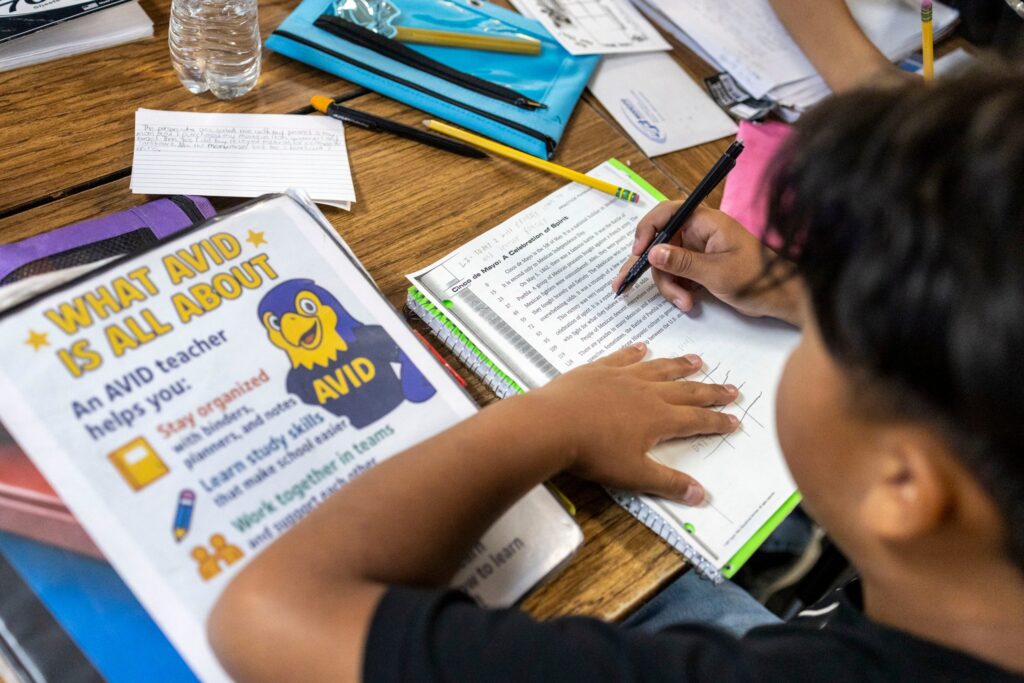
At Modesto’s Fairview Elementary, Barajas’ students practice reading speed and fluency daily. After a dance break, they read texts together and in pairs, pairing English learners with native speakers. “Eventually, you get through the word like it’s water,” a student noted.
The Associated Press’ education coverage receives financial support from multiple private foundations. AP is solely responsible for all content. Find AP’s standards for working with philanthropies, a list of supporters and funded coverage areas at AP.org.
Was this story helpful? Leave a tip to support your education reporters.
The Hechinger Report is a nonprofit newsroom powered by reader support
—
Read More Kitchen Table News