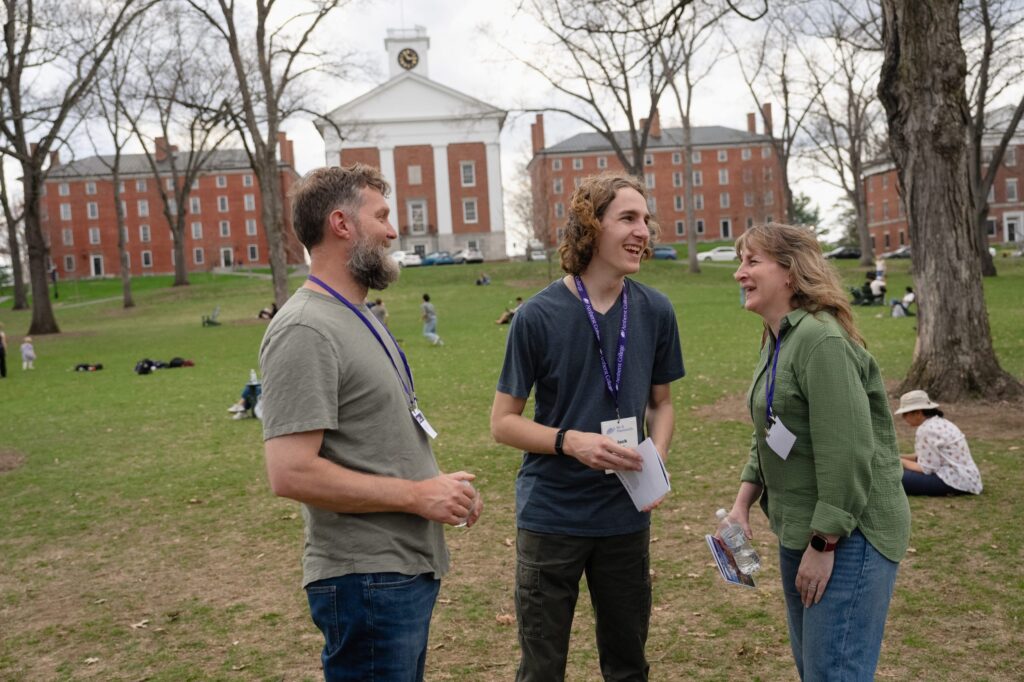
AMHERST, Mass. — High school seniors gathered around a fire pit at Amherst College, offering fire-building tips as if it were a crucial exam. “This is our test of how rural you are,” joked Nathan Grove, the college’s assistant dean of admissions. He finally ignited the logs, allowing students to make s’mores during their two-day campus visit.
This event aimed to encourage rural students, who are often overlooked by elite colleges, to enroll. Jack Hancock, a senior from Milford, Pennsylvania, was surprised by the college’s interest in rural applicants. He beat the one-in-13 odds of admission and decided to attend.
The effort to recruit rural students is part of the STARS College Network, funded by Byron Trott, a University of Chicago alumnus. Although nearly a quarter of Americans live in rural areas, they comprise only 3% of students at top universities. While 90% of rural students graduate high school, only half proceed to college, compared to higher rates in urban areas.
Trott’s foundation has expanded STARS from 16 to 32 schools, including prestigious institutions like Yale and MIT. This initiative supports rural recruitment, contrasting with a tendency to focus on urban high schools. In the past year, rural applications to STARS schools rose 15%, totaling over 90,000, as the focus shifts from applications to enrollments.
“This process is moving into not just the ‘to college’ part but the ‘through college’ part,” said Marjorie Betley, STARS’ executive director. Rural students often face skepticism about the value of higher education, with many questioning its impact on personal values, according to a Quinnipiac University poll.
Private colleges are often financially out of reach for rural families, whose median income is 12% lower than the national average. This economic disparity, along with a lack of exposure to college-level resources, contributes to a perception that elite schools are unattainable.
Amherst and other STARS schools offer prospective rural students free campus visits to demystify college life. Despite these efforts, many rural students like Olivia Meier from Alaska struggle with self-doubt. “It’s really easy to doubt yourself,” she said, until learning someone from her area had been admitted to a top university.
Rural students face unique challenges, including homesickness and a sense of not belonging. They are more likely to drop out than their urban counterparts. Amherst junior Ryan Peipher, from Lancaster, Pennsylvania, noted that rural students often lack the personal and professional networks that urban peers have. “For a student from rural America…how can they network?” he asked.
Increasing rural student enrollment benefits both the students and the colleges, said Amherst’s president, Michael Elliott. He emphasized the importance of diverse perspectives in academia. Last year, Amherst admitted 96 rural students, up from 70, increasing their rural student body to 11%. The initiative also aims to boost rural areas where young people struggle to find good jobs.
STARS executive director Marjorie Betley sees a shift in rural attitudes toward higher education. She attributes this to increased college outreach in rural areas, addressing long-standing distrust. “We haven’t shown them that we are people who you can trust,” she said.
For some rural students, attending a selective college seems almost fanciful. Kara Lewis, an Amherst junior from Maryland, remarked, “It seems like something from a movie.” Yet, once they experience college life, many develop a deeper appreciation for their roots.
—
Read More Kitchen Table News