Radioactive Waste Ban Enforced at Michigan Landfill Following Court Decision
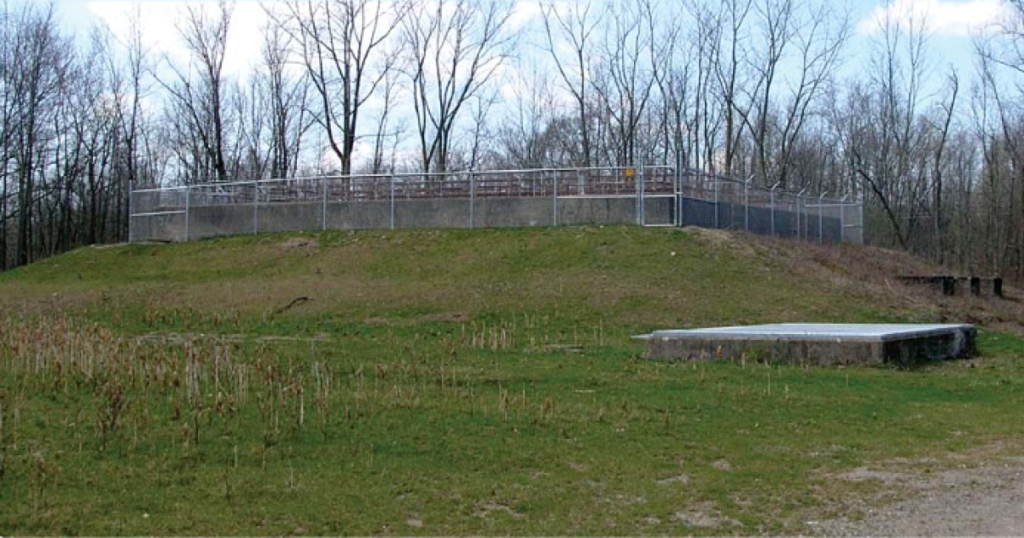
In a significant legal development, a Wayne County Circuit Court judge has permanently banned a landfill in Van Buren Township from receiving radioactive waste linked to the Manhattan Project. The decision, made by Judge Kevin Cox, follows a bench trial earlier this year, siding with Wayne County and several local communities in their lawsuit against Wayne Disposal, Inc.
Judge Cox’s ruling makes permanent a preliminary injunction from August 2025, prohibiting the facility from accepting radioactive waste, known as TENORM, from sites managed by the U.S. Army Corps of Engineers. The landfill, operated by Republic Services, was deemed inadequate in its ability to manage the long-term impacts of such waste.
Judge Cox emphasized, “Acceptance of any additional FUSRAP TENORM at the WDI Landfill facility would unreasonably interfere with rights common to the public and therefore constitutes a public nuisance.” This waste originates from Formerly Utilized Sites Remedial Action Program (FUSRAP) sites, which were pivotal in the development of nuclear weapons during World War II.
Republic Services intends to challenge the ruling. Roman Blahoski, the company’s spokesperson, stated, “Wayne Disposal, Inc. is a safe, well-managed facility that is specifically engineered to handle FUSRAP TENORM and other complex waste streams.” He expressed concerns about the ruling’s implications on interstate commerce and waste management.
Local Communities and Legal Disputes
Wayne County communities and leaders have been actively opposing the shipment of radioactive waste to the region. They filed a lawsuit in September 2024, after it was revealed that waste from the Niagara Falls Storage Site in New York was destined for Michigan. The opposition gained momentum with Wayne County joining the legal battle.
The state’s Department of Environment, Great Lakes, and Energy (EGLE) had earlier approved a significant expansion of the landfill, despite local resistance. The approval included a 5.2-million-cubic-yard increase in capacity. However, this decision faced a formal appeal from Michigan Against Atomic Waste (MAAW).
Environmental Concerns and Public Health Risks
Concerns about the landfill’s impact on the environment and public health were central to Judge Cox’s decision. Dr. Kimberlee Kearfott, a radiation protection expert, provided compelling testimony regarding increased radiation levels at the landfill’s monitoring sites since it began accepting TENORM in 2017. She noted, “It’s increasing the risk of cancers, life-shortening, and other effects associated with radiation.”
Judge Cox highlighted the potential threats to local water bodies, including Belleville Lake and Lake Erie, from radioactive waste and associated runoff. He pointed out that Wayne County’s population density and environmental conditions make it unsuitable for such waste compared to landfills in more arid regions.
Wayne Disposal’s Operational History
Despite these concerns, Wayne Disposal has historically accepted over 600,000 tons of TENORM without incident, according to Scott Watson, an attorney representing the landfill. He argued that no evidence had been presented to prove harm to residents from the waste.
However, the lawsuit emphasized the nuisance caused by disposing of elevated radiation waste near densely populated areas, exacerbating existing environmental issues in the community.
This article was first published by Planet Detroit and shared through a collaboration with The Associated Press.
—
Read More Michigan News