Michigan House Moves Forward with New Legislation on Protest Boundaries
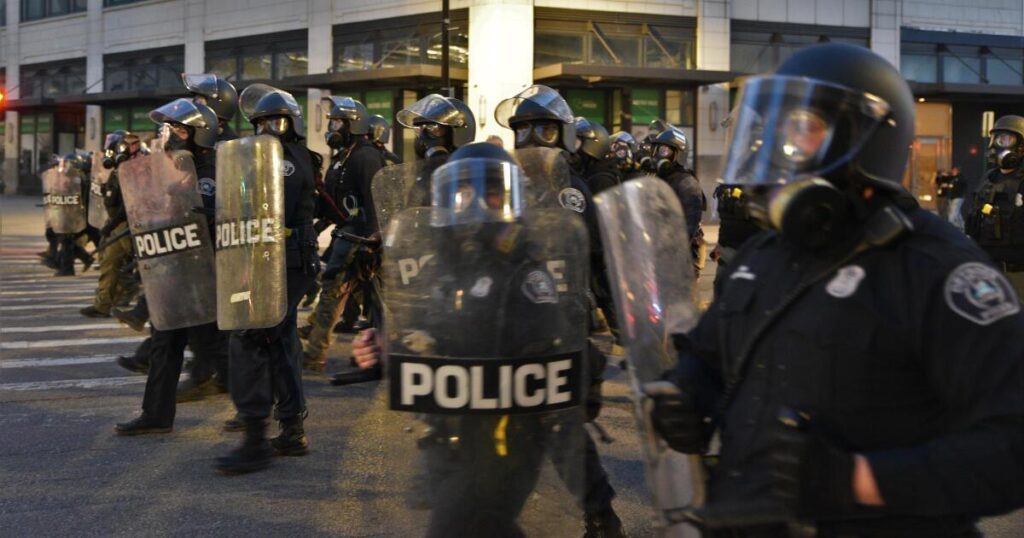
In a recent legislative session, the Michigan House passed a series of bills aimed at creating 25-foot buffer zones around law enforcement and emergency activities, allowing for the arrest of demonstrators who may pose threats to public safety personnel. These measures have spurred a mix of support and opposition among lawmakers and civil rights groups.
The catalyst for this legislation stems from protests targeting local law enforcement agencies in Michigan due to their collaboration with federal immigration authorities. Proponents argue that such demonstrations could jeopardize public safety and unfairly criticize officers performing their duties. For instance, Representative Mike Harris (R-Waterford Township), a sponsor of the bills, emphasized the risks involved at emergency scenes, stating, “Emergency scenes can involve traffic hazards, weapons, fire, hazardous materials or emotionally volatile individuals. People who insert themselves into these situations may not fully understand the dangers around them.”
Despite the bipartisan support for the bills, concerns have been raised about their implications. Representative Kelly Breen (D-Novi) expressed apprehension over the bills’ ambiguous language, which she believes could infringe on First Amendment rights. She remarked, “It is just a recipe for disaster. People won’t know what their rights are.” Breen suggested that more precise wording could have garnered her backing.
In alignment with these concerns, Kyle Zawacki from the American Civil Liberties Union of Michigan argued that the legislation appears to be more about restricting protests than safeguarding law enforcement activities. He noted, “Obstruction is already against the law. To obstruct an officer or first responder from doing their duty is already against the law, punishable by a felony and multiple years. We feel that this expands that further and in a way that is unnecessary.”
Critics also highlight the potential impact on public oversight, as the bills could hinder the ability of bystanders to record police actions, thereby affecting accountability.
The proposed legislation now advances to the state Senate for further consideration.
—
Read More Michigan News