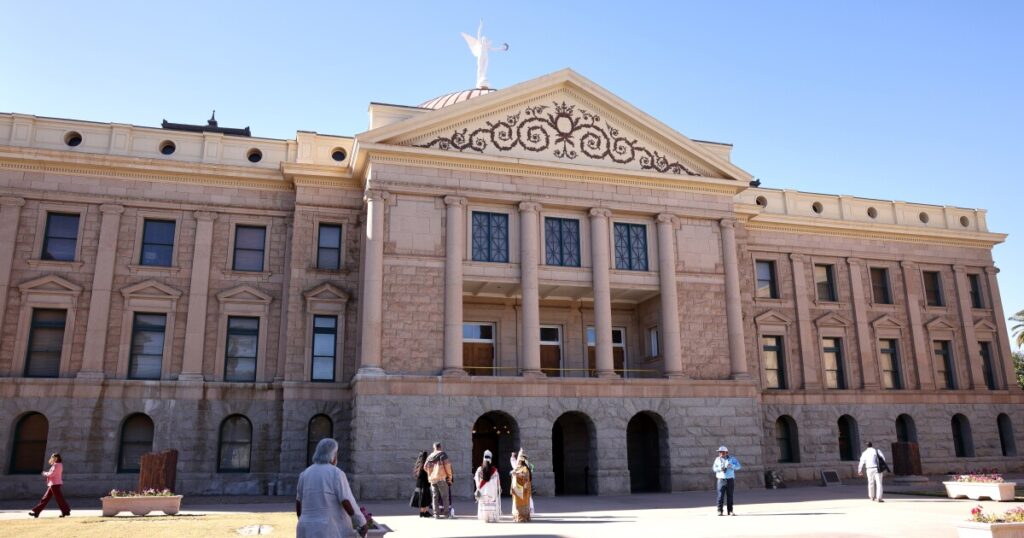
Arizona’s legislative body has taken a significant step by forwarding an $18.3 billion budget proposal that has garnered bipartisan support. This budget, which includes substantial tax cuts, also partially reverses previously suggested cuts to state agencies, put forth by the Republican majority in both the House and Senate.
The proposal breezed through a joint committee, receiving overwhelming backing with only three dissenting votes out of 28 lawmakers. According to Senate Minority Leader Priya Sundareshan (D-Tucson), Democrats rate their satisfaction with the budget between six and seven out of ten. The legislation now awaits votes from both the House and Senate, expected to take place on Thursday.
Democratic Achievements: Employment and Education
Democrats have emphasized their efforts to secure funding to counteract the impacts of HR 1, a federal tax cut bill signed by President Donald Trump. Since the approval of changes to the SNAP program last summer, over half of Arizona’s food stamp beneficiaries have been excluded from the program. The Department of Economic Security, responsible for SNAP administration, has faced challenges due to understaffing, complicating the application process under the new federal requirements.
Rep. Oscar De Los Santos (D-Laveen) highlighted the budget’s allocation of $21 million for new hires at AHCCCS and the Department of Economic Security, aimed at assisting Arizonans in adapting to HR 1’s changes. Additionally, $11 million is earmarked for rural hospitals affected by federal funding modifications.
Despite the absence of a renewal for Proposition 123, which was a crucial focus for Gov. Katie Hobbs and Democrats, other educational funding successes have been noted. This includes maintaining $37 million in a funding mechanism that aids low-income schools. “House Democrats and Senate Democrats have won $37 million in what’s called the opportunity weight,” stated De Los Santos, emphasizing its importance for schools serving underprivileged students. The budget also allocates $2 million to remove co-pays for students eligible for reduced-price lunches.
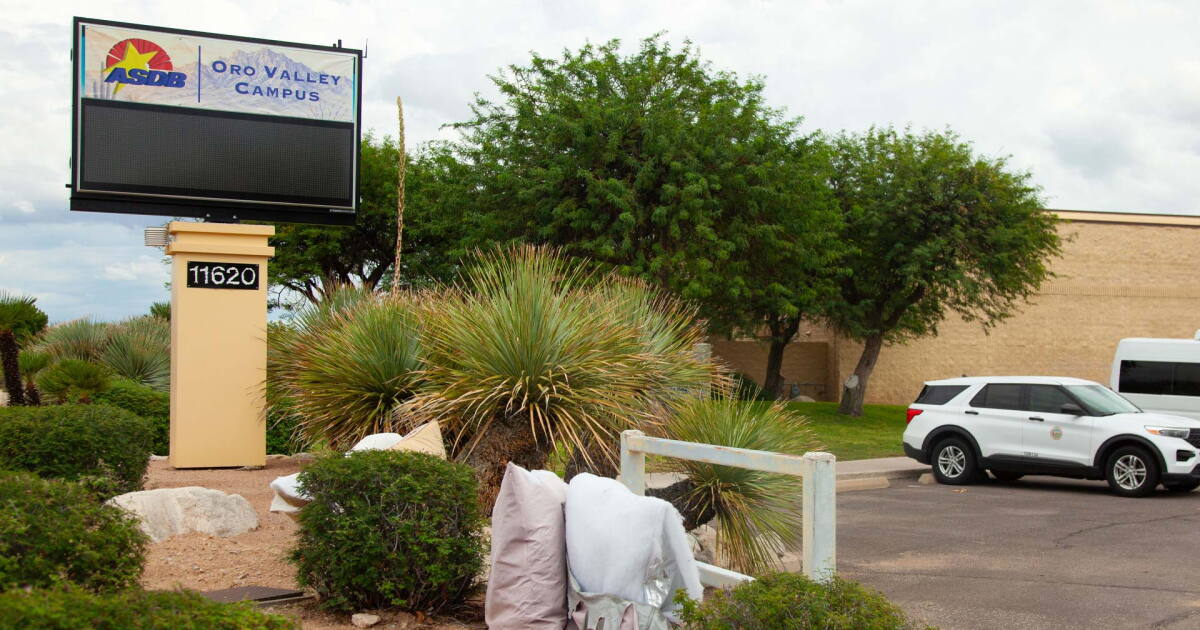
Most state agencies will face a 2.5% budget cut, sparing key departments like the Department of Economic Security and the Arizona State Schools for the Deaf and Blind. The Republican-only budget initially suggested a 5% reduction across most agencies, which was adjusted due to unexpected capital gains revenue.
Rep. David Livingston (R-Peoria) explained that higher-than-expected income from capital gains taxes reduced the necessity for drastic cuts. However, Sundareshan expressed concerns that this revenue might signal future economic challenges, describing it as a “lessened confidence in the stock market for the future.”
Republican Highlights: Tax Conformity
This year’s bipartisan budget aligns state tax policy with federal reforms, preventing the need for Arizonans to refile their taxes. Arizona is unique in fully adopting federal tax changes, a decision praised by Republicans despite initial resistance from both parties. GOP members highlighted Arizona’s status as the only state to implement President Trump’s tax cuts at the state level.
Although Gov. Hobbs previously vetoed a tax conformity package, Republicans fulfilled their promise to include it in the budget. Some adjustments, like reverting the State and Local Tax deduction cap back to $10,000 next year, were met with mixed feelings. “I was not happy that the SALT reform was done in D.C., but it was so — and we needed to honor that, because people have already filed taxes,” commented Livingston.
Sen. Mitzi Epstein (D-Tempe) criticized the budget’s tax cuts, warning of potential revenue declines affecting public services, including education and caregiver salaries.
Data Center Tax Breaks Temporarily Suspended
The budget imposes a three-year suspension on new tax incentives for data centers, marking a victory for Democrats. These tax breaks, in place since 2013, have come under scrutiny due to concerns about resource consumption. Although Gov. Hobbs originally proposed eliminating them, a compromise was reached with the temporary moratorium.
Livingston noted that this pause will not impact existing or approved data centers, and its financial impact is minimal. However, for Democrats, the moratorium signifies a shift in policy direction. De Los Santos remarked, “We have completely flipped the script,” highlighting Arizona’s pioneering step in implementing a stringent moratorium on data center tax incentives.
Excluded Measures: School Vouchers and Rentals
Missing from the budget are reforms to the state’s Empowerment Scholarship Accounts, a point of contention for Hobbs and Democrats. Additionally, proposed regulations on short-term rentals, such as those on platforms like Vrbo and Airbnb, were not included in the final budget.
—
Read More Arizona News
![Jody White’s Unconventional Michigan Supreme Court Candidacy Explored[embed]https://www.youtube.com/watch?v=8NfxFIPE4ac[/embed]](https://www.kitchentablenews.org/wp-content/uploads/2026/10/Jody-Whites-Unconventional-Michigan-Supreme-Court-Candidacy-Exploredembedhttpswwwyoutubecomwatchv8NfxFIPE4acembed.com2F842F0e2Fc7223daa43c9876b36a4e00773a42Fme-supc.png "Jody White’s Unconventional Michigan Supreme Court Candidacy Explored[embed]https://www.youtube.com/watch?v=8NfxFIPE4ac[/embed]")