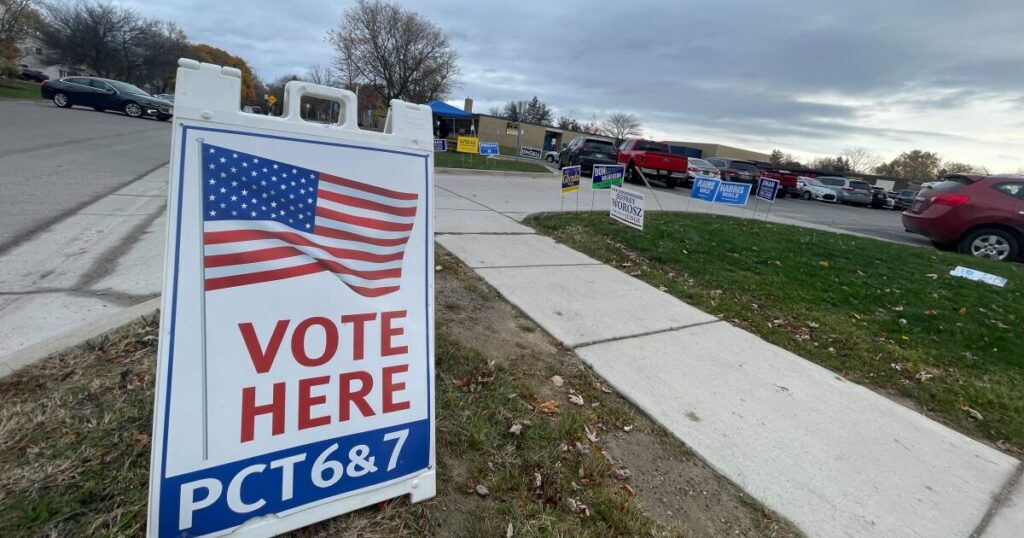
Michigan Senate Passes State-Level Voting Rights Act
In a significant move, the Michigan Senate has approved new legislation aimed at establishing a state-level Voting Rights Act. This initiative is a response to the U.S. Supreme Court’s recent decision to nullify key sections of the federal voting rights law.
The proposed legislation empowers individuals to legally contest any local measures perceived to complicate or obscure the voting process, particularly for minority groups. Additionally, the bills seek to broaden the availability of election-related materials in languages other than English.
Another component of the legislation is the establishment of a Michigan Voting and Elections Database and Institute. This body will be responsible for gathering data and developing strategies to enhance the voting systems and the management of elections in the state.
Michigan’s voter-endorsed constitutional amendment delegates the task of drawing congressional and legislative maps to an independent bipartisan redistricting commission. However, the Supreme Court’s ruling compromised provisions intended to safeguard minority voting rights.
Senator Jeremy Moss (D-Southfield), head of the Senate Elections and Ethics Committee, emphasized the necessity for states to protect voter rights in light of the Supreme Court’s decisions and actions from the previous Trump administration. “So the Supreme Court gutted major provisions of the Voting Rights Act and now, again, as with everything else, it’s up to the states to come forward and protect our constituents,” he stated. “Whether it’s after Roe versus Wade or after this Supreme Court decision on the Voting Rights Act.”
The legislative push aligns with Michigan’s history of addressing federal legal changes at the state level. Notably, after the Supreme Court’s decision to overturn the federal right to abortion, Michigan voters ratified the Right to Reproductive Freedom amendment in 2022, and the Democratic-led Legislature subsequently eased abortion restrictions.
Senate Majority Leader Winnie Brinks (D-Grand Rapids) highlighted the importance of proactive state legislatures. “This does show the importance of having strong state legislatures who will defend our very democracy when it is threatened at the federal level,” she remarked following the Senate vote.
The bills passed in the Senate strictly along party lines, with Republican opposition citing concerns about increased burdens on local election officials and potential facilitation of lawsuits against local governments. Senator Ruth Johnson (R-Groveland Township), a former Michigan Secretary of State, argued, “They would create a huge bureaucracy under the Secretary of State with the primary purpose, it would seem, to facilitate lawsuits against our local units of government and our hard-working clerks.”
The proposed bills now advance to the Michigan House, which is under Republican control, where their future remains uncertain. Representative Rachelle Smit (R-Martin), chair of the House Election Integrity Committee, expressed skepticism about their prospects: “House Republicans aren’t interested in passing bills just for show, that duplicate federal protections, that have been in place for decades,” she said. “While the Senate is busy wasting time on campaign bills, House Republicans will remain focused on improving Michigan elections by safeguarding systems and ensuring only citizens can cast a ballot.”
—
Read More Michigan News



![Jody White’s Unconventional Michigan Supreme Court Candidacy Explored[embed]https://www.youtube.com/watch?v=8NfxFIPE4ac[/embed]](https://www.kitchentablenews.org/wp-content/uploads/2026/10/Jody-Whites-Unconventional-Michigan-Supreme-Court-Candidacy-Exploredembedhttpswwwyoutubecomwatchv8NfxFIPE4acembed.com2F842F0e2Fc7223daa43c9876b36a4e00773a42Fme-supc.png "Jody White’s Unconventional Michigan Supreme Court Candidacy Explored[embed]https://www.youtube.com/watch?v=8NfxFIPE4ac[/embed]")