
Growing Plants in Space: A Look at Innovative Farming on Other Worlds
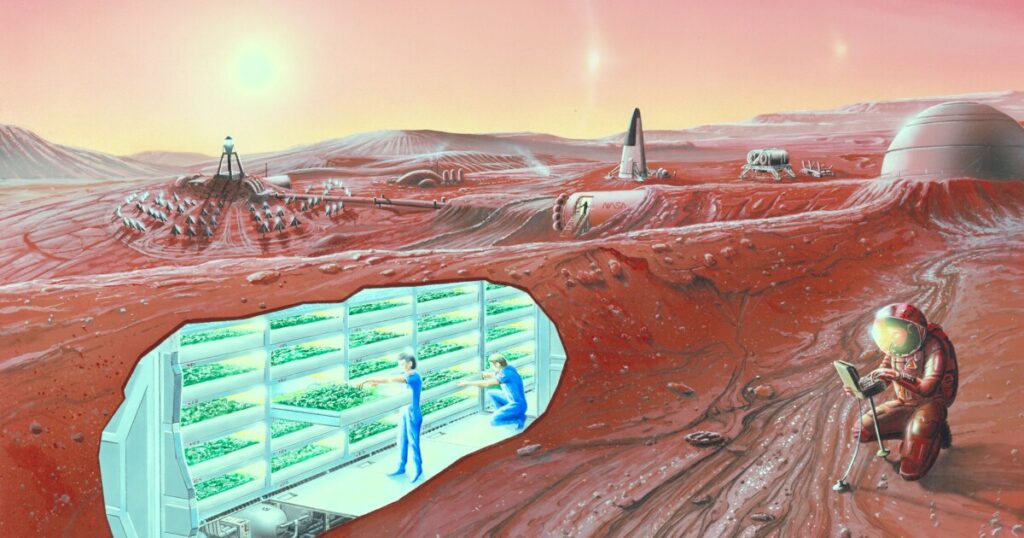
As humanity sets its sights on Mars and the Moon, one key question arises: how will we cultivate food in such extraterrestrial environments? Laura Lee, a doctoral candidate from Northern Arizona University, is delving into this challenge, and her research in northern Arizona might hold the key to future space farming.
The challenge is significant, as plants traditionally rely on soil, which is costly to transport into orbit. Instead of living soil, the Moon and Mars are covered with regolith—a lifeless, pulverized rock containing phosphorus but lacking nitrogen, both essential components for plant growth.
Lee’s study focuses on the viability of growing the “Three Sisters” crops—corn, squash, and beans—famed in Indigenous American agriculture, in simulated regolith from the Moon and Mars. To create this simulant, she used volcanic debris from Merriam Crater near Flagstaff. Two types of fertilizers were tested: one rich in nitrogen, and another derived from processed human waste, along with microscopic root fungus mixed into each regolith-fertilizer combination.
Results were promising: corn grown in Martian regolith simulant with fungus showed the highest leaf chlorophyll levels, indicating robust health. Meanwhile, corn in Lunar regolith simulant supplemented with fungus and human waste not only grew larger and lived longer but also bore visible ears.
Lee’s future research aims to grow the Three Sisters together in a single regolith plot, testing if the age-old symbiosis known to Indigenous farmers could thrive on the Moon or Mars. The volcanic terrain of northern Arizona, alongside its Indigenous agricultural heritage, may very well contribute to the future of human space exploration.
This report was crafted by Justin Creiver, in collaboration with KNAU and the Sustainable Communities Program at Northern Arizona University.
—
Read More Arizona News







![Botched Ad Mix-Up: Super PAC Error in Arizona Congressional Race[embed]https://www.youtube.com/watch?v=bEMgIlCkHz0[/embed]](https://www.kitchentablenews.org/wp-content/uploads/2026/10/Botched-Ad-Mix-Up-Super-PAC-Error-in-Arizona-Congressional-RaceembedhttpswwwyoutubecomwatchvbEMgIlCkHz0embed.com2F0e2F962Fe971102f49e7a4f2a64fd3cc60a22Fjonatha.png "Botched Ad Mix-Up: Super PAC Error in Arizona Congressional Race[embed]https://www.youtube.com/watch?v=bEMgIlCkHz0[/embed]")