With the arrival of summer, many people embrace the season by enjoying outdoor activities such as swimming, hiking, and grilling. While these activities are enjoyable, they also come with potential risks. Taking precautions can help ensure safety throughout the summer months. Here are essential tips for staying safe while enjoying the season.
Essential Water Safety Skills Everyone Should Know
Reported by Marielle Segarra
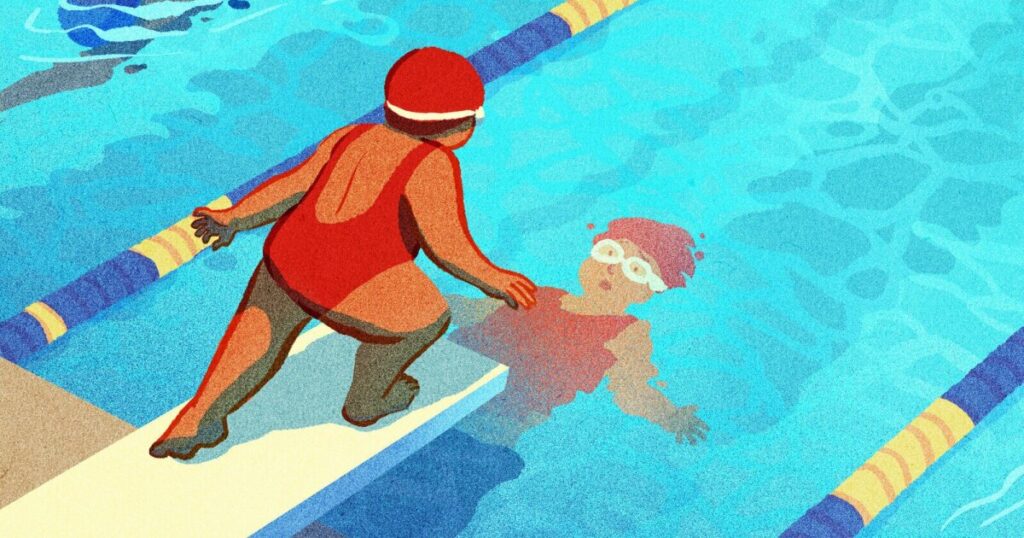
The American Red Cross emphasizes the importance of mastering basic water safety skills. Start by practicing jumping into water, fully submerging, and resurfacing. After surfacing, float or tread water for at least a minute. Relaxation is key to avoiding exhaustion while treading water.
Next, turn in a complete circle in the water to locate an exit, as “getting out of the water is just as important as getting into the water,” according to Cullen Jones, an Olympic gold medalist swimmer. Swim 25 yards to an exit without stopping, using any preferred stroke. Most pools in the U.S. measure this distance. Lastly, practice exiting the water without relying on a ladder using the technique “elbow, elbow, tummy, knee, knee,” as taught by Jones to his young son. (More swimming tips here.)
Assign a “Water-Watcher” to Enhance Swim Safety
Reported by Marielle Segarra
A “water-watcher” is an adult tasked with monitoring children and the water. This person should remain sober, attentive, and keep a phone within reach for emergencies. Rotate the watcher every 15 minutes to maintain vigilance. Knowing CPR and having a flotation device ready can also be beneficial. (Quiz on water safety knowledge.)
Recognize and React to Heat Exhaustion Symptoms
Reported by Clare Marie Schneider
During hot weather, monitor yourself and others for heat exhaustion symptoms. Dr. Renee Salas from Harvard Medical School advises vigilance, as friends may notice signs you might miss. Symptoms include excessive sweating, dizziness, fainting, pale skin, nausea, vomiting, and fatigue.
Individuals at higher risk include seniors, children, those with medical conditions like heart disease and diabetes, and those on certain medications. If symptoms arise, move to an air-conditioned area or call 911 if necessary. Continued symptoms require medical attention. (More on heat protection here.)
Conduct a Thorough Tick Check
Reported by Pien Huang
Approximately 31 million Americans experience tick bites annually, with summer being the peak season. Ticks can transmit diseases like Lyme, so covering your skin is advisable, especially in tick-prone areas like the Northeast.
When hiking or gardening, wear long sleeves, pants, and tuck pants into socks. Use EPA-recommended repellents, applying permethrin to clothes and DEET to exposed skin. Stick to trails to avoid tall grass. After outdoor activities, dry clothes to eliminate ticks and check for ticks immediately. Early removal reduces disease transmission risk. (Episode on ticks.)
Grilling Safely: Keep Your Grill Clear of Structures
Reported by Ruth Tam
To prevent fire-related incidents, read your grill’s manual before use. Position the grill away from structures like houses, patio roofs, or balconies. “You want to have your grill in open air so there’s a lot of space for the air to circulate and for the heat to disperse itself,” says Jess Larson, food blog founder of Plays Well With Butter.
If a fire appears uncontrollable, close the grill lid and vents to smother it. Keep a fire extinguisher nearby as a precaution. (Grilling tips for beginners.)
Story edited by Meghan Keane. Visuals by CJ Riculan. Contact us at LifeKit@npr.org. Listen to Life Kit on Apple Podcasts and Spotify. Subscribe to our newsletter. Follow us on Instagram: @nprlifekit.
Copyright 2026 NPR
—
Read More Michigan News


![Botched Ad Mix-Up: Super PAC Error in Arizona Congressional Race[embed]https://www.youtube.com/watch?v=bEMgIlCkHz0[/embed]](https://www.kitchentablenews.org/wp-content/uploads/2026/10/Botched-Ad-Mix-Up-Super-PAC-Error-in-Arizona-Congressional-RaceembedhttpswwwyoutubecomwatchvbEMgIlCkHz0embed.com2F0e2F962Fe971102f49e7a4f2a64fd3cc60a22Fjonatha.png "Botched Ad Mix-Up: Super PAC Error in Arizona Congressional Race[embed]https://www.youtube.com/watch?v=bEMgIlCkHz0[/embed]")