Debate Surrounds Federal Program to Protect Native Fish in the Grand Canyon
In a bid to safeguard threatened fish species in the Grand Canyon, environmental advocates are seeking clarity on the status of a federal program designed to manage invasive fish populations in the Colorado River.
Initiated in 2024, the program involves releasing cold water from Lake Powell into the Colorado River during warmer periods. This effort aims to displace invasive fish species, such as smallmouth bass, which pose a threat to federally-protected native fish like the humpback chub.
This year, river temperatures have reached levels that historically trigger these “cool mix flows,” yet the Bureau of Reclamation has not announced any releases. These flows occurred in 2024 and 2025, and were praised by Reclamation officials as essential for native fish conservation. However, the water intended for these releases is embroiled in a broader debate regarding the future of the Colorado River.
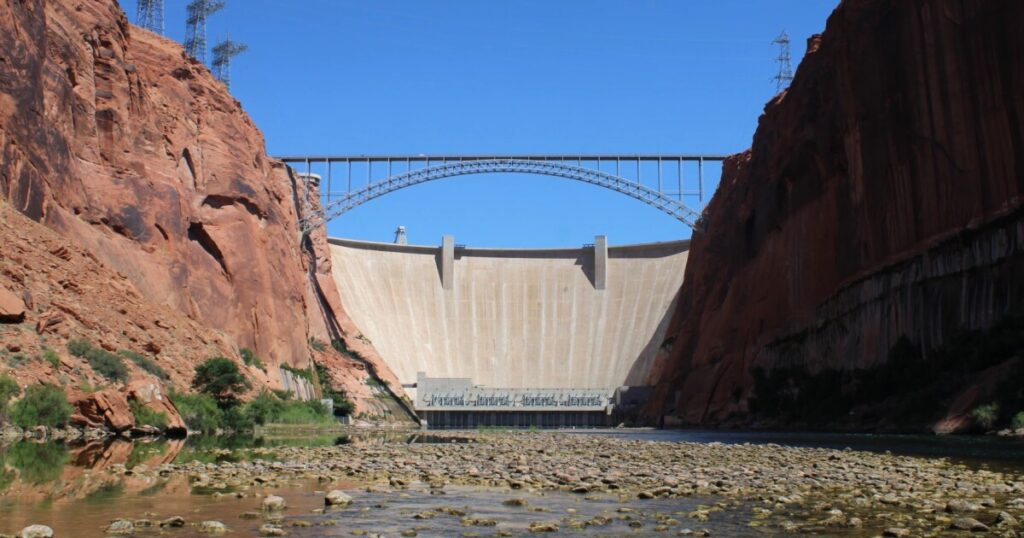
Lake Powell, the second-largest reservoir in the U.S., is currently less than 25% full and is approaching record low levels, as reported by KJZZ. If levels drop further, it could jeopardize the operation of hydroelectric turbines at Glen Canyon Dam in Arizona.
The cold water for fish conservation must be released through backup pipes at the dam’s base, which do not generate electricity, unlike the main turbines. This situation presents a dilemma for federal officials who are currently making controversial efforts to maintain hydropower production by keeping Lake Powell’s levels stable.
Jen Pelz, water advocacy director at the Grand Canyon Trust, emphasizes the need to weigh the economic impacts of reduced hydropower against the invaluable nature of preserving ancient native fisheries. She states, “We just need to think about what it is we’re willing to lose and the values that we cherish. [The] Grand Canyon is one of the most iconic landscapes in this country, in the world. In fact, it’s a UNESCO World Heritage Site, and trying to maintain its fishery is integral to maintaining that ecological and cultural integrity of this place.”
Smallmouth bass begin reproducing when water temperatures reach 16 degrees Celsius. The cool mix flows are designed to commence when river temperatures exceed an average of 15.5 degrees Celsius. According to U.S. Geological Survey data, temperatures at Lees Ferry have consistently surpassed this threshold since early July, with peaks above 18 degrees Celsius.
Pelz highlights the urgency of implementing cool mix flows to curb the invasive fish population. “We’re at the very start of what’s known as an invasion,” she explains. “If you can stop that establishment from happening at the start of the invasion, it’s much easier and less expensive than if you wait until those non-native fish have really gotten into every part and tributary of the Colorado River.”
A Bureau of Reclamation spokesperson provided a brief response to inquiries from KJZZ, stating, “The option for cool mix flows remains under consideration by the Department at this time.”
This article was produced by KJZZ, a public radio station in Phoenix, and shared by KNAU as part of the Arizona Public Media Exchange.
—
Read More Arizona News