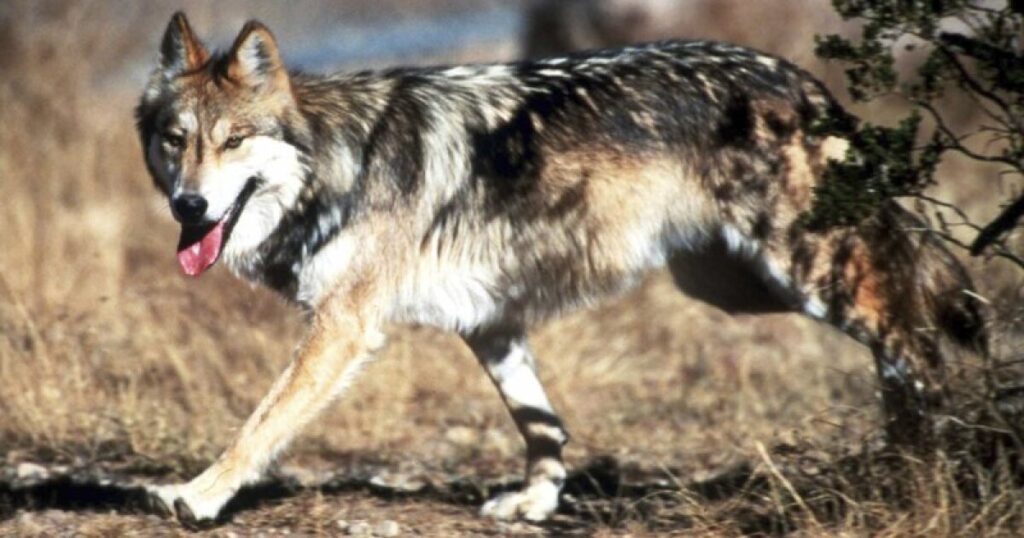
Mexican Gray Wolves See Population Increase While Facing Genetic Challenges
Efforts to conserve the Mexican gray wolf have led to a notable increase in their population, prompting Arizona Game and Fish officials to consider a change in their endangered species listing. This potential reclassification from “endangered” to “threatened” highlights the success of long-term recovery efforts but raises concerns among conservationists.
After nearly two decades of focused conservation, wildlife officials in Arizona and New Mexico report that they are nearing a critical population milestone. Their goal is to maintain an average of 320 wolves over four years across both states. As of last year, a minimum of 319 wolves were identified in the wild.
The recovery efforts extend beyond U.S. borders, as wolves have also been released in Mexico to bolster the population. A recent media release from the U.S. Fish and Wildlife Service, along with state wildlife departments, confirmed, “Following the successful transfer of 12 Mexican wolves from the United States to Mexico earlier this year and with two key recovery plan criteria within reach, the U.S. Fish and Wildlife Service, the New Mexico Department of Wildlife and the Arizona Game and Fish Department are preparing a petition for downlisting the subspecies based on these successes.”
However, not everyone agrees with this optimistic outlook. Greta Anderson from Western Watersheds criticized the criteria for recovery as insufficient. “We’ve argued against those recovery criteria because we think that’s pretty arbitrary and doesn’t speak to the long-term genetic viability of the population,” she stated. Anderson emphasized the continued genetic challenges facing the species and predicted a petition for reclassification could be filed within two years.
Efforts to enhance genetic diversity have included introducing nearly 150 captive-born wolf pups into existing dens. Despite these efforts, Anderson pointed out that the genetic diversity remains limited, comparing it to that of siblings. She cautioned that a downgrade in federal protection could lead to a shift in management to state agencies, potentially increasing risks to the wolves and further narrowing their genetic pool.
The Mexican gray wolf population has experienced steady growth for nine consecutive years. However, conservationists stress the urgency of addressing pressing genetic issues to ensure the population’s long-term health and viability.
—
Read More Arizona News



![Jody White’s Unconventional Michigan Supreme Court Candidacy Explored[embed]https://www.youtube.com/watch?v=8NfxFIPE4ac[/embed]](https://www.kitchentablenews.org/wp-content/uploads/2026/10/Jody-Whites-Unconventional-Michigan-Supreme-Court-Candidacy-Exploredembedhttpswwwyoutubecomwatchv8NfxFIPE4acembed.com2F842F0e2Fc7223daa43c9876b36a4e00773a42Fme-supc.png "Jody White’s Unconventional Michigan Supreme Court Candidacy Explored[embed]https://www.youtube.com/watch?v=8NfxFIPE4ac[/embed]")