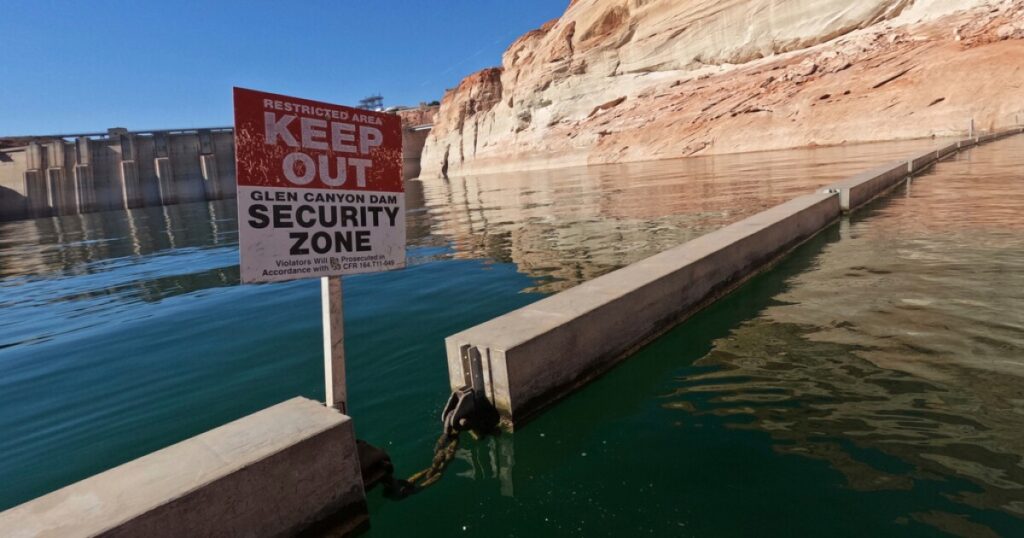
In a challenging decision that highlights the delicate balance between environmental conservation and energy needs, federal officials have decided against releasing cool water from a key reservoir on the Colorado River this year. This move was aimed at protecting hydropower production but comes at a potential cost to a native fish species.
The Bureau of Reclamation, according to an email accessed by The Associated Press, informed stakeholders that water from the Glen Canyon Dam in northern Arizona would remain unreleased. The decision stemmed from “significant hydropower generation concerns under already strained system conditions.”
As the Colorado River faces reduced flow due to overuse and climate change, officials found themselves weighing the preservation of the humpback chub—a threatened species native to the river—against the economic implications for electricity ratepayers.
Following a record-low snowpack in the Colorado River Basin, a crucial source for farmers, industries, wildlife, and over 40 million people across seven U.S. states, tribal nations, and Mexico, this decision comes on the heels of a federal proposal aimed at averting a crisis in the waterway.
The proposal suggests water cuts for states such as California, Nevada, and Arizona after they were unable to reach a long-term agreement on resource sharing. A “cool mix flow” involves releasing cold water from deep within a reservoir like Lake Powell to cool the river downstream. However, this would bypass hydropower turbines, leading to a loss in power generation.
Lake Powell, currently at about 23% capacity due to prolonged overuse and increasing evaporation from rising temperatures, faces challenges as warm surface waters are drawn through generators. This process inadvertently allows smallmouth bass, a species introduced for sport fishing in the 1980s, to enter the river, where they can spawn if conditions are warm enough, threatening the humpback chub and other protected fish species.
The Bureau of Reclamation notes that cool water releases in 2024 and 2025 were successful in preventing smallmouth bass spawning. The river below the dam is currently around 69 degrees Fahrenheit, exceeding the Bureau’s threshold of 60 F for cold water release consideration for over a month.
“Our efforts this year will continue to focus on expanded rapid response removal actions, additional backwater modifications, evaluation of innovative tools, and advancement of durable structural solutions,” Wayne G. Pullan, regional director of the Upper Colorado Basin, wrote in the email.
Matt Rice from American Rivers expressed disappointment at the decision, noting, “We’ve proven that the cool mix flows are the most effective way to mitigate the smallmouth bass invasion in the Grand Canyon. Hopefully it’s not a death sentence to humpback chub.” He also highlighted the risk to the nearby rainbow trout fishery due to elevated temperatures.
Rice hopes for future collaborative solutions that balance environmental protection with the needs of those who depend on the river for power. Meanwhile, utilities reliant on Glen Canyon Dam’s hydropower warned that water releases would necessitate costly alternative energy purchases, likely raising electricity bills and reducing reliance on renewable sources.
“We’re very pleased with the decision and appreciate Reclamation’s deliberate and thoughtful approach to this, just recognizing the challenges that we’re facing on the river,” commented Andy Colosimo of the Colorado River Energy Distributors Association, representing about 155 federal hydropower customers. He added, “I think this was the right call, given the conditions that we’re all facing.”
Potentially, the federal framework could lead to significant cuts in Arizona’s river water allocation, affecting some Native American communities.
—
Read More Arizona News