In the heart of the American Southwest, a silent transformation is unfolding as the once bustling coal industry fades into history. On the lands of the Navajo Nation, the echoes of excavator cranes have been replaced by a newfound tranquility, marking the end of an era for coal mining on Black Mesa.
From the 1800s to the mid-20th century, coal was the lifeblood of America’s energy landscape, propelling the nation through industrial milestones. While Appalachia and Wyoming often dominated headlines, northern Arizona’s Black Mesa was also a thriving hub for coal mining. Today, however, its legacy is a mix of environmental challenges and economic memories.
The Rise and Fall of Coal on Black Mesa
For generations, Black Mesa was synonymous with coal production, courtesy of Peabody Energy. The company, which once operated expansive strip mines across 64,000 acres, had a significant impact on local communities. “During the time I was a child, it was like that,” recalled Lily Johnson, a lifelong resident of the area. The cessation of mining activities brought a newfound peace to the region, as Johnson noted, “We were so happy when Peabody left, and I realized that one day I got up with no noise.”
Steve Trusell from the Arizona Mining Association confirmed, “We don’t have coal production at the moment,” referring to the absence of mining on Black Mesa. The U.S. Geological Survey once estimated that billions of tons of coal lay beneath this land, attracting interest for decades.
The Conflict and Consequences
The extraction of coal on Black Mesa is intertwined with a century-old territorial dispute between the Navajo and Hopi tribes. An 1882 executive order by President Chester Arthur created overlapping rights, which the U.S. government later sought to resolve through the Navajo-Hopi Land Settlement Act of 1974. This legislation resulted in the relocation of thousands of Navajo families to make way for mining operations.
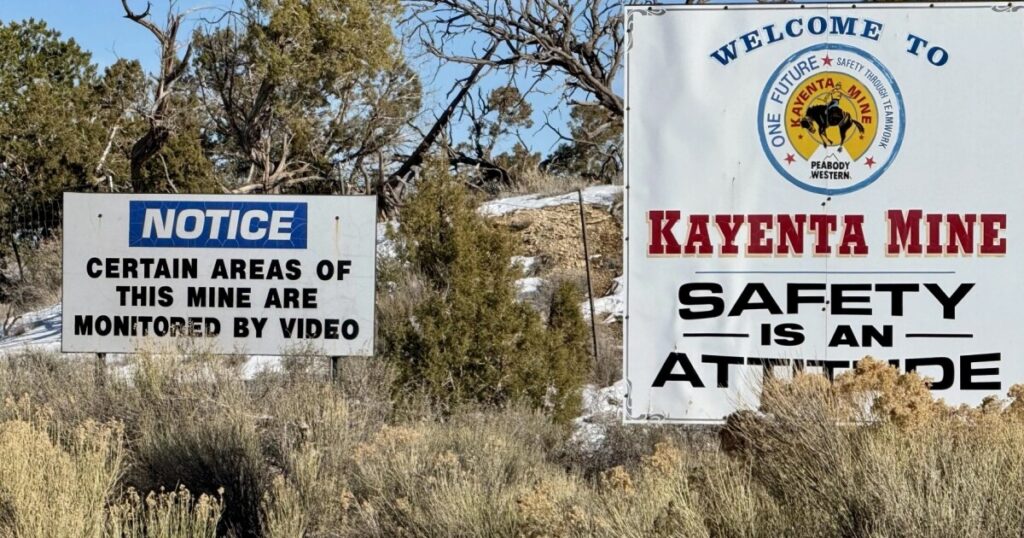
The Kayenta Mine Complex emerged as a key player, supplying coal to power cities like Phoenix and Los Angeles. Yet, environmental impacts, such as the depletion of local aquifers and air pollution from coal-fired plants, were significant. The Navajo Generating Station, a major coal consumer, was shut down in 2019 as part of a broader shift towards cleaner energy sources.
Reclamation Efforts and Future Challenges
Today, the focus is on reclamation and restoring the land. Sam Yazzie, a former Peabody employee, expressed concern over Peabody’s efforts, stating, “They’re just fulfilling the contract, nothing more.” Peabody’s sustainability report emphasizes collaboration with the Navajo and Hopi tribes, but locals remain skeptical about the effectiveness of these measures.
Despite economic benefits from coal mining, such as $1.3 billion in contributions to local economies, the environmental legacy remains contentious. As Jarvis Williams, Kayenta’s Town Manager, reflected, “It was a gradual decline… It’ll be felt for at least a couple more generations.”
As the coal era closes, the Navajo Nation faces the challenge of balancing economic development with environmental stewardship, a task that will shape the future of Black Mesa and its people.
This article was created in collaboration with KJZZ, Phoenix’s public radio station, and published by KNAU as part of the Arizona Public Media Exchange.
—
Read More Arizona News