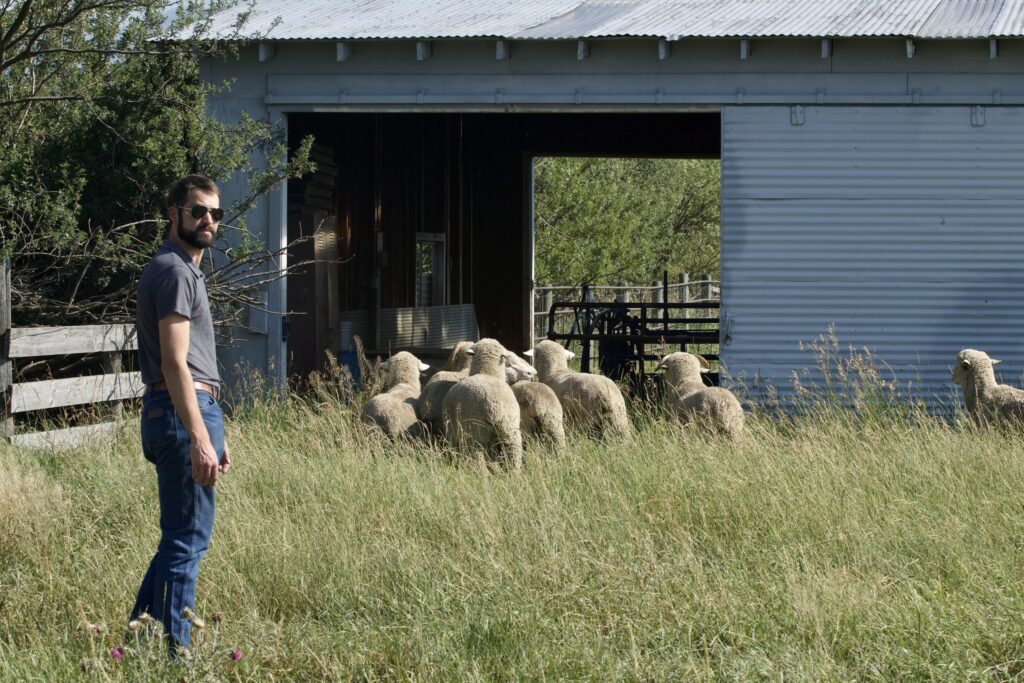
On a hot August day, wool expert Brent Roeder assessed the flock at Montana State University’s Fort Ellis Research and Teaching Farm. This flock provides agriculture students hands-on experience in raising high-quality sheep. Roeder plans to take six top animals to a Miles City sale this September. “You’re taking your best of your best,” Roeder said.
Roeder aims to revive Montana’s wool industry through the university’s new Wool Lab, designed to make wool production more profitable and efficient. This facility launched in July alongside other state labs on campus. The Wool Lab cost around $10 million, funded by legislative and private donations. Its predecessor dates to the 1940s, a time when wool labs were more common at universities.
Wool labs have dwindled as the wool industry declined. U.S. sheep herds have reduced by 90% over 80 years due to rising costs, drought, and lamb imports. In Montana, wool production has dropped by two-thirds, and sheep operations have halved over 30 years. As of 2024, Montana had about 190,000 sheep and 1,100 wool operations.
Roeder opposes synthetic fabrics, noting their environmental impact and promoting natural fibers like wool. He believes the Wool Lab can innovate cheaper wool production methods with input from Montana ranchers. Every two years, 25 sheep producers evaluate the lab’s work, though results remain private. Stefanie Leach of the Montana Wool Growers Association, which contributed $100,000, said, “Without the research there, our industry stays stagnant.”
The lab focuses on breeding sheep for next-to-skin wool, less than 30 microns thick, largely sourced from Montana and neighboring states. Becky Weed, a local sheep rancher, said the market has shifted, and ranchers must now focus more on wool processing and sales. “The mainstream wool growers at that time weren’t paying as close attention to what happened to their fiber,” she said.
Roeder noted improvements in wool prices, which have doubled in two years but argued the industry still struggles from past neglect. “We have not had enough profitability in the industry for so long,” he stated. As he tended sheep at Fort Ellis, Roeder, a longtime 4H participant mentor, wore a belt buckle from his Texas A&M wool judging championship.
The Wool Lab aims to innovate and sustain Montana’s wool industry by training a new generation. Roeder, an advocate for the wool industry, encourages students with practical knowledge and instincts.
“`
—
Read More Montana News